<?xml version="1.0" encoding="utf-8"?>
<feed xmlns="http://www.w3.org/2005/Atom">
  <author>
    <name>Enthusjast</name>
  </author>
  <generator uri="https://hexo.io/">Hexo</generator>
  <icon>https://enthusjast.cc/img/icon.png</icon>
  <id>https://enthusjast.cc/</id>
  <link href="https://enthusjast.cc/" rel="alternate"/>
  <link href="https://enthusjast.cc/atom.xml" rel="self"/>
  <rights>All rights reserved 2026, Enthusjast</rights>
  <title>Enthusjast's Blog</title>
  <updated>2026-04-11T11:58:09.000Z</updated>
  <entry>
    <author>
      <name>Enthusjast</name>
    </author>
    <category term="life" scheme="https://enthusjast.cc/categories/life/"/>
    <category term="life" scheme="https://enthusjast.cc/tags/life/"/>
    <content>
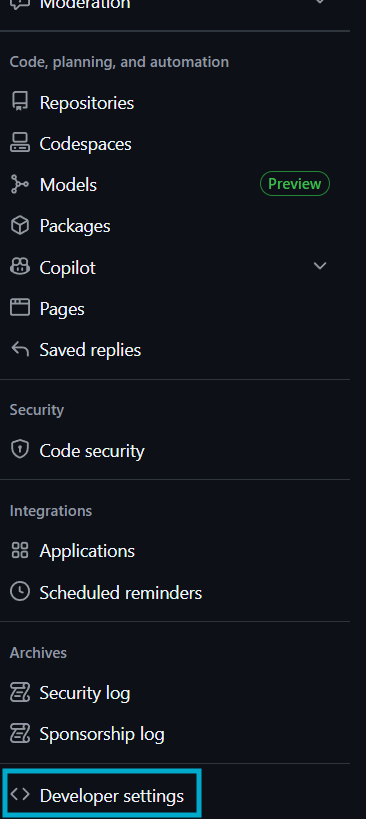
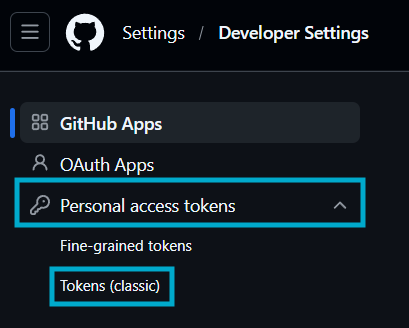
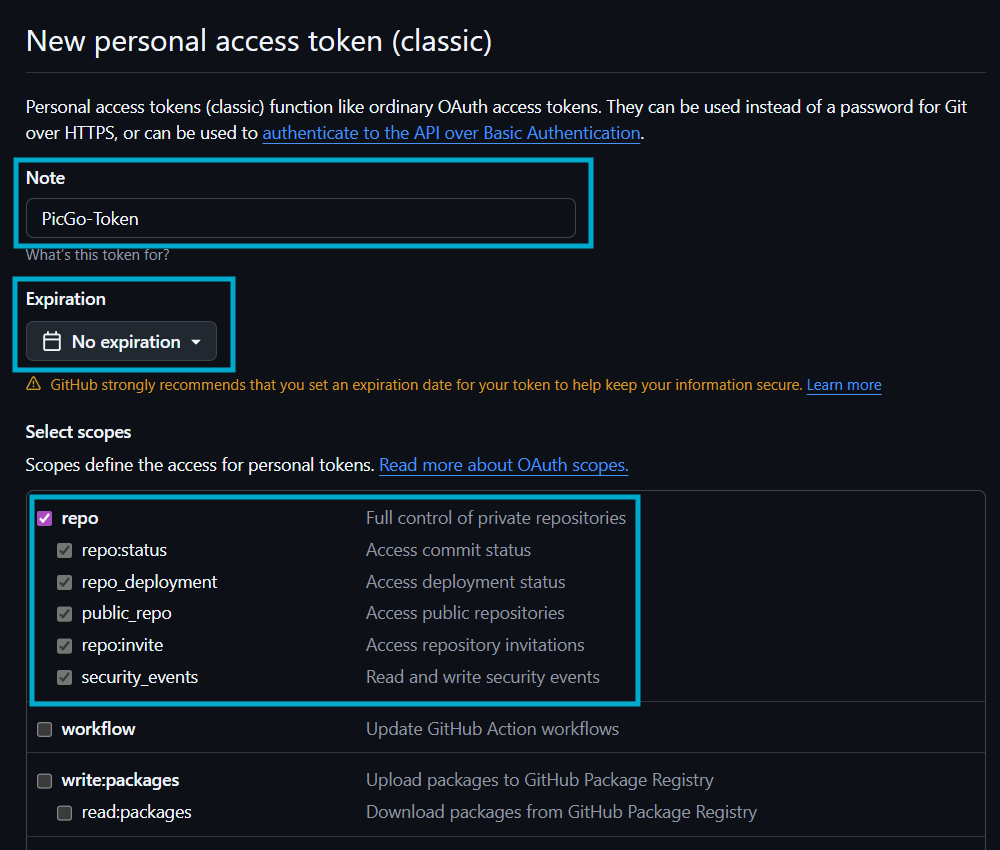
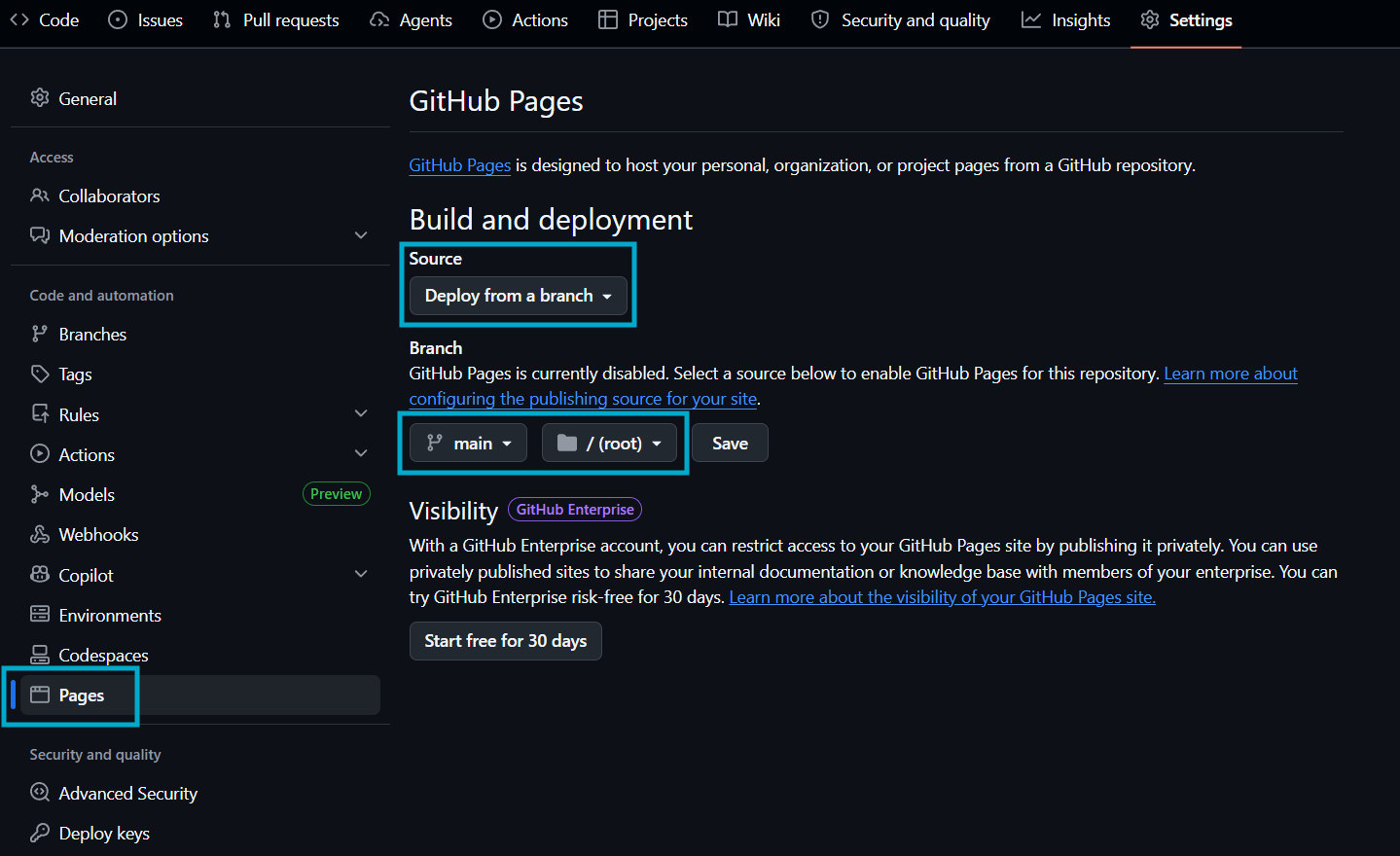
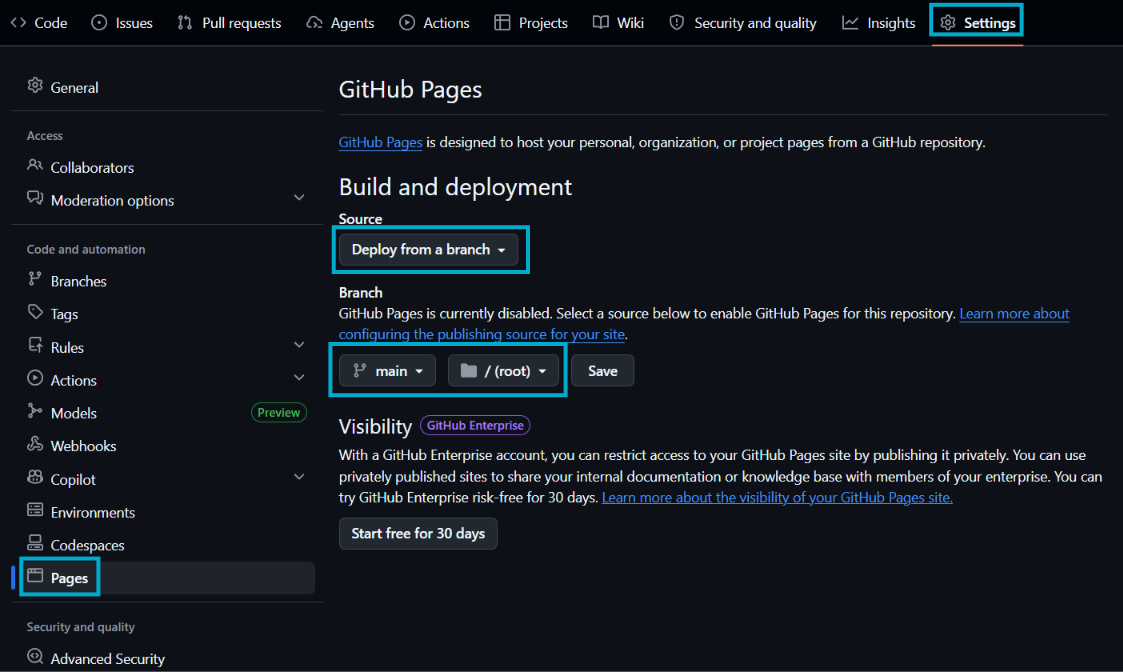
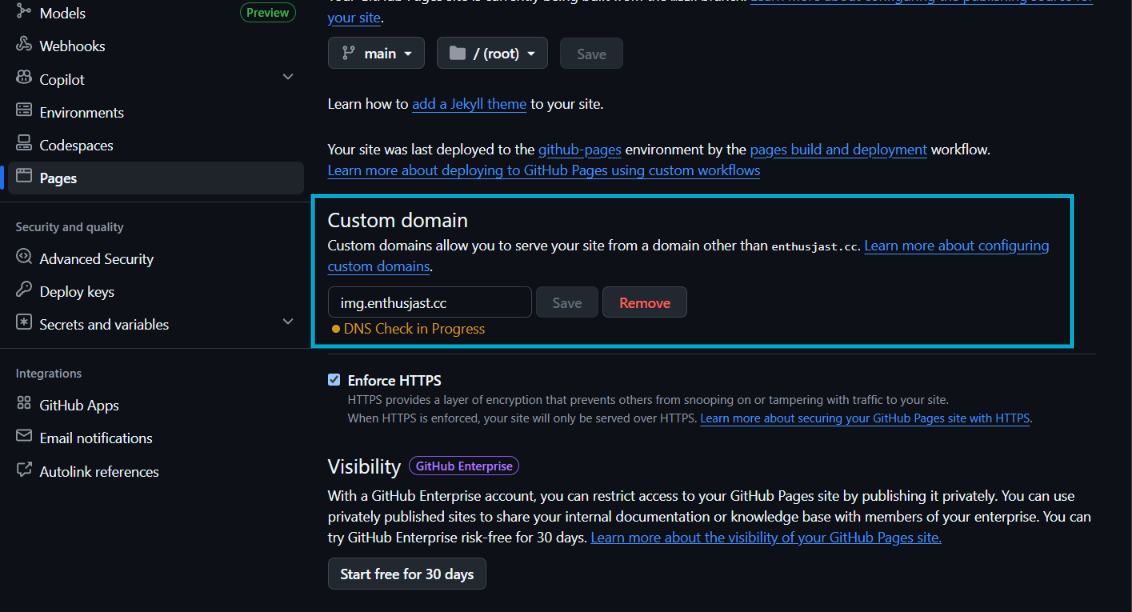
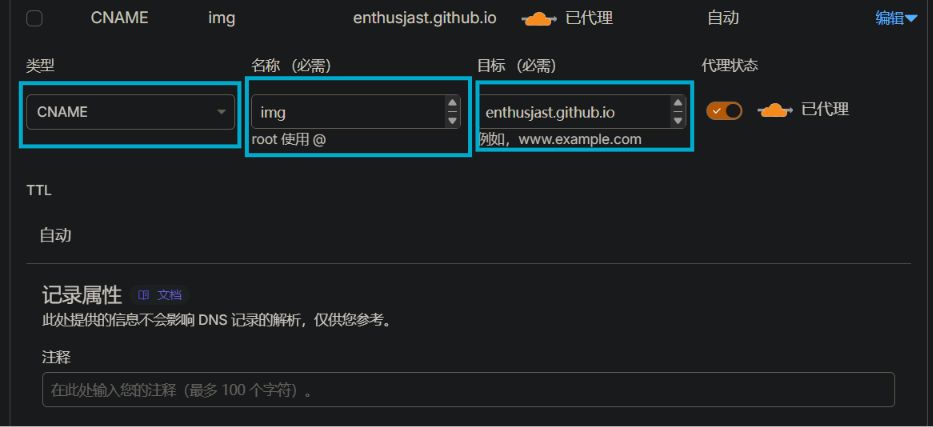
      <![CDATA[<h2 id="Github"><a href="#Github" class="headerlink" title="Github"></a>Github</h2><h3 id="创建仓库"><a href="#创建仓库" class="headerlink" title="创建仓库"></a>创建仓库</h3><p>在 GitHub 上创建一个 Public Repository, 命名为 “my-pics” (其实随意命名)</p><h3 id="创建-Token"><a href="#创建-Token" class="headerlink" title="创建 Token"></a>创建 Token</h3><p>进入设置页, 在边栏底部找到 “Developer Settings”, 进入这一项.</p><p><img src="https://img.enthusjast.cc/20260411203532995.png"></p><p>进入后在边栏中展开 “Personal access tokens”, 选择 “Tokens (classic)”.右侧点击 “Generate new token”, 在下拉菜单中选择 “Generate new token (classic)”.</p><p><img src="https://img.enthusjast.cc/20260411204737979.png"></p><p>在 Note 中填入该 Token 的名称(例如 PicGo-Token, 随意填写); Expiration 选择 No expiration (不过期);下方列表中勾选 repo; 最后在页面底部点击 Generate token.</p><p><img src="https://img.enthusjast.cc/20260411205142408.png"></p><p>复制出现的 Token, 并将其保存至一个安全的地方, 该 Token 只会出现一次.</p><p><img src="https://img.enthusjast.cc/20260311205153758.png"></p><h3 id="发布-GitHub-Pages"><a href="#发布-GitHub-Pages" class="headerlink" title="发布 GitHub Pages"></a>发布 GitHub Pages</h3><p>转至仓库页面, 进入仓库设置. 在边栏中转至 “Pages”, 右侧 “Source” 下选择 “Deploy from a branch”, “Branch” 下分别选择 “main”, “&#x2F;(root)”.</p><p><img src="https://img.enthusjast.cc/20260412215519551.png"></p><p>这样, 可以通过访问 <code>https://username.github.io/my-pics</code> 来访问你的 图床. 例如, 若你有一张图片名为 <code>img.png</code>, 则链接 <code>https://username.github.io/my-pics/img.png</code> 可以访问到该图片.</p><h2 id="PicGo"><a href="#PicGo" class="headerlink" title="PicGo"></a>PicGo</h2><h3 id="PicGo-软件的配置"><a href="#PicGo-软件的配置" class="headerlink" title="PicGo 软件的配置"></a>PicGo 软件的配置</h3><p>前往 <a href="https://github.com/Molunerfinn/PicGo/releases">PicGo 的 GitHub Releases 页面</a> 下载 PicGo.</p><p>边栏选择图床设置下的 GitHub, 添加配置. 配置中需要填写如下配置项</p><ul><li><strong>图床配置名</strong>: 这项随意填写, 例如 “GitHub”.</li><li><strong>设定仓库名</strong>: 填写你在 GitHub 上创建的仓库名, 例如 “username&#x2F;my-pics”.</li><li><strong>设定分支名</strong>: 一般为 “main”.</li><li><strong>设定 Token</strong>: 填写你在 GitHub 上创建的 Personal Access Token.</li><li><strong>设定存储路径</strong>: 非必填, 留空则默认将图片存储至仓库根目录.</li><li><strong>设定自定义域名</strong>: 非必填, 若你有自己的域名, 我们后面的章节介绍相关配置.</li></ul><p>接下来在边栏选择进入上传区, 在这里你可以上传图片至你的图床.在边栏选择进入相册, 可以看到你上传至图床的全部图片, 也可以复制相关图片的图床链接.</p><h3 id="自定义域名"><a href="#自定义域名" class="headerlink" title="自定义域名"></a>自定义域名</h3><p>如果你有一个自己的域名(例如 <code>yourdomain.com</code>), 那么你可以考虑通过自定义域名访问图床.</p><p>进入你的图床仓库 “username&#x2F;my-pics”, 在顶栏转到 “Settings”, 下面的侧边栏中转到 “Pages”. 在大页面中的 “source” 下选择 “Deploy from a branch”, “Branch” 下分别选择 “main”, “&#x2F;(root)”.</p><p><img src="https://img.enthusjast.cc/20260418210445717.png"></p><p>点击 “Save” 后, 在下面 “Custom domain” 中填入你的自定义域名, 例如 <code>img.yourdomain.com</code>.</p><p><img src="https://img.enthusjast.cc/20260418210645206.png"></p><p>接下来配置 DNS, 例如使用 Cloudflare, 添加一条 CNAME 记录, 名称为 <code>img</code>, 目标为 <code>username.github.io</code>.</p><p><img src="https://img.enthusjast.cc/20260418211143581.png"></p><p>回到 PicGo 中, 在”设定自定义域名”中填入 <code>img.yourdomain.com</code> 即可.</p>]]>
    </content>
    <id>https://enthusjast.cc/life/2026/%E4%BD%BF%E7%94%A8-PicGo-%E4%B8%8E-GitHub-%E9%85%8D%E7%BD%AE%E5%9B%BE%E5%BA%8A/</id>
    <link href="https://enthusjast.cc/life/2026/%E4%BD%BF%E7%94%A8-PicGo-%E4%B8%8E-GitHub-%E9%85%8D%E7%BD%AE%E5%9B%BE%E5%BA%8A/"/>
    <published>2026-04-11T11:58:09.000Z</published>
    <summary>使用 PicGo + GitHub Pages 搭建免费图床的完整教程，含自定义域名配置。</summary>
    <title>使用 PicGo 与 GitHub 配置图床</title>
    <updated>2026-04-11T11:58:09.000Z</updated>
  </entry>
  <entry>
    <author>
      <name>Enthusjast</name>
    </author>
    <category term="life" scheme="https://enthusjast.cc/categories/life/"/>
    <category term="life" scheme="https://enthusjast.cc/tags/life/"/>
    <content>
      <![CDATA[<p><strong>我是 Joker!</strong> 刚得知 Vlab 内置了 TeX Live 2026, 那我这篇文章白写了(</p><hr><p>Windows 下的 TeX Live 性能远远不如 Linux 中的 TeX Live, 且在 Windows 下配置和使用都较为复杂. 我曾尝试过将 TeX Live 配置在 WSL 中, 但是反而出现了更多问题. 前几日听说了<a href="https://vlab.ustc.edu.cn/">科大 Vlab 项目</a>提供了免费的 Linux 平台, 于是我决定在上面配置 TeX Live 及尝试远程开发.</p><p>有关 Vlab 平台的注册与使用, 参见 <a href="https://vlab.ustc.edu.cn/docs/">Vlab 文档</a>.</p><h2 id="安装-TeX-Live"><a href="#安装-TeX-Live" class="headerlink" title="安装 TeX Live"></a>安装 TeX Live</h2><p>使用科大 Vlab 平台可以方便快捷调用科大开源软件镜像, 所以下文使用在线安装 TeX Live 的方式.</p><h3 id="1-下载安装程序"><a href="#1-下载安装程序" class="headerlink" title="1. 下载安装程序"></a>1. 下载安装程序</h3><figure class="highlight bash"><table><tr><td class="gutter"><pre><span class="line">1</span><br><span class="line">2</span><br><span class="line">3</span><br></pre></td><td class="code"><pre><code class="hljs bash"><span class="hljs-built_in">cd</span> /tmp<br>wget http://mirrors.ustc.edu.cn/CTAN/systems/texlive/tlnet/install-tl-unx.tar.gz <span class="hljs-comment"># 使用科大镜像源</span><br>tar -xzf install-tl-unx.tar.gz<br></code></pre></td></tr></table></figure><h3 id="2-运行安装程序"><a href="#2-运行安装程序" class="headerlink" title="2. 运行安装程序"></a>2. 运行安装程序</h3><figure class="highlight bash"><table><tr><td class="gutter"><pre><span class="line">1</span><br><span class="line">2</span><br></pre></td><td class="code"><pre><code class="hljs bash"><span class="hljs-built_in">cd</span> install-tl-*/<br><span class="hljs-built_in">sudo</span> ./install-tl --repository https://mirrors.ustc.edu.cn/CTAN/systems/texlive/tlnet/ <span class="hljs-comment"># 指定科大镜像源</span><br></code></pre></td></tr></table></figure><p>接下来会看到类似如下的文字</p>    <div class="fold">      <div class="fold-title fold-info collapsed" data-toggle="collapse" href="#collapse-e064c6af" role="button" aria-expanded="false" aria-controls="collapse-e064c6af">        <div class="fold-arrow">▶</div>安装页面      </div>      <div class="fold-collapse collapse" id="collapse-e064c6af">        <div class="fold-content">          <figure class="highlight text"><table><tr><td class="gutter"><pre><span class="line">1</span><br><span class="line">2</span><br><span class="line">3</span><br><span class="line">4</span><br><span class="line">5</span><br><span class="line">6</span><br><span class="line">7</span><br><span class="line">8</span><br><span class="line">9</span><br><span class="line">10</span><br><span class="line">11</span><br><span class="line">12</span><br><span class="line">13</span><br><span class="line">14</span><br><span class="line">15</span><br><span class="line">16</span><br><span class="line">17</span><br><span class="line">18</span><br><span class="line">19</span><br><span class="line">20</span><br><span class="line">21</span><br><span class="line">22</span><br><span class="line">23</span><br><span class="line">24</span><br><span class="line">25</span><br><span class="line">26</span><br><span class="line">27</span><br><span class="line">28</span><br><span class="line">29</span><br><span class="line">30</span><br><span class="line">31</span><br><span class="line">32</span><br><span class="line">33</span><br><span class="line">34</span><br><span class="line">35</span><br><span class="line">36</span><br><span class="line">37</span><br><span class="line">38</span><br><span class="line">39</span><br><span class="line">40</span><br><span class="line">41</span><br><span class="line">42</span><br><span class="line">43</span><br><span class="line">44</span><br><span class="line">45</span><br><span class="line">46</span><br><span class="line">47</span><br></pre></td><td class="code"><pre><code class="hljs text">======================&gt; TeX Live installation procedure &lt;=====================<br><br>======&gt;   Letters/digits in &lt;angle brackets&gt; indicate   &lt;=======<br>======&gt;   menu items for actions or customizations      &lt;=======<br>= help&gt;   https://tug.org/texlive/doc/install-tl.html   &lt;=======<br><br> Detected platform: GNU/Linux on x86_64<br><br> &lt;B&gt; set binary platforms: 1 out of 15<br><br> &lt;S&gt; set installation scheme: scheme-full<br><br> &lt;C&gt; set installation collections:<br>     40 collections out of 41, disk space required: 9404 MB (free: 9841 MB)<br><br> &lt;D&gt; set directories:<br>   TEXDIR (the main TeX directory):<br>     /usr/local/texlive/2026<br>   TEXMFLOCAL (directory for site-wide local files):<br>     /usr/local/texlive/texmf-local<br>   TEXMFSYSVAR (directory for variable and automatically generated data):<br>     /usr/local/texlive/2026/texmf-var<br>   TEXMFSYSCONFIG (directory for local config):<br>     /usr/local/texlive/2026/texmf-config<br>   TEXMFVAR (personal directory for variable and automatically generated data):<br>     ~/.texlive2026/texmf-var<br>   TEXMFCONFIG (personal directory for local config):<br>     ~/.texlive2026/texmf-config<br>   TEXMFHOME (directory for user-specific files):<br>     ~/texmf<br><br> &lt;O&gt; options:<br>   [ ] use letter size instead of A4 by default<br>   [X] allow execution of restricted list of programs via \write18<br>   [X] create all format files<br>   [X] install macro/font doc tree<br>   [X] install macro/font source tree<br>   [ ] create symlinks to standard directories<br><br> &lt;V&gt; set up for portable installation<br><br>Actions:<br> &lt;I&gt; start installation to hard disk<br> &lt;P&gt; save installation profile to &#x27;texlive.profile&#x27; and exit<br> &lt;Q&gt; quit<br><br>Enter command:<br></code></pre></td></tr></table></figure>         </div>      </div>    </div><p>输入 <code>I</code> 开始安装. 这会耗费较长时间(取决于网速), 因为它会从镜像站下载数千个文件.</p><div class="note note-warning">            <p><strong>Attention</strong></p> <p>TeX Live 安装可能占用 10GB+ 的存储空间.</p>           </div><p>安装过程中会显示如下若干文字</p>    <div class="fold">      <div class="fold-title fold-info collapsed" data-toggle="collapse" href="#collapse-5b75660a" role="button" aria-expanded="false" aria-controls="collapse-5b75660a">        <div class="fold-arrow">▶</div>安装提示      </div>      <div class="fold-collapse collapse" id="collapse-5b75660a">        <div class="fold-content">          <figure class="highlight text"><table><tr><td class="gutter"><pre><span class="line">1</span><br><span class="line">2</span><br><span class="line">3</span><br><span class="line">4</span><br><span class="line">5</span><br><span class="line">6</span><br><span class="line">7</span><br><span class="line">8</span><br><span class="line">9</span><br><span class="line">10</span><br><span class="line">11</span><br><span class="line">12</span><br><span class="line">13</span><br><span class="line">14</span><br><span class="line">15</span><br><span class="line">16</span><br><span class="line">17</span><br><span class="line">18</span><br><span class="line">19</span><br><span class="line">20</span><br><span class="line">21</span><br><span class="line">22</span><br><span class="line">23</span><br><span class="line">24</span><br><span class="line">25</span><br><span class="line">26</span><br><span class="line">27</span><br><span class="line">28</span><br><span class="line">29</span><br><span class="line">30</span><br><span class="line">31</span><br><span class="line">32</span><br><span class="line">33</span><br><span class="line">34</span><br><span class="line">35</span><br><span class="line">36</span><br><span class="line">37</span><br><span class="line">38</span><br><span class="line">39</span><br><span class="line">40</span><br><span class="line">41</span><br><span class="line">42</span><br><span class="line">43</span><br><span class="line">44</span><br><span class="line">45</span><br><span class="line">46</span><br><span class="line">47</span><br><span class="line">48</span><br><span class="line">49</span><br><span class="line">50</span><br><span class="line">51</span><br><span class="line">52</span><br><span class="line">53</span><br><span class="line">54</span><br><span class="line">55</span><br><span class="line">56</span><br><span class="line">57</span><br><span class="line">58</span><br><span class="line">59</span><br><span class="line">60</span><br><span class="line">61</span><br><span class="line">62</span><br><span class="line">63</span><br><span class="line">64</span><br><span class="line">65</span><br></pre></td><td class="code"><pre><code class="hljs text">Installing to: /usr/local/texlive/2026<br>Installing [1/4, time/total: ??:??/??:??]: hyphen-base [23k]<br>Installing [2/4, time/total: 00:00/00:00]: kpathsea [1291k]<br>Installing [3/4, time/total: 00:01/00:01]: texlive-scripts [563k]<br>Installing [4/4, time/total: 00:01/00:01]: texlive.infra [671k]<br>Time used for installing the packages: 00:01<br>Installing [0001/5016, time/total: ??:??/??:??]: 12many [376k]<br>......<br>Installing [5016/5016, time/total: 01:21:49/01:21:49]: zztex [147k]<br>Time used for installing the packages: 1:21:51<br>[20:13:54] running mktexlsr /usr/local/texlive/2026/texmf-dist ...<br>mktexlsr: Updating /usr/local/texlive/2026/texmf-dist/ls-R...<br>mktexlsr: Done.<br>writing fmtutil.cnf to /usr/local/texlive/2026/texmf-dist/web2c/fmtutil.cnf<br>writing updmap.cfg to /usr/local/texlive/2026/texmf-dist/web2c/updmap.cfg<br>writing language.dat to /usr/local/texlive/2026/texmf-var/tex/generic/config/language.dat<br>writing language.def to /usr/local/texlive/2026/texmf-var/tex/generic/config/language.def<br>writing language.dat.lua to /usr/local/texlive/2026/texmf-var/tex/generic/config/language.dat.lua<br>[20:14:37] running mktexlsr /usr/local/texlive/2026/texmf-var /usr/local/texlive/2026/texmf-config /usr/local/texlive/2026/texmf-dist ...<br>mktexlsr: Updating /usr/local/texlive/2026/texmf-config/ls-R...<br>mktexlsr: Updating /usr/local/texlive/2026/texmf-dist/ls-R...<br>mktexlsr: Updating /usr/local/texlive/2026/texmf-var/ls-R...<br>mktexlsr: Done.<br>[20:14:38] running updmap-sys --nohash ...done<br>[20:15:00] re-running mktexlsr /usr/local/texlive/2026/texmf-var /usr/local/texlive/2026/texmf-config ...<br>mktexlsr: Updating /usr/local/texlive/2026/texmf-config/ls-R...<br>mktexlsr: Updating /usr/local/texlive/2026/texmf-var/ls-R...<br>mktexlsr: Done.<br>setting up ConTeXt caches: [20:15:02] running mtxrun --generate ...done<br>[20:15:08] running context --generate --luatex ...done<br>pre-generating all format files, be patient...<br>[20:15:13] running fmtutil-sys --no-error-if-no-engine=luametatex,luajithbtex,luajittex,mfluajit --no-strict --all ...failed<br>./install-tl: fmtutil-sys --no-error-if-no-engine=luametatex,luajithbtex,luajittex,mfluajit --no-strict --all failed (status 28):<br>[20:18:47] running package-specific postactions<br>[20:18:49] finished with package-specific postactions<br><br>Summary of warnings:<br>./install-tl: fmtutil-sys --no-error-if-no-engine=luametatex,luajithbtex,luajittex,mfluajit --no-strict --all failed (status 28):<br><br> ----------------------------------------------------------------------<br> The following environment variables contain the string &quot;tex&quot;<br> (case-independent).  If you&#x27;re doing anything but adding personal<br> directories to the system paths, they may well cause trouble somewhere<br> while running TeX.  If you encounter problems, try unsetting them.<br><br> Please ignore spurious matches unrelated to TeX. (To omit this check,<br> set the environment variable TEXLIVE_INSTALL_ENV_NOCHECK.)<br><br>    SUDO_COMMAND=./install-tl --repository https://mirrors.ustc.edu.cn/CTAN/systems/texlive/tlnet/<br>    TEXLIVE_INSTALL_NO_DISKCHECK=1<br> ----------------------------------------------------------------------<br>欢迎进入 TeX Live 的世界！<br>请参阅 /usr/local/texlive/2026/index.html 获取文档链接。<br><br>TeX Live 网站 (https://tug.org/texlive/) 提供所有更新<br>和更正。TeX Live 是世界各地 TeX 用户组的联合项目；<br>请考虑加入最适合您的群组来支持它。群组列表可在<br>https://tug.org/usergroups.html 上找到。<br><br>将 /usr/local/texlive/2026/texmf-dist/doc/man 添加到 MANPATH。<br>将 /usr/local/texlive/2026/texmf-dist/doc/info 添加到 INFOPATH。<br>最重要的是，将  /usr/local/texlive/2026/bin/x86_64-linux<br>添加到当前和未来会话的 PATH。<br><br>Logfile: /usr/local/texlive/2026/install-tl.log<br></code></pre></td></tr></table></figure>         </div>      </div>    </div><h3 id="3-配置环境变量"><a href="#3-配置环境变量" class="headerlink" title="3. 配置环境变量"></a>3. 配置环境变量</h3><p>安装完成后, 需要将 TeX Live 的路径添加到 <code>~/.bashrc</code> 文件中</p><figure class="highlight bash"><table><tr><td class="gutter"><pre><span class="line">1</span><br><span class="line">2</span><br></pre></td><td class="code"><pre><code class="hljs bash"><span class="hljs-comment"># 查看当前安装的版本</span><br><span class="hljs-built_in">ls</span> /usr/local/texlive<br></code></pre></td></tr></table></figure><figure class="highlight bash"><table><tr><td class="gutter"><pre><span class="line">1</span><br><span class="line">2</span><br><span class="line">3</span><br></pre></td><td class="code"><pre><code class="hljs bash"><span class="hljs-comment"># 创建一个不带版本号的软连接</span><br><span class="hljs-built_in">sudo</span> <span class="hljs-built_in">ln</span> -s /usr/local/texlive/20XX /usr/local/texlive/latest<br><span class="hljs-comment"># Attention: 这里需要将 20XX 替换为你实际安装的版本号.</span><br></code></pre></td></tr></table></figure><figure class="highlight bash"><table><tr><td class="gutter"><pre><span class="line">1</span><br><span class="line">2</span><br></pre></td><td class="code"><pre><code class="hljs bash"><span class="hljs-comment"># 打开配置文件</span><br>nano ~/.bashrc<br></code></pre></td></tr></table></figure><p>在文件末尾添加以下行</p><figure class="highlight bash"><table><tr><td class="gutter"><pre><span class="line">1</span><br><span class="line">2</span><br><span class="line">3</span><br></pre></td><td class="code"><pre><code class="hljs bash"><span class="hljs-built_in">export</span> PATH=/usr/local/texlive/latest/bin/x86_64-linux:<span class="hljs-variable">$PATH</span><br><span class="hljs-built_in">export</span> MANPATH=/usr/local/texlive/latest/texmf-dist/doc/man:<span class="hljs-variable">$MANPATH</span><br><span class="hljs-built_in">export</span> INFOPATH=/usr/local/texlive/latest/texmf-dist/doc/info:<span class="hljs-variable">$INFOPATH</span><br></code></pre></td></tr></table></figure><figure class="highlight bash"><table><tr><td class="gutter"><pre><span class="line">1</span><br><span class="line">2</span><br></pre></td><td class="code"><pre><code class="hljs bash"><span class="hljs-comment"># 生效配置</span><br><span class="hljs-built_in">source</span> ~/.bashrc<br></code></pre></td></tr></table></figure><h3 id="4-验证安装"><a href="#4-验证安装" class="headerlink" title="4. 验证安装"></a>4. 验证安装</h3><p>运行下列命令来检查是否成功</p><figure class="highlight bash"><table><tr><td class="gutter"><pre><span class="line">1</span><br><span class="line">2</span><br><span class="line">3</span><br></pre></td><td class="code"><pre><code class="hljs bash">tex -v<br>latex -v<br>xelatex -v<br></code></pre></td></tr></table></figure><p>输出应当形如</p><ul><li><code>tex -v</code> 的输出</li></ul><figure class="highlight text"><table><tr><td class="gutter"><pre><span class="line">1</span><br><span class="line">2</span><br><span class="line">3</span><br><span class="line">4</span><br></pre></td><td class="code"><pre><code class="hljs text">TeX 3.141592653 (TeX Live 2026)<br>kpathsea version 6.4.2<br>Copyright 2026 D.E. Knuth.<br>...<br></code></pre></td></tr></table></figure><ul><li><code>latex -v</code> 的输出</li></ul><figure class="highlight text"><table><tr><td class="gutter"><pre><span class="line">1</span><br><span class="line">2</span><br><span class="line">3</span><br><span class="line">4</span><br></pre></td><td class="code"><pre><code class="hljs text">pdfTeX 3.141592653-2.6-1.40.29 (TeX Live 2026)<br>kpathsea version 6.4.2<br>Copyright 2026 Han The Thanh (pdfTeX) et al.<br>...<br></code></pre></td></tr></table></figure><ul><li><code>xelatex -v</code> 的输出</li></ul><figure class="highlight text"><table><tr><td class="gutter"><pre><span class="line">1</span><br><span class="line">2</span><br><span class="line">3</span><br><span class="line">4</span><br></pre></td><td class="code"><pre><code class="hljs text">XeTeX 3.141592653-2.6-0.999998 (TeX Live 2026)<br>kpathsea version 6.4.2<br>Copyright 2026 SIL International, Jonathan Kew and Khaled Hosny.<br>...<br></code></pre></td></tr></table></figure><h2 id="远程开发"><a href="#远程开发" class="headerlink" title="远程开发"></a>远程开发</h2><p>参照 <a href="https://vlab.ustc.edu.cn/docs/">Vlab 文档</a> 配置 Vlab 平台的 SSH 连接, 以及通过 VSCode 连接 Vlab.</p><h3 id="1-配置-VSCode"><a href="#1-配置-VSCode" class="headerlink" title="1. 配置 VSCode"></a>1. 配置 VSCode</h3><p>在 VSCode 中安装 LaTeX 开发扩展: LaTeX Workshop</p><p>为了让 VSCode 能够正确调用服务器上的工具链(特别是处理中文时常用的 <code>xelatex</code>), 需要修改 VSCode 的 <code>settings.json</code>.</p><p>在远程窗口中, 按 <code>Ctrl + Shift + P</code>, 输入并选择 <code>Preferences: Open Remote Settings (JSON)</code></p><p>添加或修改如下配置</p>    <div class="fold">      <div class="fold-title fold-info collapsed" data-toggle="collapse" href="#collapse-b83a4609" role="button" aria-expanded="false" aria-controls="collapse-b83a4609">        <div class="fold-arrow">▶</div>配置      </div>      <div class="fold-collapse collapse" id="collapse-b83a4609">        <div class="fold-content">          <figure class="highlight json"><table><tr><td class="gutter"><pre><span class="line">1</span><br><span class="line">2</span><br><span class="line">3</span><br><span class="line">4</span><br><span class="line">5</span><br><span class="line">6</span><br><span class="line">7</span><br><span class="line">8</span><br><span class="line">9</span><br><span class="line">10</span><br><span class="line">11</span><br><span class="line">12</span><br><span class="line">13</span><br><span class="line">14</span><br><span class="line">15</span><br><span class="line">16</span><br><span class="line">17</span><br><span class="line">18</span><br><span class="line">19</span><br><span class="line">20</span><br><span class="line">21</span><br><span class="line">22</span><br><span class="line">23</span><br><span class="line">24</span><br><span class="line">25</span><br><span class="line">26</span><br><span class="line">27</span><br><span class="line">28</span><br><span class="line">29</span><br><span class="line">30</span><br><span class="line">31</span><br><span class="line">32</span><br><span class="line">33</span><br><span class="line">34</span><br><span class="line">35</span><br><span class="line">36</span><br><span class="line">37</span><br><span class="line">38</span><br><span class="line">39</span><br><span class="line">40</span><br><span class="line">41</span><br><span class="line">42</span><br><span class="line">43</span><br><span class="line">44</span><br><span class="line">45</span><br><span class="line">46</span><br><span class="line">47</span><br><span class="line">48</span><br><span class="line">49</span><br><span class="line">50</span><br><span class="line">51</span><br><span class="line">52</span><br><span class="line">53</span><br><span class="line">54</span><br><span class="line">55</span><br><span class="line">56</span><br><span class="line">57</span><br><span class="line">58</span><br><span class="line">59</span><br><span class="line">60</span><br><span class="line">61</span><br><span class="line">62</span><br><span class="line">63</span><br><span class="line">64</span><br><span class="line">65</span><br><span class="line">66</span><br><span class="line">67</span><br><span class="line">68</span><br><span class="line">69</span><br><span class="line">70</span><br><span class="line">71</span><br><span class="line">72</span><br><span class="line">73</span><br><span class="line">74</span><br><span class="line">75</span><br><span class="line">76</span><br><span class="line">77</span><br><span class="line">78</span><br><span class="line">79</span><br><span class="line">80</span><br><span class="line">81</span><br><span class="line">82</span><br><span class="line">83</span><br><span class="line">84</span><br><span class="line">85</span><br><span class="line">86</span><br><span class="line">87</span><br><span class="line">88</span><br><span class="line">89</span><br><span class="line">90</span><br><span class="line">91</span><br><span class="line">92</span><br><span class="line">93</span><br><span class="line">94</span><br><span class="line">95</span><br><span class="line">96</span><br><span class="line">97</span><br><span class="line">98</span><br><span class="line">99</span><br><span class="line">100</span><br><span class="line">101</span><br><span class="line">102</span><br><span class="line">103</span><br><span class="line">104</span><br><span class="line">105</span><br><span class="line">106</span><br><span class="line">107</span><br><span class="line">108</span><br><span class="line">109</span><br><span class="line">110</span><br><span class="line">111</span><br><span class="line">112</span><br><span class="line">113</span><br><span class="line">114</span><br><span class="line">115</span><br><span class="line">116</span><br><span class="line">117</span><br><span class="line">118</span><br><span class="line">119</span><br><span class="line">120</span><br><span class="line">121</span><br><span class="line">122</span><br><span class="line">123</span><br><span class="line">124</span><br><span class="line">125</span><br><span class="line">126</span><br><span class="line">127</span><br><span class="line">128</span><br><span class="line">129</span><br><span class="line">130</span><br><span class="line">131</span><br><span class="line">132</span><br><span class="line">133</span><br><span class="line">134</span><br><span class="line">135</span><br><span class="line">136</span><br><span class="line">137</span><br><span class="line">138</span><br><span class="line">139</span><br><span class="line">140</span><br><span class="line">141</span><br><span class="line">142</span><br><span class="line">143</span><br><span class="line">144</span><br><span class="line">145</span><br></pre></td><td class="code"><pre><code class="hljs json"><span class="hljs-punctuation">&#123;</span><br>    <span class="hljs-attr">&quot;latex-workshop.latex.autoBuild.run&quot;</span><span class="hljs-punctuation">:</span> <span class="hljs-string">&quot;onSave&quot;</span><span class="hljs-punctuation">,</span><br>    <span class="hljs-attr">&quot;latex-workshop.showContextMenu&quot;</span><span class="hljs-punctuation">:</span> <span class="hljs-literal"><span class="hljs-keyword">true</span></span><span class="hljs-punctuation">,</span><br>    <span class="hljs-attr">&quot;latex-workshop.intellisense.package.enabled&quot;</span><span class="hljs-punctuation">:</span> <span class="hljs-literal"><span class="hljs-keyword">true</span></span><span class="hljs-punctuation">,</span><br>    <span class="hljs-attr">&quot;latex-workshop.latex.tools&quot;</span><span class="hljs-punctuation">:</span> <span class="hljs-punctuation">[</span><br>        <span class="hljs-punctuation">&#123;</span><br>            <span class="hljs-attr">&quot;name&quot;</span><span class="hljs-punctuation">:</span> <span class="hljs-string">&quot;XeLaTeX&quot;</span><span class="hljs-punctuation">,</span><br>            <span class="hljs-attr">&quot;command&quot;</span><span class="hljs-punctuation">:</span> <span class="hljs-string">&quot;xelatex&quot;</span><span class="hljs-punctuation">,</span><br>            <span class="hljs-attr">&quot;args&quot;</span><span class="hljs-punctuation">:</span> <span class="hljs-punctuation">[</span><br>                <span class="hljs-string">&quot;-synctex=1&quot;</span><span class="hljs-punctuation">,</span><br>                <span class="hljs-string">&quot;-interaction=nonstopmode&quot;</span><span class="hljs-punctuation">,</span><br>                <span class="hljs-string">&quot;-file-line-error&quot;</span><span class="hljs-punctuation">,</span><br>                <span class="hljs-string">&quot;%DOC%&quot;</span><br>            <span class="hljs-punctuation">]</span><br>        <span class="hljs-punctuation">&#125;</span><span class="hljs-punctuation">,</span><br>        <span class="hljs-punctuation">&#123;</span><br>            <span class="hljs-attr">&quot;name&quot;</span><span class="hljs-punctuation">:</span> <span class="hljs-string">&quot;PDFLaTeX&quot;</span><span class="hljs-punctuation">,</span><br>            <span class="hljs-attr">&quot;command&quot;</span><span class="hljs-punctuation">:</span> <span class="hljs-string">&quot;pdflatex&quot;</span><span class="hljs-punctuation">,</span><br>            <span class="hljs-attr">&quot;args&quot;</span><span class="hljs-punctuation">:</span> <span class="hljs-punctuation">[</span><br>                <span class="hljs-string">&quot;-synctex=1&quot;</span><span class="hljs-punctuation">,</span><br>                <span class="hljs-string">&quot;-interaction=nonstopmode&quot;</span><span class="hljs-punctuation">,</span><br>                <span class="hljs-string">&quot;-file-line-error&quot;</span><span class="hljs-punctuation">,</span><br>                <span class="hljs-string">&quot;%DOCFILE%&quot;</span><br>            <span class="hljs-punctuation">]</span><br>        <span class="hljs-punctuation">&#125;</span><span class="hljs-punctuation">,</span><br>        <span class="hljs-punctuation">&#123;</span><br>            <span class="hljs-attr">&quot;name&quot;</span><span class="hljs-punctuation">:</span> <span class="hljs-string">&quot;LaTeXmk&quot;</span><span class="hljs-punctuation">,</span><br>            <span class="hljs-attr">&quot;command&quot;</span><span class="hljs-punctuation">:</span> <span class="hljs-string">&quot;latexmk&quot;</span><span class="hljs-punctuation">,</span><br>            <span class="hljs-attr">&quot;args&quot;</span><span class="hljs-punctuation">:</span> <span class="hljs-punctuation">[</span><br>                <span class="hljs-string">&quot;-synctex=1&quot;</span><span class="hljs-punctuation">,</span><br>                <span class="hljs-string">&quot;-interaction=nonstopmode&quot;</span><span class="hljs-punctuation">,</span><br>                <span class="hljs-string">&quot;-file-line-error&quot;</span><span class="hljs-punctuation">,</span><br>                <span class="hljs-string">&quot;-pdf&quot;</span><span class="hljs-punctuation">,</span><br>                <span class="hljs-string">&quot;-outdir=%OUTDIR%&quot;</span><span class="hljs-punctuation">,</span><br>                <span class="hljs-string">&quot;%DOCFILE%&quot;</span><br>            <span class="hljs-punctuation">]</span><br>        <span class="hljs-punctuation">&#125;</span><span class="hljs-punctuation">,</span><br>        <span class="hljs-punctuation">&#123;</span><br>            <span class="hljs-attr">&quot;name&quot;</span><span class="hljs-punctuation">:</span> <span class="hljs-string">&quot;Biber&quot;</span><span class="hljs-punctuation">,</span><br>            <span class="hljs-attr">&quot;command&quot;</span><span class="hljs-punctuation">:</span> <span class="hljs-string">&quot;biber&quot;</span><span class="hljs-punctuation">,</span><br>            <span class="hljs-attr">&quot;args&quot;</span><span class="hljs-punctuation">:</span> <span class="hljs-punctuation">[</span><br>                <span class="hljs-string">&quot;%DOCFILE%&quot;</span><br>            <span class="hljs-punctuation">]</span><br>        <span class="hljs-punctuation">&#125;</span><span class="hljs-punctuation">,</span><br>        <span class="hljs-punctuation">&#123;</span><br>            <span class="hljs-attr">&quot;name&quot;</span><span class="hljs-punctuation">:</span> <span class="hljs-string">&quot;BibTeX&quot;</span><span class="hljs-punctuation">,</span><br>            <span class="hljs-attr">&quot;command&quot;</span><span class="hljs-punctuation">:</span> <span class="hljs-string">&quot;bibtex&quot;</span><span class="hljs-punctuation">,</span><br>            <span class="hljs-attr">&quot;args&quot;</span><span class="hljs-punctuation">:</span> <span class="hljs-punctuation">[</span><br>                <span class="hljs-string">&quot;%DOCFILE%&quot;</span><br>            <span class="hljs-punctuation">]</span><br>        <span class="hljs-punctuation">&#125;</span><br>    <span class="hljs-punctuation">]</span><span class="hljs-punctuation">,</span><br>    <span class="hljs-attr">&quot;latex-workshop.latex.recipes&quot;</span><span class="hljs-punctuation">:</span> <span class="hljs-punctuation">[</span><br>        <span class="hljs-punctuation">&#123;</span><br>            <span class="hljs-attr">&quot;name&quot;</span><span class="hljs-punctuation">:</span> <span class="hljs-string">&quot;PDFLaTeX&quot;</span><span class="hljs-punctuation">,</span><br>            <span class="hljs-attr">&quot;tools&quot;</span><span class="hljs-punctuation">:</span> <span class="hljs-punctuation">[</span><br>                <span class="hljs-string">&quot;PDFLaTeX&quot;</span><br>            <span class="hljs-punctuation">]</span><br>        <span class="hljs-punctuation">&#125;</span><span class="hljs-punctuation">,</span><br>        <span class="hljs-punctuation">&#123;</span><br>            <span class="hljs-attr">&quot;name&quot;</span><span class="hljs-punctuation">:</span> <span class="hljs-string">&quot;PDFLaTeX * 2&quot;</span><span class="hljs-punctuation">,</span><br>            <span class="hljs-attr">&quot;tools&quot;</span><span class="hljs-punctuation">:</span> <span class="hljs-punctuation">[</span><br>                <span class="hljs-string">&quot;PDFLaTeX&quot;</span><span class="hljs-punctuation">,</span><br>                <span class="hljs-string">&quot;PDFLaTeX&quot;</span><br>            <span class="hljs-punctuation">]</span><br>        <span class="hljs-punctuation">&#125;</span><span class="hljs-punctuation">,</span><br>        <span class="hljs-punctuation">&#123;</span><br>            <span class="hljs-attr">&quot;name&quot;</span><span class="hljs-punctuation">:</span> <span class="hljs-string">&quot;XeLaTeX&quot;</span><span class="hljs-punctuation">,</span><br>            <span class="hljs-attr">&quot;tools&quot;</span><span class="hljs-punctuation">:</span> <span class="hljs-punctuation">[</span><br>                <span class="hljs-string">&quot;XeLaTeX&quot;</span><br>            <span class="hljs-punctuation">]</span><br>        <span class="hljs-punctuation">&#125;</span><span class="hljs-punctuation">,</span><br>        <span class="hljs-punctuation">&#123;</span><br>            <span class="hljs-attr">&quot;name&quot;</span><span class="hljs-punctuation">:</span> <span class="hljs-string">&quot;XeLaTeX * 2&quot;</span><span class="hljs-punctuation">,</span><br>            <span class="hljs-attr">&quot;tools&quot;</span><span class="hljs-punctuation">:</span> <span class="hljs-punctuation">[</span><br>                <span class="hljs-string">&quot;XeLaTeX&quot;</span><span class="hljs-punctuation">,</span><br>                <span class="hljs-string">&quot;XeLaTeX&quot;</span><br>            <span class="hljs-punctuation">]</span><br>        <span class="hljs-punctuation">&#125;</span><span class="hljs-punctuation">,</span><br>        <span class="hljs-punctuation">&#123;</span><br>            <span class="hljs-attr">&quot;name&quot;</span><span class="hljs-punctuation">:</span> <span class="hljs-string">&quot;BibTeX&quot;</span><span class="hljs-punctuation">,</span><br>            <span class="hljs-attr">&quot;tools&quot;</span><span class="hljs-punctuation">:</span> <span class="hljs-punctuation">[</span><br>                <span class="hljs-string">&quot;BibTeX&quot;</span><br>            <span class="hljs-punctuation">]</span><br>        <span class="hljs-punctuation">&#125;</span><span class="hljs-punctuation">,</span><br>        <span class="hljs-punctuation">&#123;</span><br>            <span class="hljs-attr">&quot;name&quot;</span><span class="hljs-punctuation">:</span> <span class="hljs-string">&quot;LaTeXmk&quot;</span><span class="hljs-punctuation">,</span><br>            <span class="hljs-attr">&quot;tools&quot;</span><span class="hljs-punctuation">:</span> <span class="hljs-punctuation">[</span><br>                <span class="hljs-string">&quot;LaTeXmk&quot;</span><br>            <span class="hljs-punctuation">]</span><br>        <span class="hljs-punctuation">&#125;</span><span class="hljs-punctuation">,</span><br>        <span class="hljs-punctuation">&#123;</span><br>            <span class="hljs-attr">&quot;name&quot;</span><span class="hljs-punctuation">:</span> <span class="hljs-string">&quot;XeLaTeX-&gt;BibTeX-&gt;XeLaTeX*2&quot;</span><span class="hljs-punctuation">,</span><br>            <span class="hljs-attr">&quot;tools&quot;</span><span class="hljs-punctuation">:</span> <span class="hljs-punctuation">[</span><br>                <span class="hljs-string">&quot;XeLaTeX&quot;</span><span class="hljs-punctuation">,</span><br>                <span class="hljs-string">&quot;BibTeX&quot;</span><span class="hljs-punctuation">,</span><br>                <span class="hljs-string">&quot;XeLaTeX&quot;</span><span class="hljs-punctuation">,</span><br>                <span class="hljs-string">&quot;XeLaTeX&quot;</span><br>            <span class="hljs-punctuation">]</span><br>        <span class="hljs-punctuation">&#125;</span><span class="hljs-punctuation">,</span><br>        <span class="hljs-punctuation">&#123;</span><br>            <span class="hljs-attr">&quot;name&quot;</span><span class="hljs-punctuation">:</span> <span class="hljs-string">&quot;PDFLaTeX-&gt;BibTeX-&gt;PDFLaTeX*2&quot;</span><span class="hljs-punctuation">,</span><br>            <span class="hljs-attr">&quot;tools&quot;</span><span class="hljs-punctuation">:</span> <span class="hljs-punctuation">[</span><br>                <span class="hljs-string">&quot;PDFLaTeX&quot;</span><span class="hljs-punctuation">,</span><br>                <span class="hljs-string">&quot;BibTeX&quot;</span><span class="hljs-punctuation">,</span><br>                <span class="hljs-string">&quot;PDFLaTeX&quot;</span><span class="hljs-punctuation">,</span><br>                <span class="hljs-string">&quot;PDFLaTeX&quot;</span><br>            <span class="hljs-punctuation">]</span><br>        <span class="hljs-punctuation">&#125;</span><span class="hljs-punctuation">,</span><br>        <span class="hljs-punctuation">&#123;</span><br>            <span class="hljs-attr">&quot;name&quot;</span><span class="hljs-punctuation">:</span> <span class="hljs-string">&quot;XeLaTeX-&gt;Biber-&gt;XeLaTeX*2&quot;</span><span class="hljs-punctuation">,</span><br>            <span class="hljs-attr">&quot;tools&quot;</span><span class="hljs-punctuation">:</span> <span class="hljs-punctuation">[</span><br>                <span class="hljs-string">&quot;XeLaTeX&quot;</span><span class="hljs-punctuation">,</span><br>                <span class="hljs-string">&quot;Biber&quot;</span><span class="hljs-punctuation">,</span><br>                <span class="hljs-string">&quot;XeLaTeX&quot;</span><span class="hljs-punctuation">,</span><br>                <span class="hljs-string">&quot;XeLaTeX&quot;</span><br>            <span class="hljs-punctuation">]</span><br>        <span class="hljs-punctuation">&#125;</span><span class="hljs-punctuation">,</span><br>    <span class="hljs-punctuation">]</span><span class="hljs-punctuation">,</span><br>    <span class="hljs-attr">&quot;latex-workshop.latex.recipe.default&quot;</span><span class="hljs-punctuation">:</span> <span class="hljs-string">&quot;lastUsed&quot;</span><span class="hljs-punctuation">,</span><br>    <span class="hljs-attr">&quot;latex-workshop.latex.clean.fileTypes&quot;</span><span class="hljs-punctuation">:</span> <span class="hljs-punctuation">[</span><br>        <span class="hljs-string">&quot;*.aux&quot;</span><span class="hljs-punctuation">,</span><br>        <span class="hljs-string">&quot;*.bbl&quot;</span><span class="hljs-punctuation">,</span><br>        <span class="hljs-string">&quot;*.blg&quot;</span><span class="hljs-punctuation">,</span><br>        <span class="hljs-string">&quot;*.idx&quot;</span><span class="hljs-punctuation">,</span><br>        <span class="hljs-string">&quot;*.ind&quot;</span><span class="hljs-punctuation">,</span><br>        <span class="hljs-string">&quot;*.lof&quot;</span><span class="hljs-punctuation">,</span><br>        <span class="hljs-string">&quot;*.lot&quot;</span><span class="hljs-punctuation">,</span><br>        <span class="hljs-string">&quot;*.out&quot;</span><span class="hljs-punctuation">,</span><br>        <span class="hljs-string">&quot;*.toc&quot;</span><span class="hljs-punctuation">,</span><br>        <span class="hljs-string">&quot;*.acn&quot;</span><span class="hljs-punctuation">,</span><br>        <span class="hljs-string">&quot;*.acr&quot;</span><span class="hljs-punctuation">,</span><br>        <span class="hljs-string">&quot;*.alg&quot;</span><span class="hljs-punctuation">,</span><br>        <span class="hljs-string">&quot;*.glg&quot;</span><span class="hljs-punctuation">,</span><br>        <span class="hljs-string">&quot;*.glo&quot;</span><span class="hljs-punctuation">,</span><br>        <span class="hljs-string">&quot;*.gls&quot;</span><span class="hljs-punctuation">,</span><br>        <span class="hljs-string">&quot;*.ist&quot;</span><span class="hljs-punctuation">,</span><br>        <span class="hljs-string">&quot;*.fls&quot;</span><span class="hljs-punctuation">,</span><br>        <span class="hljs-string">&quot;*.log&quot;</span><span class="hljs-punctuation">,</span><br>        <span class="hljs-string">&quot;*.fdb_latexmk&quot;</span><span class="hljs-punctuation">,</span><br>    <span class="hljs-punctuation">]</span><span class="hljs-punctuation">,</span><br>    <span class="hljs-attr">&quot;latex-workshop.latex.autoClean.run&quot;</span><span class="hljs-punctuation">:</span> <span class="hljs-string">&quot;onBuilt&quot;</span><span class="hljs-punctuation">,</span><br>    <span class="hljs-attr">&quot;latex-workshop.view.pdf.internal.synctex.keybinding&quot;</span><span class="hljs-punctuation">:</span> <span class="hljs-string">&quot;double-click&quot;</span><span class="hljs-punctuation">,</span><br>    <span class="hljs-attr">&quot;latex-workshop.view.pdf.viewer&quot;</span><span class="hljs-punctuation">:</span> <span class="hljs-string">&quot;tab&quot;</span><span class="hljs-punctuation">,</span><br><span class="hljs-punctuation">&#125;</span><br></code></pre></td></tr></table></figure>         </div>      </div>    </div><p>配置好 LaTeX Workshop 后, 就可以进行 LaTeX 远程开发了.</p><p>如果您在 Windows 下已经配置好了 LaTeX Workshop, 一般可以直接将其迁移至这里, 只需要注意路径的设置.</p><div class="note note-warning">            <p><strong>Attention</strong></p> <p>如果直接将项目文件移动至 Ubuntu 中, 建议先清除一遍临时文件 (<code>.aux</code>, <code>.log</code>, <code>.fls</code> 等), 以免 Windows 下的路径缓存干扰 Linux 下的编译.</p>           </div><h3 id="2-验证配置"><a href="#2-验证配置" class="headerlink" title="2. 验证配置"></a>2. 验证配置</h3><p>随便写个小文档, 例如</p><figure class="highlight latex"><table><tr><td class="gutter"><pre><span class="line">1</span><br><span class="line">2</span><br><span class="line">3</span><br><span class="line">4</span><br><span class="line">5</span><br><span class="line">6</span><br><span class="line">7</span><br></pre></td><td class="code"><pre><code class="hljs latex"><span class="hljs-keyword">\documentclass</span>&#123;article&#125;<br><br><span class="hljs-keyword">\begin</span>&#123;document&#125;<br><br>He110, w0r1d!<br><br><span class="hljs-keyword">\end</span>&#123;document&#125;<br></code></pre></td></tr></table></figure><h2 id="补充"><a href="#补充" class="headerlink" title="补充"></a>补充</h2><h3 id="1-安装或更新宏包"><a href="#1-安装或更新宏包" class="headerlink" title="1. 安装或更新宏包"></a>1. 安装或更新宏包</h3><p>安装完 TeX Live 后, 如果发现缺少某个新的宏包, 可以使用 <code>tlmgr</code> (TeX Live Manager) 进行在线更新或安装.</p><figure class="highlight bash"><table><tr><td class="gutter"><pre><span class="line">1</span><br><span class="line">2</span><br></pre></td><td class="code"><pre><code class="hljs bash"><span class="hljs-comment"># 添加 tlmgr 路径</span><br><span class="hljs-built_in">sudo</span> /usr/local/texlive/latest/bin/x86_64-linux/tlmgr path add<br></code></pre></td></tr></table></figure><figure class="highlight bash"><table><tr><td class="gutter"><pre><span class="line">1</span><br><span class="line">2</span><br></pre></td><td class="code"><pre><code class="hljs bash"><span class="hljs-comment"># 更新宏包索引</span><br><span class="hljs-built_in">sudo</span> tlmgr option repository https://mirrors.ustc.edu.cn/CTAN/systems/texlive/tlnet/<br></code></pre></td></tr></table></figure><figure class="highlight bash"><table><tr><td class="gutter"><pre><span class="line">1</span><br><span class="line">2</span><br></pre></td><td class="code"><pre><code class="hljs bash"><span class="hljs-comment"># 安装宏包</span><br><span class="hljs-built_in">sudo</span> tlmgr install &lt;packagename&gt;<br></code></pre></td></tr></table></figure><figure class="highlight bash"><table><tr><td class="gutter"><pre><span class="line">1</span><br><span class="line">2</span><br></pre></td><td class="code"><pre><code class="hljs bash"><span class="hljs-comment"># 移除宏包</span><br><span class="hljs-built_in">sudo</span> tlmgr remove &lt;packagename&gt;<br></code></pre></td></tr></table></figure><figure class="highlight bash"><table><tr><td class="gutter"><pre><span class="line">1</span><br><span class="line">2</span><br></pre></td><td class="code"><pre><code class="hljs bash"><span class="hljs-comment"># 查看所有更新的宏包</span><br><span class="hljs-built_in">sudo</span> tlmgr update --list<br></code></pre></td></tr></table></figure><figure class="highlight bash"><table><tr><td class="gutter"><pre><span class="line">1</span><br><span class="line">2</span><br></pre></td><td class="code"><pre><code class="hljs bash"><span class="hljs-comment"># 更新所有需要更新的宏包</span><br><span class="hljs-built_in">sudo</span> tlmgr update --self --all<br></code></pre></td></tr></table></figure><h3 id="2-配置-LaTeX-格式化"><a href="#2-配置-LaTeX-格式化" class="headerlink" title="2. 配置 LaTeX 格式化"></a>2. 配置 LaTeX 格式化</h3><p>在 Ubuntu 环境下, 通过 VSCode 远程配置 LaTeX 格式化，最核心的工具是 <code>latexindent</code>. 它是 TeX Live 的自带脚本, 支持自动缩进, 对齐和换行等处理.</p><p>安装 <code>latexindent</code> 相关依赖</p><figure class="highlight bash"><table><tr><td class="gutter"><pre><span class="line">1</span><br><span class="line">2</span><br><span class="line">3</span><br><span class="line">4</span><br><span class="line">5</span><br><span class="line">6</span><br><span class="line">7</span><br><span class="line">8</span><br><span class="line">9</span><br><span class="line">10</span><br></pre></td><td class="code"><pre><code class="hljs bash"><span class="hljs-comment"># 安装 Perl 包管理器</span><br><span class="hljs-built_in">sudo</span> apt update<br><span class="hljs-built_in">sudo</span> apt install perl cpanminus<br><br><span class="hljs-comment"># 安装 latexindent 运行所需的 4 个核心模块</span><br><span class="hljs-built_in">sudo</span> cpanm YAML::Tiny<br><span class="hljs-built_in">sudo</span> cpanm File::HomeDir<br><span class="hljs-built_in">sudo</span> cpanm Log::Log4perl<br><span class="hljs-built_in">sudo</span> cpanm Log::Dispatch<br><span class="hljs-built_in">sudo</span> cpanm Unicode::GCString<br></code></pre></td></tr></table></figure><p>在终端输入命令 <code>latexindent -v</code>, 若安装成功, 输出应当形如</p><figure class="highlight text"><table><tr><td class="gutter"><pre><span class="line">1</span><br></pre></td><td class="code"><pre><code class="hljs text">4.0, 2026-03-15<br></code></pre></td></tr></table></figure><p>参照上文打开 VSCode 配置文件, 添加或修改如下配置</p>    <div class="fold">      <div class="fold-title fold-info collapsed" data-toggle="collapse" href="#collapse-77f9195f" role="button" aria-expanded="false" aria-controls="collapse-77f9195f">        <div class="fold-arrow">▶</div>配置      </div>      <div class="fold-collapse collapse" id="collapse-77f9195f">        <div class="fold-content">          <figure class="highlight json"><table><tr><td class="gutter"><pre><span class="line">1</span><br><span class="line">2</span><br><span class="line">3</span><br><span class="line">4</span><br><span class="line">5</span><br><span class="line">6</span><br><span class="line">7</span><br><span class="line">8</span><br><span class="line">9</span><br><span class="line">10</span><br><span class="line">11</span><br><span class="line">12</span><br><span class="line">13</span><br><span class="line">14</span><br><span class="line">15</span><br><span class="line">16</span><br><span class="line">17</span><br><span class="line">18</span><br><span class="line">19</span><br><span class="line">20</span><br><span class="line">21</span><br><span class="line">22</span><br><span class="line">23</span><br><span class="line">24</span><br></pre></td><td class="code"><pre><code class="hljs json"><span class="hljs-punctuation">&#123;</span><br>    <span class="hljs-comment">// 添加 latexindent 路径</span><br>    <span class="hljs-attr">&quot;latex-workshop.formatting.latexindent.path&quot;</span><span class="hljs-punctuation">:</span> <span class="hljs-string">&quot;latexindent&quot;</span><span class="hljs-punctuation">,</span><br><br>    <span class="hljs-comment">// 指定格式化引擎</span><br>    <span class="hljs-attr">&quot;latex-workshop.formatting.latex&quot;</span><span class="hljs-punctuation">:</span> <span class="hljs-string">&quot;latexindent&quot;</span><span class="hljs-punctuation">,</span><br>    <br>    <span class="hljs-comment">// 传递给 latexindent 的参数</span><br>    <span class="hljs-attr">&quot;latex-workshop.formatting.latexindent.args&quot;</span><span class="hljs-punctuation">:</span> <span class="hljs-punctuation">[</span><br>        <span class="hljs-string">&quot;-m&quot;</span><span class="hljs-punctuation">,</span>                <span class="hljs-comment">// 允许修改行尾（重排文本）</span><br>        <span class="hljs-string">&quot;-w&quot;</span><span class="hljs-punctuation">,</span>                <span class="hljs-comment">// Overwrite，直接修改原文件</span><br>        <span class="hljs-string">&quot;-y=indentPreamble:1&quot;</span><span class="hljs-punctuation">,</span> <span class="hljs-comment">// 同时也缩进导言区（\documentclass 到 \begin&#123;document&#125; 之间）</span><br>    <span class="hljs-punctuation">]</span><span class="hljs-punctuation">,</span><br><br>    <span class="hljs-comment">// 开启自动格式化（按需开启）</span><br>    <span class="hljs-attr">&quot;editor.formatOnSave&quot;</span><span class="hljs-punctuation">:</span> <span class="hljs-literal"><span class="hljs-keyword">true</span></span><span class="hljs-punctuation">,</span>    <span class="hljs-comment">// 保存时自动美化</span><br>    <span class="hljs-attr">&quot;editor.formatOnType&quot;</span><span class="hljs-punctuation">:</span> <span class="hljs-literal"><span class="hljs-keyword">true</span></span><span class="hljs-punctuation">,</span>    <span class="hljs-comment">// 输入时自动美化</span><br>    <br>    <span class="hljs-comment">// 指定默认格式化器</span><br>    <span class="hljs-attr">&quot;[latex]&quot;</span><span class="hljs-punctuation">:</span> <span class="hljs-punctuation">&#123;</span><br>        <span class="hljs-attr">&quot;editor.defaultFormatter&quot;</span><span class="hljs-punctuation">:</span> <span class="hljs-string">&quot;James-Yu.latex-workshop&quot;</span><span class="hljs-punctuation">,</span><br>        <span class="hljs-attr">&quot;editor.formatOnPaste&quot;</span><span class="hljs-punctuation">:</span> <span class="hljs-literal"><span class="hljs-keyword">true</span></span><span class="hljs-punctuation">,</span><br>    <span class="hljs-punctuation">&#125;</span><span class="hljs-punctuation">,</span><br><span class="hljs-punctuation">&#125;</span><br></code></pre></td></tr></table></figure>         </div>      </div>    </div><h3 id="3-配置中文字体"><a href="#3-配置中文字体" class="headerlink" title="3. 配置中文字体"></a>3. 配置中文字体</h3><p>Ubuntu 所使用的字体与 Windows 不同, 我们需要安装开源字体, 并在 LaTeX 文档中指定使用.</p><figure class="highlight bash"><table><tr><td class="gutter"><pre><span class="line">1</span><br><span class="line">2</span><br><span class="line">3</span><br><span class="line">4</span><br><span class="line">5</span><br></pre></td><td class="code"><pre><code class="hljs bash"><span class="hljs-comment"># 安装开源中文字体(思源系列)</span><br><span class="hljs-built_in">sudo</span> apt install fonts-noto<br><br><span class="hljs-comment"># 刷新字体缓存</span><br>fc-cache -fv<br></code></pre></td></tr></table></figure><p>在 LaTeX 文档导言区中指定字体</p><figure class="highlight latex"><table><tr><td class="gutter"><pre><span class="line">1</span><br><span class="line">2</span><br><span class="line">3</span><br></pre></td><td class="code"><pre><code class="hljs latex"><span class="hljs-keyword">\usepackage</span>&#123;fontspec&#125;<br><span class="hljs-keyword">\setmainfont</span>&#123;Noto Serif CJK SC&#125;<br><span class="hljs-keyword">\setsansfont</span>&#123;Noto Sans CJK SC&#125;<br></code></pre></td></tr></table></figure>]]>
    </content>
    <id>https://enthusjast.cc/life/2026/%E5%9C%A8-USTC-Vlab-%E4%B8%AD%E9%85%8D%E7%BD%AE-TeX-Live/</id>
    <link href="https://enthusjast.cc/life/2026/%E5%9C%A8-USTC-Vlab-%E4%B8%AD%E9%85%8D%E7%BD%AE-TeX-Live/"/>
    <published>2026-03-25T02:39:01.000Z</published>
    <summary>在科大 Vlab 平台在线安装 TeX Live 并配置 VSCode 远程 LaTeX 开发的完整教程，含中文支持和格式化配置。</summary>
    <title>在 USTC Vlab 中配置 TeX Live</title>
    <updated>2026-04-11T14:07:37.000Z</updated>
  </entry>
  <entry>
    <author>
      <name>Enthusjast</name>
    </author>
    <category term="maths" scheme="https://enthusjast.cc/categories/maths/"/>
    <category term="study" scheme="https://enthusjast.cc/tags/study/"/>
    <category term="maths" scheme="https://enthusjast.cc/tags/maths/"/>
    <content>
      <![CDATA[<blockquote><p><strong>定理</strong></p><p>在四边形 $ABCD$ 中，记 $|AB| &#x3D; a, |BC| &#x3D; b, |CD| &#x3D; c, |DA| &#x3D; d$, 再记半周长 $p &#x3D; \dfrac{a + b + c + d}{2}$. 则四边形 $ABCD$ 的面积为$$ \sqrt{(p - a)(p - b)(p - c)(p - d) - abcd \cos^2 \dfrac{A + C}{2}} $$</p></blockquote><p><em>证明.</em> 连接 $B, D$, 则$$ Area &#x3D; \dfrac{1}{2} ad \sin A + \dfrac{1}{2} bc \sin C $$</p><p>因此$$ \begin{align}    4Area^2 &amp; &#x3D; a^2d^2 \sin^2 A + b^2c^2 \sin^2 C + 2abcd \sin A \sin C \notag \    &amp; &#x3D; a^2d^2 + b^2c^2 - a^2d^2 \cos^2 A - b^2c^2 \cos^2 C + 2abcd \sin A \sin C\end{align} $$</p><p>在 $\triangle ABD, \triangle BCD$ 中用余弦定理得$$ a^2 + d^2 - 2ad \cos A &#x3D; |BD|^2 &#x3D; b^2 + c^2 - 2bc \cos C $$</p><p>因此$$ a^2d^2 \cos^2 A + b^2c^2 \cos^2 C &#x3D; \dfrac{1}{4} (a^2 + d^2 - b^2 - c^2)^2 + 2abcd \cos A \cos C $$</p><p>代入得$$ \begin{align*}    16Area^2 &amp; &#x3D; 4a^2d^2 + 4b^2c^2 - \left( a^2 + d^2 - b^2 - c^2 \right)^2 - 8abcd(\cos A \cos C - \sin A \sin C) \    &amp; &#x3D; 4a^2d^2 + 4b^2c^2 - \left( a^2 + d^2 - b^2 - c^2 \right)^2 - 8abcd \cos (A + C) \    &amp; &#x3D; 4a^2d^2 + 4b^2c^2 + 8abcd - \left( a^2 + d^2 - b^2 - c^2 \right)^2 - 16abcd \cos^2 \dfrac{A + C}{2} \    &amp; &#x3D; \left( 2ad + 2bc \right)^2 - \left( a^2 + d^2 - b^2 - c^2 \right)^2 - 16abcd \cos^2 \dfrac{A + C}{2} \    &amp; &#x3D; \left( 2ad + 2bc + a^2 + d^2 - b^2 - c^2 \right) \left( 2ad + 2bc - a^2 - d^2 + b^2 + c^2 \right) - 16abcd \cos^2 \dfrac{A + C}{2} \    &amp; &#x3D; \left( (a + d)^2 - (b - c)^2 \right) \left( (b + c)^2 - (a - d)^2 \right) - 16abcd \cos^2 \dfrac{A + C}{2} \    &amp; &#x3D; (a + b + c - d)(b + c + d - a)(c + d + a - b)(d + a + b - c) - 16abcd \cos^2 \dfrac{A + C}{2} \    &amp; &#x3D; 16(p - a)(p - b)(p - c)(p - d) - 16abcd \cos^2 \dfrac{A + C}{2} \    &amp; &#x3D; 16 \left( (p - a)(p - b)(p - c)(p - d) - abcd \cos^2 \dfrac{A + C}{2} \right)\end{align*} $$</p><p>故 $Area &#x3D; \sqrt{(p - a)(p - b)(p - c)(p - d) - abcd \cos^2 \dfrac{A + C}{2}}$.</p><blockquote><p><strong>注记</strong></p><ol><li>由 $A + B + C + D &#x3D; 2 \pi$ 知 $\cos^2 \dfrac{A + C}{2} &#x3D; \cos^2 \dfrac{B + D}{2}$, 因此还有$$ Area &#x3D; \sqrt{(p - a)(p - b)(p - c)(p - d) - abcd \cos^2 \dfrac{B + D}{2}} $$</li><li>$Area$ 的最大值为 $\sqrt{(p - a)(p - b)(p - c)(p - d)}$, 当且仅当 $A, B, C, D$ 四点共圆时取等.</li></ol></blockquote>]]>
    </content>
    <id>https://enthusjast.cc/maths/2026/%E4%BB%BB%E6%84%8F%E5%9B%9B%E8%BE%B9%E5%BD%A2%E7%9A%84%E9%9D%A2%E7%A7%AF%E5%85%AC%E5%BC%8F/</id>
    <link href="https://enthusjast.cc/maths/2026/%E4%BB%BB%E6%84%8F%E5%9B%9B%E8%BE%B9%E5%BD%A2%E7%9A%84%E9%9D%A2%E7%A7%AF%E5%85%AC%E5%BC%8F/"/>
    <published>2026-03-05T14:01:17.000Z</published>
    <summary>推导任意四边形面积的一般公式（Bretschneider 公式），其最大值为圆内接四边形面积。</summary>
    <title>任意四边形的面积公式</title>
    <updated>2026-03-05T14:01:17.000Z</updated>
  </entry>
  <entry>
    <author>
      <name>Enthusjast</name>
    </author>
    <category term="maths" scheme="https://enthusjast.cc/categories/maths/"/>
    <category term="study" scheme="https://enthusjast.cc/tags/study/"/>
    <category term="maths" scheme="https://enthusjast.cc/tags/maths/"/>
    <content>
      <![CDATA[<h2 id="单位根"><a href="#单位根" class="headerlink" title="单位根"></a>单位根</h2><blockquote><p><strong>定义</strong></p><p>方程 $z^n - 1 &#x3D; 0$ 的根称为 $n$ 次<strong>单位根 (Roots of unity)</strong>.</p></blockquote><p>易知 $n$ 次单位根有互不相同的 $n$ 个,分别为 $\cos \frac{2k\pi}{n} + i \sin \frac{2k\pi}{n}, k &#x3D; 0, 1, \cdots, n-1$.</p><blockquote><p><strong>命题</strong> </p><p>设 $\xi &#x3D; \cos \frac{2\pi}{n} + i \sin \frac{2\pi}{n}$ 为 $n$ 次单位根,则$$1 + \xi^m + \xi^{2m} + \cdots + \xi^{(n-1)m} &#x3D;\begin{cases}    n, &amp; n \mid m; \    0, &amp; n \nmid m.\end{cases}$$</p></blockquote><p><em>证明</em></p><p>当 $n \mid m$ 时,有 $\xi^m &#x3D; 1$,故原式 $&#x3D; n$.</p><p>当 $n \nmid m$ 时,有 $\xi^m \neq 1$,故原式为等比数列和：$$\text{原式} &#x3D; \frac{1 - (\xi^m)^n}{1 - \xi^m} &#x3D; 0$$</p><h2 id="Filter"><a href="#Filter" class="headerlink" title="Filter"></a>Filter</h2><blockquote><p><strong>定理</strong></p><p>设 $\xi &#x3D; \cos \frac{2\pi}{n} + i \sin \frac{2\pi}{n}$ 为 $n$ 次单位根,多项式 $F(x) &#x3D; a_0 + a_1x + a_2 x^2 + \cdots$ (有限多项),则$$a_0 + a_n + a_{2n} + \cdots &#x3D; \frac{1}{n} \sum_{k&#x3D;0}^{n-1} F(\xi^k)$$</p></blockquote><p><em>证明</em></p><p>易知右端每个 $a_m$ 的系数为$$\frac{1}{n} \sum_{k&#x3D;0}^{n-1} (\xi^k)^m &#x3D;\begin{cases}    1, &amp; n \mid m; \    0, &amp; n \nmid m.\end{cases}$$故右端即为左端.</p><p>这个定理可以帮我们 “filter” 出那些下标被 $n$ 整除的项的系数和,运用单位根的运算性质.这个定理就被我们称为 “Roots of Unity Filter”.它也可以用于求解数列中相应项之和,只要运用生成函数 (Generating Function) 的技术.有关生成函数的理解可以看这个<a href="https://www.bilibili.com/video/BV1QM411A73c/">视频 (BV1QM411A73c)</a></p><p>笔者没有找到 “Roots of Unity Filter” 的中文名称,直接翻译可能类似 “单位根过滤器”,但中文互联网上没有查找到相应结果.中文 OI(信息学竞赛) 社区中有 “单位根反演” 的说法,指代的算法类似于我们上面所说的定理.<a href="https://notes.sshwy.name/Math/Unit-Root-Inversion/">一篇文章</a>给出其英文名为 “unit root inversion”,但英文互联网中也没有相应结果. 那我们还是称其为 “Roots of Unity Filter” 吧.</p><blockquote><p><strong>推论</strong></p><p>设 $r \in [1, n - 1]$, $G(x) &#x3D; x^rF(x)$, 则$$a_{n - r} + a_{2n - r} + \cdots &#x3D; \frac{1}{n} \sum_{k&#x3D;0}^{n-1} G(\xi^k)$$</p></blockquote><p>这个推论的证明十分简单,我们把它留给读者思考.</p><blockquote><p><strong>注记</strong></p><p><strong>用哪个单位根？</strong> 上面我们只使用了 $n$ 个单位根中的一个 $\xi &#x3D; \cos \frac{2\pi}{n} + i \sin \frac{2\pi}{n}$.事实上,对于任何一个与 $n$ 互素的正整数 $k$, 使用 $\xi^k$ 也可行. 但我们仍推荐使用 $\xi$.我从未见过任何一个问题,其中 $\xi^k$ 可行而 $\xi$ 不可行.</p><p>更深入地讲,当 $(n, k) &#x3D; 1$ 时,${ \xi^k, (\xi^k)^2, \cdots, (\xi^k)^{n - 1} }$为 ${ \xi, \xi^2, \cdots, \xi^{n - 1} }$ 的一个排列,因此我们可以说二者没有区别.</p></blockquote><h2 id="一些题目"><a href="#一些题目" class="headerlink" title="一些题目"></a>一些题目</h2><blockquote><p><strong>练习 1</strong></p><p>设 $\binom{n}{k}$ 为二项式系数,求 $\binom{2026}{0} + \binom{2026}{3} + \binom{2026}{6} + \cdots + \binom{2026}{2025}$.</p></blockquote><p><strong>提示</strong> 取 $F(x) &#x3D; (1 + x)^{2026}$, 用三次单位根 filter.</p><blockquote><p><strong>练习 2</strong></p><p>一个班级中有 $a$ 个男生,$b$ 个女生. 现在要在其中选出若干同学组成一个代表团,要求男生数与女生数之差为 4 的倍数,共有多少种满足条件的选法？</p></blockquote><p><strong>解答</strong> 设 $F(x) &#x3D; (1 + x)^a (1 + y)^b$, 易知其展开式中 $x^my^n$ 项的系数 (记为 $c_{mn}$) 即为选取 $m$ 个男生与 $n$ 个女生的方法数.我们要对满足 $4 \mid m - n$ 的 $c_{mn}$ 求和,但 $c_{00} &#x3D; 1$ 除外.令 $G(x) &#x3D; F(x, \frac{1}{x})$, 则 $F(x, y)$ 中的 $x^my^n$ 项变为 $G(x)$ 中的 $x^{m - n}$ 项. 于是对 $G(x)$ 用四次单位根 filter 即可.</p><p>接下来这道题为刚结束的 2026 年中科大少年班入围考试数学测试倒数第 2 题.</p><blockquote><p><strong>练习 3</strong></p><p>用 3 种颜色为 $n$ 边形染色,要求相邻顶点颜色不同,有多少种不同的染色方法？</p></blockquote><p><strong>解答</strong> 将三种颜色编号为 0, 1, 2, 则相邻顶点颜色编号之差 (模 3 取余) 只能为 1, 2.</p><p>设 $n$ 个顶点颜色分别为 $s_1, s_2, \cdots, s_n$, 相邻顶点颜色之差分别为 $d_1, d_2, \cdots, d_n$,<br>其中 $s_{i + 1} \equiv s_i + d_i \pmod{3}, i &#x3D; 1, 2, \cdots, n - 1$, 且 $s_1 \equiv s_n + d_n \pmod{3}$.</p><p>令 $F(x) &#x3D; (x + x^2)^n$, 则其展开式中 $x^n$ 项的系数即为满足 $d_1 + d_2 + \cdots + d_n \equiv n \pmod{3}$ 的选法数.由题意知 $3 \mid n$ (因为 $n$ 个顶点转一圈回到原处). 于是对$F(x)$ 用 3 次单位根 filter,这样就得到了满足 $3 \mid d_1 + d_2 + \cdots + d_n$ 的方法数.</p><p>再给所得的系数和乘 3, 因为第一个顶点有 3 种颜色可选.</p>]]>
    </content>
    <id>https://enthusjast.cc/maths/2026/Roots-of-Unity-Filter/</id>
    <link href="https://enthusjast.cc/maths/2026/Roots-of-Unity-Filter/"/>
    <published>2026-03-04T01:47:47.000Z</published>
    <summary>介绍单位根过滤器（Roots of Unity Filter）——利用单位根性质提取生成函数中下标为 n 的倍数的系数和，并附三道练习题。</summary>
    <title>Roots-of-Unity-Filter</title>
    <updated>2026-03-04T01:47:47.000Z</updated>
  </entry>
  <entry>
    <author>
      <name>Enthusjast</name>
    </author>
    <category term="maths" scheme="https://enthusjast.cc/categories/maths/"/>
    <category term="study" scheme="https://enthusjast.cc/tags/study/"/>
    <category term="maths" scheme="https://enthusjast.cc/tags/maths/"/>
    <content>
      <![CDATA[<p>已知三角形三边长求其面积，一般会使用海伦公式，可如果边长中带有根号，海伦公式的形式就复杂了，接下来介绍海伦公式的一个推论.</p><blockquote><p><strong>Theorem</strong></p><p>设三角形 $ABC$ 三边长为 $a, b, c$, 设 $x, y, z$ 满足$$\begin{cases}    x + y &#x3D; a^2 \    y + z &#x3D; b^2 \    z + x &#x3D; c^2\end{cases}$$</p><p>则 $Area &#x3D; \frac{1}{2} \sqrt{xy + yz + zx}$.</p></blockquote><p><em>proof.</em> 由题意知$$\begin{cases}    x &#x3D; \frac{1}{2}(c^2 + a^2 - b^2) \    y &#x3D; \frac{1}{2}(a^2 + b^2 - c^2) \    z &#x3D; \frac{1}{2}(b^2 + c^2 - a^2)\end{cases}$$</p><p>因此$$\begin{align*}    &amp; \frac{1}{2} \sqrt{xy + yz + zx} \    &amp; &#x3D; \frac{1}{4} \sqrt{(c^2 + a^2 - b^2)(a^2 + b^2 - c^2) + (a^2 + b^2 - c^2)(b^2 + c^2 - a^2) +        (b^2 + c^2 - a^2)(c^2 + a^2 - b^2)} \    &amp; &#x3D; \frac{1}{4} \sqrt{a^4 - (b - c)^2 + b^4 - (c - a)^2 + c^4 - (a - b)^2} \    &amp; &#x3D; \frac{1}{4} \sqrt{2a^2b^2 + 2b^2c^2 + 2c^2a^2 - a^4 - b^4 - c^4} \    &amp; &#x3D; \frac{1}{4} \sqrt{(a + b + c)(b + c - a)(c + a - b)(a + b - c)} \    &amp; &#x3D; \sqrt{p(p - a)(p - b)(p - c)} \    &amp; &#x3D; Area\end{align*}$$</p><p>最后一步运用了海伦公式.</p><blockquote><p><strong>Remark</strong></p><p>由余弦定理知$$\begin{cases}    x &#x3D; ac \cos B &#x3D; \vec{BA} \cdot \vec{BC} \    y &#x3D; ab \cos C &#x3D; \vec{CA} \cdot \vec{CB} \    z &#x3D; bc \cos A &#x3D; \vec{AB} \cdot \vec{AC}\end{cases}$$</p><p>于是知$$Area &#x3D; \frac{1}{2} \sqrt{(\vec{BA} \cdot \vec{BC})(\vec{CA} \cdot \vec{CB})</p><ul><li>(\vec{CA} \cdot \vec{CB})(\vec{AB} \cdot \vec{AC}) + (\vec{AB} \cdot \vec{AC})(\vec{BA} \cdot \vec{BC})}$$</li></ul></blockquote>]]>
    </content>
    <id>https://enthusjast.cc/maths/2026/%E6%B5%B7%E4%BC%A6%E5%85%AC%E5%BC%8F%E7%9A%84%E6%8E%A8%E8%AE%BA/</id>
    <link href="https://enthusjast.cc/maths/2026/%E6%B5%B7%E4%BC%A6%E5%85%AC%E5%BC%8F%E7%9A%84%E6%8E%A8%E8%AE%BA/"/>
    <published>2026-03-02T11:06:29.000Z</published>
    <summary>当三角形边长含根号时海伦公式形式复杂，本文介绍一个推论——用向量内积表示面积，计算更简洁。</summary>
    <title>海伦公式的推论</title>
    <updated>2026-03-02T11:06:29.000Z</updated>
  </entry>
  <entry>
    <author>
      <name>Enthusjast</name>
    </author>
    <category term="maths" scheme="https://enthusjast.cc/categories/maths/"/>
    <category term="study" scheme="https://enthusjast.cc/tags/study/"/>
    <category term="maths" scheme="https://enthusjast.cc/tags/maths/"/>
    <content>
      <![CDATA[<p>设直线 $l_1: A_1x + B_1y + C_1 &#x3D; 0$, $l_2: A_2x + B_2y + C_2 &#x3D; 0$. 不妨设 $A_1^2 + B_1^2 &#x3D; A_2^2 + B_2^2 \neq 0$.</p><p>过两直线交点 $O$ 的直线的方程为$$l: \lambda (A_1x + B_1y + C_1) + \mu (A_2x + B_2y + C_2) &#x3D; 0,$$这个方程称为过两直线 $l_1, l_2$ 交点的<strong>共点直线系方程</strong>. 考虑 $l$ 不与 $l_1, l_2$ 重合的情形，此时 $\lambda, \mu \neq 0$.</p><p>设 $l$ 与 $l_1, l_2$ 的夹角为 $\alpha, \beta$, 设 $l$ 上一点 $P$ 到 $l_1, l_2$ 的距离分别为 $d_1, d_2$, 则有$$d_1 &#x3D; OP \cdot \sin \alpha, \qquad d_2 &#x3D; OP \cdot \sin \beta.$$因此 $\dfrac{d_1}{d_2} &#x3D; \dfrac{\sin \alpha}{\sin \beta}$ 为定值.</p><p>设 $P(x_0, y_0)$, 则$$\lambda (A_1x_0 + B_1y_0 + C_1) + \mu (A_2x_0 + B_2y_0 + C_2) &#x3D; 0$$因此$$|\lambda| \cdot |A_1x_0 + B_1y_0 + C_1| &#x3D; |\mu| \cdot |A_2x_0 + B_2y_0 + C_2|$$又因为$$A_1^2 + B_1^2 &#x3D; A_2^2 + B_2^2$$由点到直线的距离公式知$$|\lambda| , d_1 &#x3D; |\mu| , d_2$$进而得到$$|\lambda| \sin \alpha &#x3D; |\mu| \sin \beta$$</p><blockquote><p>🎯 <strong>几何意义</strong><br>共点直线系方程的几何意义就是：$l$ 分 $l_1, l_2$ 的夹角的正弦的比为 $\left|\dfrac{\mu}{\lambda}\right|$.</p></blockquote><blockquote><p>💡 <strong>Remark</strong><br>注意到，满足 $|\lambda| \sin \alpha &#x3D; |\mu| \sin \beta$ 的直线有<strong>两条</strong>，分别穿过 $l_1$ 与 $l_2$ 所夹的<strong>锐角</strong>与<strong>钝角</strong>.</p></blockquote>]]>
    </content>
    <id>https://enthusjast.cc/maths/2026/%E5%85%B1%E7%82%B9%E7%9B%B4%E7%BA%BF%E7%B3%BB%E6%96%B9%E7%A8%8B%E7%9A%84%E5%87%A0%E4%BD%95%E6%84%8F%E4%B9%89/</id>
    <link href="https://enthusjast.cc/maths/2026/%E5%85%B1%E7%82%B9%E7%9B%B4%E7%BA%BF%E7%B3%BB%E6%96%B9%E7%A8%8B%E7%9A%84%E5%87%A0%E4%BD%95%E6%84%8F%E4%B9%89/"/>
    <published>2026-03-01T02:20:15.000Z</published>
    <summary>共点直线系方程的几何意义是：l 分 l₁、l₂ 夹角的正弦之比为 |μ/λ|。本文给出完整的推导过程。</summary>
    <title>共点直线系方程的几何意义</title>
    <updated>2026-03-01T02:20:15.000Z</updated>
  </entry>
  <entry>
    <author>
      <name>Enthusjast</name>
    </author>
    <category term="french" scheme="https://enthusjast.cc/categories/french/"/>
    <category term="french" scheme="https://enthusjast.cc/tags/french/"/>
    <category term="study" scheme="https://enthusjast.cc/tags/study/"/>
    <content>
      <![CDATA[<p>今年寒假的法语作业是学习(复习)一系列知识点,以及做对应的练习题.那么就把这些知识点整理出来吧.</p><hr><h2 id="直陈式现在时-present-de-l’indicatif-中的-etre-与-avoir"><a href="#直陈式现在时-present-de-l’indicatif-中的-etre-与-avoir" class="headerlink" title="直陈式现在时(présent de l’indicatif)中的 être 与 avoir"></a>直陈式现在时(présent de l’indicatif)中的 être 与 avoir</h2><h3 id="etre"><a href="#etre" class="headerlink" title="être"></a>être</h3><p>être 的变位</p><table><thead><tr><th>肯定形式</th><th>否定形式</th></tr></thead><tbody><tr><td>je suis</td><td>je ne suis pas</td></tr><tr><td>tu es</td><td>tu n’es pas</td></tr><tr><td>il&#x2F;elle&#x2F;on est</td><td>il&#x2F;elle&#x2F;on n’est pas</td></tr><tr><td>nous sommes</td><td>nous ne sommes pas</td></tr><tr><td>vous êtes</td><td>vous n’êtes pas</td></tr><tr><td>ils&#x2F;elles sont</td><td>ils&#x2F;elles ne sont pas</td></tr></tbody></table><blockquote><p><strong>Tip</strong></p><p>否定结构为: ne + 动词 + pas</p></blockquote><p>用法:</p><ul><li>职业<ul><li>Je suis professeur. 我是老师.</li><li>Nous sommes commerçants. 我们是商人.<blockquote><p><strong>Attention</strong></p><p>Je suis <del>un</del> ingénieur.</p></blockquote></li></ul></li><li>国籍<ul><li>Je suis français. 我是法国人.</li><li>Est-ce qu’elle est hongroise? 她是匈牙利人吗?  - Ils ne sont pas espagnols. 他们不是西班牙人.</li><li>On est italien(s). 我们是意大利人.</li></ul></li><li>品质或缺点<ul><li>Il est patient. 他有耐心.</li><li>Elle est intelligente. 她很聪明.</li><li>Ils sont jaloux. 他们嫉妒心强.</li></ul></li><li>状况,状态<ul><li>Est-ce qu’il est là? 他在那儿吗?</li><li>On est libre(s). 我们有空.</li><li>Nous ne sommes pas mariés. 我们没结婚.</li><li>Il est divorcé. 他离婚了.</li><li>Vous êtes en avance. 您提前到了.</li></ul></li></ul><h3 id="avoir"><a href="#avoir" class="headerlink" title="avoir"></a>avoir</h3><p>avoir 的变位</p><table><thead><tr><th>肯定形式</th><th>否定形式</th></tr></thead><tbody><tr><td>j’ai</td><td>je n’ai pas</td></tr><tr><td>tu as</td><td>tu n’as pas</td></tr><tr><td>il&#x2F;elle&#x2F;on a</td><td>il&#x2F;elle&#x2F;on n’a pas</td></tr><tr><td>nous avons</td><td>nous n’avons pas</td></tr><tr><td>vous avez</td><td>vous n’avez pas</td></tr><tr><td>ils&#x2F;elles ont</td><td>ils&#x2F;elles n’ont pas</td></tr></tbody></table><blockquote><p><strong>Tip</strong></p><p>否定句中, un&#x2F;une&#x2F;des 变为 pas de&#x2F;d’</p></blockquote><blockquote><p><strong>Tip</strong></p><p>je + a, e, i, o, u, y, h &#x3D; j’a, e, i, o, u, y, hne + a, e, i, o, u, y, h &#x3D; n’a, e, i, o, u, y, h</p></blockquote><p>用法:</p><ul><li>实物<ul><li>Est-ce que vous avez une voiture? 您有车吗?</li><li>Non, je n’ai pas de voiture. 不,我没有车.</li></ul></li><li>人<ul><li>Est-ce qu’elle a des enfants? 她有孩子吗?</li><li>Oui, elle a deux enfants. &#x2F; Non, elle n’a pas d’enfants.</li><li>Nous avons un bon professeur. 我们有个好老师.</li></ul></li><li>抽象概念<ul><li>J’ai rendez-vous à 15 heures. 我下午三点有约会.</li><li>Il a faim. 他饿了.</li><li>Nous avons de la chance! 我们真幸运!</li><li>On a une réunion. 我们有个会议.</li></ul></li><li>年龄<ul><li>Quel âge avez-vous? 您多大年纪?</li><li>J’ai 43 ans. 我 43 岁.</li><li>Quel âge il a? 他几岁?</li><li>Il a 6 ans. 他 6 岁.</li></ul></li></ul><h2 id="Il-y-a-与-C’est-形容词"><a href="#Il-y-a-与-C’est-形容词" class="headerlink" title="Il y a 与 C’est (+形容词)"></a>Il y a 与 C’est (+形容词)</h2><h3 id="Il-y-a-Il-n’y-a-pas-de-…"><a href="#Il-y-a-Il-n’y-a-pas-de-…" class="headerlink" title="Il y a &#x2F; Il n’y a pas de …"></a>Il y a &#x2F; Il n’y a pas de …</h3><ul><li>Il y a un bon film à la télévision. 电视上有一部好电影.</li><li>Il n’y a pas de problème! 没有问题!</li></ul><h3 id="C’est-Ce-n’est-pas"><a href="#C’est-Ce-n’est-pas" class="headerlink" title="C’est &#x2F; Ce n’est pas"></a>C’est &#x2F; Ce n’est pas</h3><ul><li>C’est mercredi soir. 现在是周三晚上.</li><li>Paris, c’est grand. 巴黎很大.</li><li>Ce n’est pas joli. 这不漂亮.</li><li>La capitale de la Slovaquie, c’est Bratislava. Slovaquie 的首都是 Bratislava.</li></ul><blockquote><p><strong>Tip</strong></p><p>使用 c’est 结构时, 后面的形容词应为阳性单数形式.</p></blockquote><p>问答句型:</p><ul><li>Qu’est-ce que c’est? C’est &#x2F; Ce n’est pas &#x2F; Ce sont &#x2F; Ce ne sont pas ..</li><li>Qui est-ce? C’est qui? C’est &#x2F; Ce sont …</li></ul><blockquote><p><strong>Remark</strong></p><ul><li><p>“C’est”表达身份(c’est un ami, c’est Paul)或评论(c’est facile).</p></li><li><p>“Il y a”表达存在,出现或位置(Il y a une pharmacie ici &#x3D; une pharmacie existe ici)</p></li></ul></blockquote><h3 id="形容词的形式"><a href="#形容词的形式" class="headerlink" title="形容词的形式"></a>形容词的形式</h3><p>intelligent 的变形:</p><table><thead><tr><th>形式</th><th>修饰</th><th>描述</th></tr></thead><tbody><tr><td>阳性单数</td><td>un garçon intelligent</td><td>il est intelligent</td></tr><tr><td>阴性单数</td><td>une fille intelligent<strong>e</strong></td><td>elle est intelligent<strong>e</strong></td></tr><tr><td>阳性复数</td><td>des garçons intelligent<strong>s</strong></td><td>ils sont intelligent<strong>s</strong></td></tr><tr><td>阴性复数</td><td>des filles intelligent<strong>es</strong></td><td>elles sont intelligent<strong>es</strong></td></tr></tbody></table><blockquote><p><strong>Tip</strong></p><p>以 -e 结尾的形容词阴性不变.</p><p>Il est malade, elle est malade.</p></blockquote><p>不规则形容词:</p><ul><li>Il est beau, elle est belle, ils sont beaux, elles sont belles.</li><li>Il est nouveau, elle est nouvelle, ils sont nouveaux, elles sont nouvelles.</li><li>Il est vieux, elle est vieille, ils sont vieux, elles sont vieilles.</li></ul><h3 id="形容词的位置"><a href="#形容词的位置" class="headerlink" title="形容词的位置"></a>形容词的位置</h3><ul><li>一般放在名词后<ul><li>une voiture confortable</li><li>un film extraordinaire</li></ul></li><li>国籍与颜色在名词后<ul><li>un auteur allemand</li><li>un stylo bleu</li></ul></li><li>常用的在名词前: bon, mauvais, petit, grand, beau, nouveau, jeune, vieux, …<ul><li>une belle femme</li><li>un bon gâteau</li><li>une mauvaise idée</li></ul></li></ul><h2 id="第一组动词的现在时-疑问句"><a href="#第一组动词的现在时-疑问句" class="headerlink" title="第一组动词的现在时(+疑问句)"></a>第一组动词的现在时(+疑问句)</h2><h3 id="以-er-结尾的动词的现在时"><a href="#以-er-结尾的动词的现在时" class="headerlink" title="以 -er 结尾的动词的现在时"></a>以 -er 结尾的动词的现在时</h3><p>trouver 的变位</p><table><thead><tr><th>肯定形式</th><th>否定形式</th></tr></thead><tbody><tr><td>je trouv<strong>e</strong></td><td>je ne trouve pas</td></tr><tr><td>tu trouv<strong>es</strong></td><td>tu ne trouves pas</td></tr><tr><td>il&#x2F;elle&#x2F;on trouv<strong>e</strong></td><td>il&#x2F;elle&#x2F;on ne trouve pas</td></tr><tr><td>nous trouv<strong>ons</strong></td><td>nous ne trouvons pas</td></tr><tr><td>vous trouv<strong>ez</strong></td><td>vous ne trouvez pas</td></tr><tr><td>ils&#x2F;elles trouv<strong>ent</strong></td><td>ils&#x2F;elles ne trouvent pas</td></tr></tbody></table><blockquote><p><strong>Tip</strong></p><ul><li>形式 trouve(je 或 il), trouves(tu), trouvent(ils) 的发音没有区别.</li><li>形式 trouver, trouvez(vous) 的发音没有区别.</li></ul></blockquote><ul><li>aimer: j’aime, je n’aime pas</li><li>habiter: j’habite, je n’habite pas</li></ul><blockquote><p><strong>Tip</strong></p><p>ne + 动词 + plus 表示“不再…”</p><p>Elle n’habite plus à Bordeaux. 她不再住在波尔多.</p></blockquote><blockquote><p><strong>Remark</strong></p><p>大部分动词都属于第一组.</p></blockquote><h3 id="现在时的用法"><a href="#现在时的用法" class="headerlink" title="现在时的用法"></a>现在时的用法</h3><ul><li>习惯性动作&#x2F;规律性行为  Je travaille ici tous les jours. 我每天在这里工作.</li><li>当前正在进行的动作&#x2F;暂时状态  Je travaille ici maintenant. 我现在在这里工作.</li></ul><h3 id="疑问句"><a href="#疑问句" class="headerlink" title="疑问句"></a>疑问句</h3><ul><li>用 Est-ce que …? 提问:<ul><li>Est-ce que vous travaillez ici? Vous travaillez ici?  Oui, je travaille ici. &#x2F; Non, je ne travaille pas ici.</li><li>Est-ce qu’elle parle grec? Elle parle grec?  Oui, elle parle grec. &#x2F; Non, elle ne parle pas grec.</li></ul></li><li>用 Qu’est-ce que …? 提问:<ul><li>Qu’est-ce que tu regardes à la télévision?  Je regarde un match.</li><li>Qu’est-ce qu’il mange?  Il mange un sandwich.</li></ul></li></ul><blockquote><p><strong>Tip</strong></p><p>que + a, e, i, o, u, y, h &#x3D; qu’a, e, i, o, u, y, h</p></blockquote><blockquote><p><strong>Remark</strong></p><p>结构 “qu’est-ce que c’est?” 是正确的.不要说 “<del>Qu’est-ce qu’est sa profession</del>”, 应当说 “Quelle est sa profession?”, “Quel est son numéro de téléphone?”</p></blockquote><h2 id="faire-与-prendre-的现在时-疑问句"><a href="#faire-与-prendre-的现在时-疑问句" class="headerlink" title="faire 与 prendre 的现在时(+疑问句)"></a>faire 与 prendre 的现在时(+疑问句)</h2><h3 id="faire"><a href="#faire" class="headerlink" title="faire"></a>faire</h3><p>faire 的变位</p><table><thead><tr><th>肯定形式</th><th>否定形式</th></tr></thead><tbody><tr><td>je <strong>fais</strong></td><td>je ne fais pas</td></tr><tr><td>tu <strong>fais</strong></td><td>tu ne fais pas</td></tr><tr><td>il&#x2F;elle&#x2F;on <strong>fait</strong></td><td>il&#x2F;elle&#x2F;on ne fait pas</td></tr><tr><td>nous <strong>faisons</strong></td><td>nous ne faisons pas</td></tr><tr><td>vous <strong>faites</strong></td><td>vous ne faites pas</td></tr><tr><td>ils&#x2F;elles <strong>font</strong></td><td>ils&#x2F;elles ne font pas</td></tr></tbody></table><blockquote><p><strong>Tip</strong></p><p>同样的变位: refaire, défaire.</p></blockquote><p>用法:</p><ul><li>运动&#x2F;活动<ul><li>Vous faites du sport? 您做运动吗?</li><li>Oui, je fais du jogging tous les dimanches. 是的,我每周日跑步.</li><li>Il fait du piano. 他弹钢琴.</li></ul></li><li>家务<ul><li>Je fais le ménage ce soir. 我今晚打扫卫生.</li></ul></li><li>工作或任务<ul><li>Ils font des travaux. 他们在干活.</li><li>Nous faisons les courses ensemble. 我们一起购物.</li></ul></li><li>天气<ul><li>Il fait beau. 天气好.</li><li>Il fait chaud dans cette salle. 这个房间很热.</li><li>En hiver, il fait froid. 冬天很冷.</li></ul></li></ul><h3 id="prendre"><a href="#prendre" class="headerlink" title="prendre"></a>prendre</h3><p>prendre 的变位</p><table><thead><tr><th>肯定形式</th><th>否定形式</th></tr></thead><tbody><tr><td>je <strong>prends</strong></td><td>je ne prends pas</td></tr><tr><td>tu <strong>prends</strong></td><td>tu ne prends pas</td></tr><tr><td>il&#x2F;elle&#x2F;on <strong>prend</strong></td><td>il&#x2F;elle&#x2F;on ne prend pas</td></tr><tr><td>nous <strong>prenons</strong></td><td>nous ne prenons pas</td></tr><tr><td>vous <strong>prenez</strong></td><td>vous ne prenez pas</td></tr><tr><td>ils&#x2F;elles <strong>prennent</strong></td><td>ils&#x2F;elles ne prennent pas</td></tr></tbody></table><blockquote><p><strong>Tip</strong></p><p>同样的变位: apprendre, reprendre, comprendre.</p></blockquote><p>用法:</p><ul><li>交通工具<ul><li>Il prend le bus, le métro, le train, l’avion, un taxi. 他坐公交,地铁,火车,飞机,出租车.</li></ul></li><li>预约<ul><li>Elle prend rendez-vous avec le médecin. 她和医生约了时间.</li></ul></li><li>拍照<ul><li>Je prends des photos de mon bébé. 我给我宝宝拍照.</li></ul></li><li>上课<ul><li>Les étudiants prennent des cours de français. 学生们上法语课.</li></ul></li><li>点餐或吃东西<ul><li>Vous ne prenez pas de dessert? 您不要甜点吗?</li><li>Si, je prends une tarte au citron. 要,我要一个柠檬塔.</li></ul></li></ul><blockquote><p><strong>Tip</strong></p><p>“Si” 用于对否定问句作肯定回答.</p></blockquote><h3 id="疑问句-1"><a href="#疑问句-1" class="headerlink" title="疑问句"></a>疑问句</h3><ul><li>疑问词 + est-ce que + 动词<ul><li>**Où est-ce qu’**ils habitent? 他们住在哪?</li><li>Ils habitent à Grenoble. 他们住在 Grenoble.</li><li><strong>Pourquoi est-ce que</strong> vous faites des travaux? 你们为什么在施工?</li><li>Parce que c’est nécessaire. 因为有必要.</li><li>**Avec qui est-ce qu’**il travaille? 他和谁一起工作?</li><li>Il travaille avec François et Gérard. 他和 François 和 Gérard 一起工作.</li><li><strong>Quand est-ce que</strong> vous faites du sport? 你们什么时候做运动?</li><li>Nous faisons du sport le samedi. 我们周六做运动.</li></ul></li><li>疑问词+动词或动词+疑问词<ul><li><strong>Pourquoi vous prenez des cours?</strong> 你为什么上课?</li><li>Il travaille <strong>avec qui</strong>? 他和谁工作?</li><li>Il revient <strong>quand</strong>? 他什么时候回来?</li><li><strong>Où</strong> ils habitent? 他们住在哪?</li></ul></li></ul><h2 id="aller-venir-与-partir"><a href="#aller-venir-与-partir" class="headerlink" title="aller, venir 与 partir"></a>aller, venir 与 partir</h2><h3 id="aller"><a href="#aller" class="headerlink" title="aller"></a>aller</h3><p>aller 的变位</p><table><thead><tr><th>肯定形式</th><th>否定形式</th></tr></thead><tbody><tr><td>je <strong>vais</strong></td><td>je ne vais pas</td></tr><tr><td>tu <strong>vas</strong></td><td>tu ne vas pas</td></tr><tr><td>il&#x2F;elle&#x2F;on <strong>va</strong></td><td>il&#x2F;elle&#x2F;on ne va pas</td></tr><tr><td>nous <strong>allons</strong></td><td>nous n’allons pas</td></tr><tr><td>vous <strong>allez</strong></td><td>vous n’allez pas</td></tr><tr><td>ils&#x2F;elles <strong>vont</strong></td><td>ils&#x2F;elles ne vont pas</td></tr></tbody></table><p>用法:</p><ul><li>去哪里<ul><li>Où est-ce que vous allez? 你们要去哪里?</li><li>Nous allons en Lituanie, à Vilnius. 我们要去立陶宛, Vilnius.</li><li>Où est-ce qu’ils vont? 他们要去哪里?</li><li>Ils vont au cinéma. 他们去看电影.</li></ul></li><li>问候语&#x2F;状态询问<ul><li>Comment allez-vous? 您好吗?</li><li>Je vais bien, merci. 我很好,谢谢.</li><li>Comment ça va? 怎么样?</li><li>Ça va bien! 很好!</li><li>Oui, ça va. 是的,还行.</li><li>Non, ça ne va pas bien. 不,不太好.</li></ul></li></ul><h3 id="venir"><a href="#venir" class="headerlink" title="venir"></a>venir</h3><p>venir 的变位</p><table><thead><tr><th>肯定形式</th><th>否定形式</th></tr></thead><tbody><tr><td>je <strong>viens</strong></td><td>je ne viens pas</td></tr><tr><td>tu <strong>viens</strong></td><td>tu ne viens pas</td></tr><tr><td>il&#x2F;elle&#x2F;on <strong>vient</strong></td><td>il&#x2F;elle&#x2F;on ne vient pas</td></tr><tr><td>nous <strong>venons</strong></td><td>nous ne venons pas</td></tr><tr><td>vous <strong>venez</strong></td><td>vous ne venez pas</td></tr><tr><td>ils&#x2F;elles <strong>viennent</strong></td><td>ils&#x2F;elles ne viennent pas</td></tr></tbody></table><blockquote><p><strong>Tip</strong></p><p>同样的变位: revenir</p></blockquote><blockquote><p><strong>Tip</strong></p><p>动词最后的 “-ent” 不发音.</p></blockquote><p>用法:</p><ul><li>Tu viens? 你来吗?</li><li>Vous venez avec nous? 你和我们一起走吗?</li><li>Il vient avec sa femme. 他和他妻子一起来.</li></ul><h3 id="partir"><a href="#partir" class="headerlink" title="partir"></a>partir</h3><p>partir 的变位</p><table><thead><tr><th>肯定形式</th><th>否定形式</th></tr></thead><tbody><tr><td>je <strong>pars</strong></td><td>je ne pars pas</td></tr><tr><td>tu <strong>pars</strong></td><td>tu ne pars pas</td></tr><tr><td>il&#x2F;elle&#x2F;on <strong>part</strong></td><td>il&#x2F;elle&#x2F;on ne part pas</td></tr><tr><td>nous <strong>partons</strong></td><td>nous ne partons pas</td></tr><tr><td>vous <strong>partez</strong></td><td>vous ne partez pas</td></tr><tr><td>ils&#x2F;elles <strong>partent</strong></td><td>ils&#x2F;elles ne partent pas</td></tr></tbody></table><blockquote><p><strong>Attention</strong></p><p>不要说 “<del>Je vais.</del>”, 应当说 “Je pars.”</p></blockquote><p>用法:</p><ul><li>Vous partez? 您要走了吗?</li><li>Oui, je pars en voyage, en vacances. 是的,我假期里要去旅行.</li><li>Comment est-ce que vous partez? 你们怎么出发?</li><li>Nous partons en train. 我们坐火车出发.</li><li>Avec qui est-ce que tu pars? 你和谁一起走?</li><li>Je pars avec un ami. 我和一个朋友一起走.</li><li>À quelle heure est-ce qu’ils partent? 他们几点出发?</li><li>Ils partent à 18 heures. 他们下午六点出发.</li></ul><h2 id="pouvoir-vouloir-与-devoir-的现在时"><a href="#pouvoir-vouloir-与-devoir-的现在时" class="headerlink" title="pouvoir, vouloir 与 devoir 的现在时"></a>pouvoir, vouloir 与 devoir 的现在时</h2><h3 id="pouvoir"><a href="#pouvoir" class="headerlink" title="pouvoir"></a>pouvoir</h3><p>pouvoir 的变位</p><table><thead><tr><th>肯定形式</th><th>否定形式</th></tr></thead><tbody><tr><td>je <strong>peux</strong></td><td>je ne peux pas</td></tr><tr><td>tu <strong>peux</strong></td><td>tu ne peux pas</td></tr><tr><td>il&#x2F;elle&#x2F;on <strong>peut</strong></td><td>il&#x2F;elle&#x2F;on ne peut pas</td></tr><tr><td>nous <strong>pouvons</strong></td><td>nous ne pouvons pas</td></tr><tr><td>vous <strong>pouvez</strong></td><td>vous ne pouvez pas</td></tr><tr><td>ils&#x2F;elles <strong>peuvent</strong></td><td>ils&#x2F;elles ne peuvent pas</td></tr></tbody></table><blockquote><p><strong>Tip</strong></p><p>如果第一个动词已变位,第二个动词用不定式.</p></blockquote><p>用法:</p><ul><li>请求与给予许可<ul><li>Maman, est-ce que je peux aller chez Vincent? 妈妈,我可以去 Vincent 家吗?</li><li>Oui, tu peux aller chez Vincent. 可以.</li><li>Non, tu ne peux pas aller chez Vincent. 不行.</li><li>Nous pouvons entrer? 我们可以进来吗?</li><li>Oui, bien sûr, vous pouvez entrer. 当然可以.</li><li>Non, vous ne pouvez pas entrer, c’est interdit. 不行,禁止入内.</li></ul></li><li>请求别人做某事<ul><li>Tu peux venir avec moi? 你能跟我来吗?</li><li>Est-ce que vous pouvez répéter lentement, s’il vous plaît? 您能慢点重复一遍吗?</li></ul></li></ul><h3 id="vouloir"><a href="#vouloir" class="headerlink" title="vouloir"></a>vouloir</h3><p>vouloir 的变位</p><table><thead><tr><th>肯定形式</th><th>否定形式</th></tr></thead><tbody><tr><td>je <strong>veux</strong></td><td>je ne veux pas</td></tr><tr><td>tu <strong>veux</strong></td><td>tu ne veux pas</td></tr><tr><td>il&#x2F;elle&#x2F;on <strong>veut</strong></td><td>il&#x2F;elle&#x2F;on ne veut pas</td></tr><tr><td>nous <strong>voulons</strong></td><td>nous ne voulons pas</td></tr><tr><td>vous <strong>voulez</strong></td><td>vous ne voulez pas</td></tr><tr><td>ils&#x2F;elles <strong>veulent</strong></td><td>ils&#x2F;elles ne veulent pas</td></tr></tbody></table><p>用法:</p><ul><li>提议<ul><li>Vous voulez un café? 您要杯咖啡吗?</li><li>Tu veux aller au cinéma? 你想去看电影吗?</li></ul></li><li>表达愿望<ul><li>Elle veut étudier l’espagnol. 她想学西班牙语.</li><li>Nous ne voulons pas quitter Prague. 我们不想离开 Prague.</li></ul></li></ul><blockquote><p><strong>Attention</strong></p><p>不要说 “je <del>veux</del> un café”, 要说 “je voudrais un café”.</p></blockquote><h3 id="devoir"><a href="#devoir" class="headerlink" title="devoir"></a>devoir</h3><p>devoir 的变位</p><table><thead><tr><th>肯定形式</th><th>否定形式</th></tr></thead><tbody><tr><td>je <strong>dois</strong></td><td>je ne dois pas</td></tr><tr><td>tu <strong>dois</strong></td><td>tu ne dois pas</td></tr><tr><td>il&#x2F;elle&#x2F;on <strong>doit</strong></td><td>il&#x2F;elle&#x2F;on ne doit pas</td></tr><tr><td>nous <strong>devons</strong></td><td>nous ne devons pas</td></tr><tr><td>vous <strong>devez</strong></td><td>vous ne devez pas</td></tr><tr><td>ils&#x2F;elles <strong>doivent</strong></td><td>ils&#x2F;elles ne doivent pas</td></tr></tbody></table><p>表达义务或责任:</p><ul><li>Nous devons réserver des billets de train. 我们必须预定火车票.</li><li>Qu’est-ce que je dois faire? 我该做什么?</li><li>Tu dois partir? 你必须走了吗?</li></ul><h2 id="savoir-与-connaitre-的现在时"><a href="#savoir-与-connaitre-的现在时" class="headerlink" title="savoir 与 connaître 的现在时"></a>savoir 与 connaître 的现在时</h2><h3 id="savoir"><a href="#savoir" class="headerlink" title="savoir"></a>savoir</h3><p>savoir 的变位</p><table><thead><tr><th>肯定形式</th><th>否定形式</th></tr></thead><tbody><tr><td>je <strong>sais</strong></td><td>je ne sais pas</td></tr><tr><td>tu <strong>sais</strong></td><td>tu ne sais pas</td></tr><tr><td>il&#x2F;elle&#x2F;on <strong>sait</strong></td><td>il&#x2F;elle&#x2F;on ne sait pas</td></tr><tr><td>nous <strong>savons</strong></td><td>nous ne savons pas</td></tr><tr><td>vous <strong>savez</strong></td><td>vous ne savez pas</td></tr><tr><td>ils&#x2F;elles <strong>savent</strong></td><td>ils&#x2F;elles ne savent pas</td></tr></tbody></table><p>用法:</p><ul><li>接 avec qui, que, pourquoi, quand, où, comment, …<ul><li>Je sais où il habite. 我知道他住在哪.</li><li>Vous savez quand il arrive? 您知道他什么时候到吗?</li><li>Tu sais qu’il est marié? 你知道他结婚了吗?</li></ul></li><li>接不定式<ul><li>Je sais conduire. 我会开车.</li><li>Il ne sait pas nager. 他不会游泳.</li></ul></li><li>单独作回答<ul><li>Où est Guillaume? Guillaume 在哪?</li><li>Je ne sais pas! 我不知道!</li><li>Agathe travaille à Paris. Agathe 在巴黎工作.</li><li>Oui, je sais! 是的,我知道!</li></ul></li></ul><blockquote><p><strong>Attention</strong></p><p>不要说 “je <del>connais</del> que”, 要说 “je sais que”.</p></blockquote><h3 id="connaitre"><a href="#connaitre" class="headerlink" title="connaître"></a>connaître</h3><p>connaître 的变位</p><table><thead><tr><th>肯定形式</th><th>否定形式</th></tr></thead><tbody><tr><td>je <strong>connais</strong></td><td>je ne connais pas</td></tr><tr><td>tu <strong>connais</strong></td><td>tu ne connais pas</td></tr><tr><td>il&#x2F;elle&#x2F;on <strong>connaît</strong></td><td>il&#x2F;elle&#x2F;on ne connaît pas</td></tr><tr><td>nous <strong>connaissons</strong></td><td>nous ne connaissons pas</td></tr><tr><td>vous <strong>connaissez</strong></td><td>vous ne connaissez pas</td></tr><tr><td>ils&#x2F;elles <strong>connaissent</strong></td><td>ils&#x2F;elles ne connaissent pas</td></tr></tbody></table><p>用法:</p><ul><li>地点<ul><li>Je connais un bon restaurant. 我知道一家好餐厅.</li><li>Il connaît bien l’Amérique latine. 他很了解拉丁美洲.</li><li>Tu connais Fontainebleau? 你认识枫丹白露吗?</li></ul></li><li>人<ul><li>Vous connaissez Virginie? 您认识 Virginie 吗?</li><li>Je ne connais pas ce cinéaste. 我不认识这位电影导演.</li></ul></li></ul><h3 id="用-quel-le-s-提问"><a href="#用-quel-le-s-提问" class="headerlink" title="用 quel(le)(s) 提问"></a>用 quel(le)(s) 提问</h3><ul><li>(阳性单数) <strong>Quel</strong> livre est-ce que tu lis?</li><li>(阴性单数) <strong>Quelle</strong> ville est-ce que tu connais?</li><li>(阳性复数) <strong>Quels</strong> plats est-ce que tu préfères?</li><li>(阴性复数) <strong>Quelles</strong> fleurs est-ce que tu achètes?</li><li><strong>À quelle</strong> heure est-ce qu’il arrive?</li><li><strong>Dans quel</strong> village est-ce qu’ils habitent?</li><li><strong>Pour quelle</strong> société est-ce qu’il travaille?</li><li><strong>Avec quels</strong> collègues est-ce que tu déjeunes?</li></ul><h2 id="物主形容词-Les-adjectifs-possessifs-与指示形容词-Les-adjectifs-demonstratifs"><a href="#物主形容词-Les-adjectifs-possessifs-与指示形容词-Les-adjectifs-demonstratifs" class="headerlink" title="物主形容词 (Les adjectifs possessifs) 与指示形容词 (Les adjectifs démonstratifs)"></a>物主形容词 (Les adjectifs possessifs) 与指示形容词 (Les adjectifs démonstratifs)</h2><h3 id="物主形容词"><a href="#物主形容词" class="headerlink" title="物主形容词"></a>物主形容词</h3><table><thead><tr><th>阳性单数</th><th>阴性单数</th><th>复数</th></tr></thead><tbody><tr><td><strong>mon</strong> père</td><td><strong>ma</strong> mère</td><td><strong>mes</strong> parents</td></tr><tr><td><strong>ton</strong> père</td><td><strong>ta</strong> mère</td><td><strong>tes</strong> parents</td></tr><tr><td><strong>son</strong> père</td><td><strong>sa</strong> mère</td><td><strong>ses</strong> parents</td></tr><tr><td><strong>notre</strong> père</td><td><strong>notre</strong> mère</td><td><strong>nos</strong> parents</td></tr><tr><td><strong>votre</strong> père</td><td><strong>votre</strong> mère</td><td><strong>vos</strong> parents</td></tr><tr><td><strong>leur</strong> père</td><td><strong>leur</strong> mère</td><td><strong>leurs</strong> parents</td></tr></tbody></table><p>用法:</p><ul><li>物主形容词与其后面的名词相同<ul><li><strong>le</strong> sac -&gt; <strong>mon</strong> sac, <strong>ton</strong> sac, <strong>son</strong> sac, …</li><li><strong>la</strong> voiture -&gt; <strong>ma</strong> voiture, <strong>ta</strong> voiture, <strong>sa</strong> voiture, …</li><li><strong>les</strong> problèmes -&gt; <strong>mes</strong> problèmes, <strong>tes</strong> problèmes, <strong>ses</strong> problèmes, …</li><li>**C’**est son anorak. (&#x3D;c’est l’anorak de Pierre, ou l’anorak de Florence)</li><li>**C’**est sa voiture. (&#x3D;c’est la voiture de Pierre, ou la voiture de Florence)</li></ul></li><li>当用 “on” 替代 “nous” 时,物主形容词用 <strong>notre</strong> 与 <strong>nos</strong><ul><li>On prend <strong>notre</strong> sac et <strong>nos</strong> clés.</li></ul></li></ul><blockquote><p><strong>Tip</strong></p><p>当阴性单数名词以元音或哑音 h 开头时,用 “mon, ton, son” 替代 “ma, ta, sa”</p><ul><li>ma amie -&gt; mon amie</li><li>ta idée -&gt; ton idée </li><li>sa opinion -&gt; son opinion</li></ul></blockquote><h3 id="指示形容词"><a href="#指示形容词" class="headerlink" title="指示形容词"></a>指示形容词</h3><p>用法:</p><ul><li>指示形容词与其后面的名词相同<ul><li>le pantalon -&gt; <strong>ce</strong> pantalon </li><li>la jupe -&gt; <strong>cette</strong> jupe</li><li>les pantalons -&gt; <strong>ces</strong> pantalons</li><li>les jupes -&gt; <strong>ces</strong> jupes</li></ul></li><li>当阳性单数名词或其形容词以元音或哑音 h 开头时, “ce” 变为 “cet”<ul><li>un appartement -&gt; <strong>cet</strong> appartement, <strong>cet</strong> autre appartement </li><li>un hôtel -&gt; <strong>cet</strong> hôtel </li><li>un accident -&gt; <strong>cet</strong> accident, <strong>cet</strong> horrible accident</li></ul></li></ul><h2 id="数量的表达"><a href="#数量的表达" class="headerlink" title="数量的表达"></a>数量的表达</h2><h3 id="一定数量-未指明"><a href="#一定数量-未指明" class="headerlink" title="一定数量,未指明"></a>一定数量,未指明</h3><p>用法:</p><ul><li>du&#x2F;pas de + 阳性单数名词<ul><li>le pain -&gt; du pain, pas de pain</li><li>le beurre -&gt; du beurre, pas de beurre</li><li>le poulet -&gt; du poulet, pas de poulet</li></ul></li><li>de la&#x2F;pas de + 阴性单数名词<ul><li>la confiture -&gt; de la confiture, pas de confiture</li><li>la sauce -&gt; de la sauce, pas de sauce</li></ul></li><li>de l’&#x2F;pas d’ + 以元音或哑音 h 开头的名词<ul><li>l’eau -&gt; de l’eau, pas d’eau</li><li>l’huile -&gt; de l’huile, pas d’huile</li></ul></li><li>des&#x2F;pas de + 复数名词<ul><li>les céréales -&gt; des céréales, pas de céréales </li><li>les fruits -&gt; des fruits, pas de fruits</li></ul></li></ul><h3 id="特定数量"><a href="#特定数量" class="headerlink" title="特定数量"></a>特定数量</h3><p>用法:</p><ul><li>计量单位 + de + 名词<ul><li>un kilo <strong>de</strong> pommes de terre 一千克土豆</li><li>un kilo **d’**oranges 一千克橙子</li><li>300 grammes <strong>de</strong> cerises 300克樱桃</li><li>un litre <strong>de</strong> lait 一升牛奶</li><li>un litre **d’**huile 一升油</li><li>un tube <strong>de</strong> dentifrice 一支牙膏</li><li>un pot <strong>de</strong> confiture 一罐果酱</li><li>un paquet <strong>de</strong> biscuits 一包饼干</li><li>une boîte <strong>de</strong> petits pois 一瓶豌豆</li><li>une bouteille **d’**eau 一瓶水</li></ul></li><li>程度副词 + de + 名词<ul><li>trop <strong>de</strong> sucre 太多糖</li><li>beaucoup <strong>de</strong> problèmes 很多问题</li><li>beaucoup **d’**amis 很多朋友</li><li>un peu <strong>de</strong> crème 一点奶油</li></ul></li><li>数词 + 名词<ul><li>quelques tomates 几个番茄</li><li>trois ou quatre oranges 三四个橙子</li></ul></li></ul><blockquote><p><strong>Tip</strong> </p><p>de + a, e, i, o, u, y, h &#x3D; d’a, e, i, o, u, y, h</p></blockquote><h2 id="形容词比较级与最高级"><a href="#形容词比较级与最高级" class="headerlink" title="形容词比较级与最高级"></a>形容词比较级与最高级</h2><h3 id="比较级-le-comparatif"><a href="#比较级-le-comparatif" class="headerlink" title="比较级 (le comparatif)"></a>比较级 (le comparatif)</h3><p>用法:</p><ul><li>plus + 形容词或副词 + que<ul><li>Marseille est plus grand qu’Avignon. Marseille 比 Avignon 更大.</li><li>Lise parle plus clairement que Frédéric. Lise 说话比 Frédéric 更清楚.</li><li>Ce gâteau est meilleur que l’autre. 这个蛋糕比另一个更好吃.<blockquote><p><strong>Attention</strong></p><p><del>plus bien</del> &#x3D; mieux</p><p><del>plus bon</del> &#x3D; meilleur</p></blockquote></li></ul></li><li>动词 + plus que<ul><li>Alain travaille plus que son collègue. Alain 工作比他的同事多.</li><li>Michel joue du piano mieux que moi. Michel 弹钢琴比我好.</li></ul></li><li>plus de + 名词 + que<ul><li>J’ai plus de travail qu’avant. 我现在的工作比以前多了.</li><li>Clémentine a plus d’amis que Christine. Clémentine 的朋友比 Christine 多.</li></ul></li><li>moins + 形容词或副词 + que<ul><li>Avignon est moins grand que Marseille. Avignon 不如 Marseille 大.</li><li>Henri téléphone moins souvent que Benoît. Henri 打电话不如 Benoît 频繁.</li></ul></li><li>动词 + moins que<ul><li>Elle fume moins qu’avant. 她抽烟比以前少了.</li></ul></li><li>moins de + 名词 + que<ul><li>Ils ont moins d’argent qu’avant. 他们的钱比以前少了.</li><li>Léa fait moins de voyages qu’Angélique. Léa 旅行次数不如 Angélique 多.</li></ul></li><li>aussi + 形容词或副词 + que<ul><li>Jeanne est aussi jolie que Viviane. Jeanne 和 Viviane 一样漂亮.</li><li>La Bourgogne est aussi belle que la Bretagne. Bourgogne 和 Bretagne 一样美.</li><li>Frank joue aussi bien de la flûte que Cédric. Frank 吹长笛和 Cédric 一样好.</li></ul></li><li>动词 + autant que<ul><li>Il travaille autant que sa femme. 他工作和他妻子一样多.</li></ul></li><li>autant de+ 名词 + que<ul><li>Luc a autant de clients que l’année dernière. Luc 的客户和去年一样多.</li><li>Il y a autant de touristes que d’habitude. 游客和往常一样多.</li></ul></li></ul><blockquote><p><strong>Tip</strong></p><p>我们可以加程度修饰语:</p><p>un peu plus …, beaucoup moins …</p></blockquote><h3 id="最高级-le-superlatif"><a href="#最高级-le-superlatif" class="headerlink" title="最高级 (le superlatif)"></a>最高级 (le superlatif)</h3><p>用法:</p><ul><li>le plus, la plus, les plus<ul><li>Ma ville est la plus belle ville du monde! 我的城市是世界上最美丽的城市!</li><li>Victor Hugo est l’écrivain français le plus connu. Victor Hugo 是最著名的法国作家.</li></ul></li><li>le moins, la moins, les moins<ul><li>Ce billet d’avion est le moins cher. 这张机票是最便宜的.</li><li>L’exercice n°15 est le moins difficile. 第十五题是最简单的.</li></ul></li></ul><h3 id="其他比较结构"><a href="#其他比较结构" class="headerlink" title="其他比较结构"></a>其他比较结构</h3><ul><li>Comme son père, David est grand. 像他父亲一样, David 很高.</li><li>Je fais comme toi, je prends un café. 我跟你一样,我也来杯咖啡.</li></ul><h2 id="代词式动词-les-verbes-pronominaux-的现在时"><a href="#代词式动词-les-verbes-pronominaux-的现在时" class="headerlink" title="代词式动词 (les verbes pronominaux) 的现在时"></a>代词式动词 (les verbes pronominaux) 的现在时</h2><h3 id="代词式动词的结构"><a href="#代词式动词的结构" class="headerlink" title="代词式动词的结构"></a>代词式动词的结构</h3><p>所有代词式动词由代词与动词组成: se lever, se préparer, s’habiller. 其变位与动词相同.</p><p>se coucher 的变位:</p><table><thead><tr><th>肯定形式</th><th>否定形式</th></tr></thead><tbody><tr><td>je <strong>me</strong> couche</td><td>je ne me couche pas</td></tr><tr><td>tu <strong>te</strong> couches</td><td>tu ne te couches pas</td></tr><tr><td>il&#x2F;elle&#x2F;on <strong>se</strong> couche</td><td>il&#x2F;elle&#x2F;on ne se couche pas</td></tr><tr><td>nous <strong>nous</strong> couchons</td><td>nous ne nous couchons pas</td></tr><tr><td>vous <strong>vous</strong> couchez</td><td>vous ne vous couchez pas</td></tr><tr><td>ils&#x2F;elles <strong>se</strong> couchent</td><td>ils&#x2F;elles ne se couchent pas</td></tr></tbody></table><blockquote><p><strong>Tip</strong></p><p>me, te, se + a, e, i, o, u, y, h &#x3D; m’, t’, s’ + a, e, i, o, u, y, h</p></blockquote><h3 id="自反代词式动词"><a href="#自反代词式动词" class="headerlink" title="自反代词式动词"></a>自反代词式动词</h3><p>我们对自己实施行为.</p><p>比较:</p><ul><li>laver: Je lave la voiture. 我洗车. -&gt; se laver: Je <strong>me</strong> lave. 我洗澡.</li><li>coucher: Je couche le bébé à 19 heures. 我晚上 7 点把宝宝哄睡. -&gt; se coucher: Je <strong>me</strong> couche à 23 heures. 我晚上 11 点睡觉.</li></ul><h3 id="相互代词式动词"><a href="#相互代词式动词" class="headerlink" title="相互代词式动词"></a>相互代词式动词</h3><p>两人互相实施行为.</p><p>比较:</p><ul><li>aimer: Christian aime Anne. Christian 爱 Anne. -&gt; s’aimer: Christian et Anne **s’**aiment. Christian 和 Anne 相爱.</li><li>téléphoner: Je téléphone à Michel. 我给 Michel 打电话. -&gt; se téléphoner: Michel et moi, nous <strong>nous</strong> téléphonons tous les jours. 我和 Michel 天天打电话.</li></ul><h3 id="其他代词式动词"><a href="#其他代词式动词" class="headerlink" title="其他代词式动词"></a>其他代词式动词</h3><ul><li>se souvenir de: Je me souviens de cette soirée. 我记得那个夜晚.</li><li>se moquer de: Il se moque de moi. 他嘲笑我.</li></ul><h3 id="常用代词式表达"><a href="#常用代词式表达" class="headerlink" title="常用代词式表达"></a>常用代词式表达</h3><ul><li>Ça (ne) se dit (pas). 这话(不)能说.</li><li>Ça (ne) se fait (pas). 这个(不)合适.</li><li>Comment est-ce que ça s’écrit? 这个词怎么写?</li><li>Comment est-ce que ça se prononce? 这个怎么发音?</li><li>Comment est-ce que ça se dit, en français? 这个用法语怎么说?</li><li>Comment est-ce que ça se lave? 这个怎么洗?</li><li>Ça se lave à la main. 这个要手洗.</li><li>Comment est-ce que ça se mange? 这个怎么吃?</li><li>Ça se mange chaud. 这个要热着吃.</li></ul><h2 id="复杂否定句-la-negation-complexe"><a href="#复杂否定句-la-negation-complexe" class="headerlink" title="复杂否定句 (la négation complexe)"></a>复杂否定句 (la négation complexe)</h2><ul><li>ne + 动词 + pas<ul><li>Je <strong>ne</strong> comprends <strong>pas du tout</strong>! 我完全不明白!</li><li>Il <strong>ne</strong> parle <strong>pas</strong> un mot de français. 他一句法语都不会说.</li></ul></li><li>ne + 动词 + plus<ul><li>Je <strong>ne</strong> sais <strong>plus</strong>. 我不记得了.</li><li>Il <strong>ne</strong> joue <strong>plus</strong> au rugby. 他不再打橄榄球了.</li><li>Tu fumes toujours? 你还抽烟吗?</li><li>Je <strong>ne</strong> fume <strong>plus</strong>. 不,我不抽了.</li></ul></li><li>ne + 动词 + jamais<ul><li>Vous allez quelquefois au théâtre? 你们有时去剧院吗?</li><li>Non, nous **n’**allons <strong>jamais</strong> au théâtre. 不,我们从不去.</li><li>Il téléphone de temps en temps à son oncle? 他偶尔给叔叔打电话吗?</li><li>Non, il <strong>ne</strong> téléphone <strong>jamais</strong> à son oncle. 不,他从没打过.</li></ul></li><li>ne + 动词 + personne<ul><li>Elle connaît quelqu’un? 她认识什么人吗?</li><li>Non, elle <strong>ne</strong> connaît <strong>personne</strong> ici. 不,她在这里谁也不认识.</li><li>Tu vois quelqu’un? 你看到有人吗?</li><li>Non, je <strong>ne</strong> vois <strong>personne</strong>. 不,我没看到任何人.</li></ul></li><li>ne + 动词 + rien<ul><li>Il sait quelque chose? 他知道点什么吗?</li><li>Non, il <strong>ne</strong> sait <strong>rien</strong>. 不,他什么都不知道.</li><li>Elle mange quelque chose de bon? 她吃点好吃的了吗?</li><li>Non, elle <strong>ne</strong> mange <strong>rien</strong> de bon! 不,她什么都没吃!</li></ul></li><li>ne + 动词 + aucun(e) + 名词<ul><li>Elle a des amis? 她有朋友吗?</li><li>Non, elle **n’**a <strong>aucun</strong> ami, ici. 不,她在这里一个朋友都没有.</li><li>Ils ont des problèmes? 他们有问题吗?</li><li>Non, ils **n’**ont <strong>aucun</strong> problème. 不,他们一点问题都没有.</li></ul></li><li>personne ne + 动词<ul><li><strong>Personne ne</strong> sait où il est. 没人知道他在哪.</li><li><strong>Personne ne</strong> m’aime! 没人爱我!</li></ul></li><li>rien ne + 动词<ul><li>**Rien n’**est possible. 什么都不可能.</li><li><strong>Rien ne</strong> marche! 什么都不管用!</li></ul></li><li>组合表达<ul><li>Je <strong>ne</strong> vois <strong>plus jamais</strong>. 我再也不想见到.</li><li>Il <strong>ne</strong> boit <strong>jamais rien</strong>.她从不喝任何东西.</li></ul></li></ul><h2 id="最近将来时-le-futur-proche"><a href="#最近将来时-le-futur-proche" class="headerlink" title="最近将来时 (le futur proche)"></a>最近将来时 (le futur proche)</h2><h3 id="最近将来时的结构"><a href="#最近将来时的结构" class="headerlink" title="最近将来时的结构"></a>最近将来时的结构</h3><p>最近将来时由现在时的 “aller” 与不定式构成.</p><p>partir 的变位</p><table><thead><tr><th>肯定形式</th><th>否定形式</th></tr></thead><tbody><tr><td>je <strong>vais</strong> partir</td><td>je ne vais pas partir</td></tr><tr><td>tu <strong>vas</strong> partir</td><td>tu ne vas pas partir</td></tr><tr><td>il&#x2F;elle&#x2F;on <strong>va</strong> partir</td><td>il&#x2F;elle&#x2F;on ne va pas partir</td></tr><tr><td>nous <strong>allons</strong> partir</td><td>nous n’allons pas partir</td></tr><tr><td>vous <strong>allez</strong> partir</td><td>vous n’allez pas partir</td></tr><tr><td>ils&#x2F;elles <strong>vont</strong> partir</td><td>ils&#x2F;elles ne vont pas partir</td></tr></tbody></table><h3 id="代词式动词"><a href="#代词式动词" class="headerlink" title="代词式动词"></a>代词式动词</h3><p>se lever 的变位</p><table><thead><tr><th>肯定形式</th><th>否定形式</th></tr></thead><tbody><tr><td>je <strong>vais me</strong> lever</td><td>je ne vais pas me lever</td></tr><tr><td>tu <strong>vas te</strong> lever</td><td>tu ne vas pas te lever</td></tr><tr><td>il&#x2F;elle&#x2F;on <strong>va se</strong> lever</td><td>il&#x2F;elle&#x2F;on ne va pas se lever</td></tr><tr><td>nous <strong>allons nous</strong> lever</td><td>nous n’allons pas nous lever</td></tr><tr><td>vous <strong>allez vous</strong> lever</td><td>vous n’allez pas vous lever</td></tr><tr><td>ils&#x2F;elles <strong>vont se</strong> lever</td><td>ils&#x2F;elles ne vont pas se lever</td></tr></tbody></table><h3 id="用法"><a href="#用法" class="headerlink" title="用法"></a>用法</h3><ul><li>表达意图或相对确定的决定<ul><li>Nous allons réserver des billets pour le concert. 我们打算订音乐会的票.</li><li>Ils vont déménager. 他们要搬家了.</li><li>Je ne vais pas inviter Barbara encore une fois, pas question! 我不会再邀请 Barbara 一次,绝对不行!</li></ul></li><li>动作可以是即时的,也可以不是.无论如何,这都被认为是极为可能甚至确定的<ul><li>(在火车站) “Attention, le train va partir dans quelques instants!” “注意,火车几分钟后就要开了!”</li><li>Ce soir, nous allons manger du poulet. 今晚我们要吃鸡肉.</li><li>C’est décidé, je vais faire de la gymnastique trois fois par semaine! 决定了,我每周要做三次体操.</li><li>L’année prochaine, il va prendre sa retraite. 明年他要退休了.</li></ul></li><li>可以用作命令式 (l’impératif)<ul><li>Nous allons maintenant travailler sur un nouveau projet. 我们现在开始着手一个新项目.</li></ul></li></ul><h2 id="不定代词"><a href="#不定代词" class="headerlink" title="不定代词"></a>不定代词</h2><ul><li>tout (不变形)<ul><li>Il sait tout! 他什么都知道!</li><li>Il comprend tout! 他什么都懂!</li><li>Tout va bien! 一切顺利!</li><li>Tout est prêt! 一切就绪!</li></ul></li><li>tout le, toute la, tous les, toutes les<ul><li>Tout le monde comprend. 所有人都明白.</li><li>Toute la ville est décorée. 整座城市都被装饰了.</li><li>Tous les voisins sont en vacances. 所有邻居都在度假.</li><li>Toutes les maisons sont blanches. 所有房子都是白色的.</li></ul></li><li>quelques<ul><li>J’ai quelques amis ici. 我在这里有一些朋友.</li><li>Ils vont acheter quelques livres. 他们要买几本书.</li></ul></li><li>certain(e)s … d’autres<ul><li>Certains font du sport, d’autres font de la musique. 有些人做运动,其他人搞音乐.</li><li>Dans certaines villes, il y a une salle de concert. Dans d’autres, il n’y a pas de salle. 有些城市里有音乐厅,其他没有.</li></ul></li><li>plusieurs <ul><li>Vous avez des amis étrangers?你有外国朋友吗?</li><li>Oui, j’ai plusieurs amis étrangers. 是的,我有好几个外国朋友.</li><li>Elle va souvent au cinéma? 她经常去电影院吗?</li><li>Oui, elle va au cinéma plusieurs fois par mois. 是的,她每个月去好几次.</li></ul></li><li>quelqu’un<ul><li>Je connais quelqu’un qui habite à San Francisco. 我认识一个住在旧金山的人.</li><li>Est-ce que quelqu’un parle le polonais, ici? 这里有人会说波兰语吗?</li><li>Non, personne ne parle le polonais. 不,没人会说波兰语.</li></ul></li><li>quelque chose<ul><li>Je cherche quelque chose de joli pour ma chambre. 我在找些漂亮的东西装饰我的房间.</li></ul></li><li>quelque part<ul><li>Où est le restaurant? 餐厅在哪里?</li><li>Quelque part dans le centre-ville. 在市中心的某个地方.</li></ul></li><li>chaque<ul><li>Chaque élève a un dictionnaire. 每个学生都有一本字典.</li><li>Quand je suis en vacances, j’envoie chaque fois des cartes postales.当我度假时,我每次都寄明信片.</li></ul></li></ul><h2 id="副词-adverbe"><a href="#副词-adverbe" class="headerlink" title="副词 (adverbe)"></a>副词 (adverbe)</h2><h3 id="一些动词"><a href="#一些动词" class="headerlink" title="一些动词"></a>一些动词</h3><p>副词修饰动词(有时 “être” 除外).限定形容词修饰名词或动词 “être” 的主语.</p><ul><li>bon&#x2F;bien<ul><li>Nous avons une bonne idée. 我们有一个好主意.</li><li>Il travaille bien. 他工作得很好.</li><li>Il parle bien japonais. 他日语说得很好.</li><li>Nous allons bien manger. 我们要好好吃一顿.<blockquote><p><strong>Tip</strong></p><p>“c’est bon” 表示“味道好”.</p><p>“c’est bien” 表示“说得好”或“做的好”</p></blockquote></li></ul></li><li>mauvais&#x2F;mal<ul><li>Nous avons une mauvaise idée. 我们有一个坏主意.</li><li>Il travaille mal. 他工作得不好.</li><li>Je parle mal l’allemand. 我德语说得不好.</li><li>Ils vont mal comprendre. 他们会误解.</li></ul></li></ul><h3 id="由-ment-构成副词"><a href="#由-ment-构成副词" class="headerlink" title="由 -ment 构成副词"></a>由 -ment 构成副词</h3><ul><li>副词通常由形容词的阴性形式构成.<ul><li>lent -&gt; lent<strong>e</strong> -&gt; lent<strong>ement</strong></li><li>parfait -&gt; parfait<strong>e</strong> -&gt; parfait<strong>ement</strong></li><li>franc -&gt; franc<strong>he</strong> -&gt; franc<strong>hement</strong></li></ul></li><li>当形容词阴性形式不变或以元音结尾<ul><li>poli -&gt; poli<strong>ment</strong></li><li>vrai -&gt; vrai<strong>ment</strong></li><li>libre -&gt; libre<strong>ment</strong></li></ul></li><li>以 -ent 结尾的形容词,其副词以 -emment 结尾<ul><li>récent -&gt; récemment</li><li>fréquent -&gt; fréquemment</li></ul></li><li>以 -ant 结尾的形容词,其副词以 -amment 结尾<ul><li>courant -&gt; couramment</li></ul></li><li>其余副词<ul><li>vite &#x3D; rapidement</li></ul></li></ul><h2 id="复合过去时-le-passe-compose-第一组动词以及-“avoir”"><a href="#复合过去时-le-passe-compose-第一组动词以及-“avoir”" class="headerlink" title="复合过去时 (le passé composé) (第一组动词以及 “avoir”)"></a>复合过去时 (le passé composé) (第一组动词以及 “avoir”)</h2><h3 id="复合过去时的结构"><a href="#复合过去时的结构" class="headerlink" title="复合过去时的结构"></a>复合过去时的结构</h3><p>对于大多数第一组动词,复合过去时的结构为:</p><p><strong>助动词 “avoir” + 过去分词</strong></p><p>trouver 的变位</p><table><thead><tr><th>肯定形式</th><th>否定形式</th></tr></thead><tbody><tr><td>j’<strong>ai</strong> trouv<strong>é</strong></td><td>je n’ai pas trouvé</td></tr><tr><td>tu <strong>as</strong> trouv<strong>é</strong></td><td>tu n’as pas trouvé</td></tr><tr><td>il&#x2F;elle&#x2F;on <strong>a</strong> trouv<strong>é</strong></td><td>il&#x2F;elle&#x2F;on n’a pas trouvé</td></tr><tr><td>nous <strong>avons</strong> trouv<strong>é</strong></td><td>nous n’avons pas trouvé</td></tr><tr><td>vous <strong>avez</strong> trouv<strong>é</strong></td><td>vous n’avez pas trouvé</td></tr><tr><td>ils&#x2F;elles <strong>ont</strong> trouv<strong>é</strong></td><td>ils&#x2F;elles n’ont pas trouvé</td></tr></tbody></table><blockquote><p><strong>Tip</strong></p><p>不定式 “trouver” 与过去分词 “trouvé” 读音相同.</p></blockquote><blockquote><p><strong>Tip</strong></p><p>可以用 jamais, rien 等替代 pas 来加强否定.</p></blockquote><p>一些例子</p><ul><li>parler -&gt; j’ai parlé </li><li>déjeuner -&gt; déjeuné </li><li>habiter -&gt; habité </li><li>aider -&gt; aidé </li><li>jouer -&gt; joué </li><li>étudier -&gt; étudié</li></ul><h3 id="复合过去时的用法"><a href="#复合过去时的用法" class="headerlink" title="复合过去时的用法"></a>复合过去时的用法</h3><ul><li>过去一系列连续发生的动作<ul><li>Hier, j’ai travaillé, j’ai déjeuné avec des collègues, j’ai téléphoné à ma mère, et le soir, j’ai dîné au restaurant. 昨天,我工作了,和同事吃了午饭,给妈妈打了电话,晚上在餐厅吃了晚饭.</li></ul></li><li>带有具体时间,时刻或持续时间的动作<ul><li><strong>La semaine dernière</strong>, nous avons acheté une voiture. 上周,我们买了一辆车</li><li><strong>En 1999</strong>, nous avons visité Chypre. 1999年,我们去了塞浦路斯.</li><li>Ce matin, j’ai parlé avec Michel <strong>pendant une heure</strong>. 今天早上,我和 Michel 聊了一个小时.</li></ul></li></ul><h2 id="复合过去式-一些第二组和第三组的动词"><a href="#复合过去式-一些第二组和第三组的动词" class="headerlink" title="复合过去式(一些第二组和第三组的动词)"></a>复合过去式(一些第二组和第三组的动词)</h2><p>结构与第一组动词相同,但过去分词形式不规则.</p><p>finir 的变位</p><table><thead><tr><th>肯定形式</th><th>否定形式</th></tr></thead><tbody><tr><td>j’ai fini</td><td>je n’ai pas fini</td></tr><tr><td>tu as fini</td><td>tu n’as pas fini</td></tr><tr><td>il&#x2F;elle&#x2F;on a fini</td><td>il&#x2F;elle&#x2F;on n’a pas fini</td></tr><tr><td>nous avons fini</td><td>nous n’avons pas fini</td></tr><tr><td>vous avez fini</td><td>vous n’avez pas fini</td></tr><tr><td>ils&#x2F;elles ont fini</td><td>ils&#x2F;elles n’ont pas fini</td></tr></tbody></table><p>prendre 的变位</p><table><thead><tr><th>肯定形式</th><th>否定形式</th></tr></thead><tbody><tr><td>j’ai pris</td><td>je n’ai pas pris</td></tr><tr><td>tu as pris</td><td>tu n’as pas pris</td></tr><tr><td>il&#x2F;elle&#x2F;on a pris</td><td>il&#x2F;elle&#x2F;on n’a pas pris</td></tr><tr><td>nous avons pris</td><td>nous n’avons pas pris</td></tr><tr><td>vous avez pris</td><td>vous n’avez pas pris</td></tr><tr><td>ils&#x2F;elles ont pris</td><td>ils&#x2F;elles n’ont pas pris</td></tr></tbody></table><blockquote><p><strong>Tip</strong></p><p>相同的变位: comprendre, apprendre.</p></blockquote><p>faire 的变位</p><table><thead><tr><th>肯定形式</th><th>否定形式</th></tr></thead><tbody><tr><td>j’ai fait</td><td>je n’ai pas fait</td></tr><tr><td>tu as fait</td><td>tu n’as pas fait</td></tr><tr><td>il&#x2F;elle&#x2F;on a fait</td><td>il&#x2F;elle&#x2F;on n’a pas fait</td></tr><tr><td>nous avons fait</td><td>nous n’avons pas fait</td></tr><tr><td>vous avez fait</td><td>vous n’avez pas fait</td></tr><tr><td>ils&#x2F;elles ont fait</td><td>ils&#x2F;elles n’ont pas fait</td></tr></tbody></table><blockquote><p><strong>Tip</strong></p><p>相同的变位: refaire, défaire.</p></blockquote><p>dire 的变位</p><p>j’ai dit, je n’ai pas dit</p><p>mettre 的变位</p><p>j’ai mis, je n’ai pas mis</p><blockquote><p><strong>Tip</strong></p><p>相同的变位: promettre -&gt; j’ai promis</p></blockquote><p>écrire 的变位</p><p>j’ai écrit, je n’ai pas écrit </p><blockquote><p><strong>Tip</strong></p><p>相同的变位: décrire -&gt; décrit</p></blockquote><p>ouvrir 的变位</p><p>j’ai ouvert, je n’ai pas ouvert</p><blockquote><p><strong>Tip</strong></p><p>相同的变位:</p><ul><li>offrir -&gt; j’ai offert</li><li>découvrir -&gt; j’ai découvert </li><li>souffrir -&gt; j’ai souffert</li></ul></blockquote><h2 id="复合过去时-其他的第三组动词"><a href="#复合过去时-其他的第三组动词" class="headerlink" title="复合过去时(其他的第三组动词)"></a>复合过去时(其他的第三组动词)</h2><h3 id="以-oir-oire-结尾的第三组动词"><a href="#以-oir-oire-结尾的第三组动词" class="headerlink" title="以 -oir, -oire 结尾的第三组动词"></a>以 -oir, -oire 结尾的第三组动词</h3><p>其过去分词以 -u 结尾.</p><p>voir 的变位</p><table><thead><tr><th>肯定形式</th><th>否定形式</th></tr></thead><tbody><tr><td>j’ai vu</td><td>je n’ai pas vu</td></tr><tr><td>tu as vu</td><td>tu n’as pas vu</td></tr><tr><td>il&#x2F;elle&#x2F;on a vu</td><td>il&#x2F;elle&#x2F;on n’a pas vu</td></tr><tr><td>nous avons vu</td><td>nous n’avons pas vu</td></tr><tr><td>vous avez vu</td><td>vous n’avez pas vu</td></tr><tr><td>ils&#x2F;elles ont vu</td><td>ils&#x2F;elles n’ont pas vu</td></tr></tbody></table><ul><li>devoir -&gt; j’ai dû </li><li>avoir -&gt; j’ai eu</li><li>recevoir -&gt; j’ai reçu </li><li>pouvoir -&gt; j’ai pu</li><li>vouloir -&gt; j’ai voulu</li><li>boire -&gt; j’ai bu</li></ul><blockquote><p><strong>Tip</strong> </p><p>il y a -&gt; il y a eu</p></blockquote><h3 id="其他的第三组动词"><a href="#其他的第三组动词" class="headerlink" title="其他的第三组动词"></a>其他的第三组动词</h3><p>其过去分词以 -u 结尾.</p><ul><li>lire -&gt; j’ai lu</li><li>tenir -&gt; j’ai tenu</li><li>obtenir -&gt; j’ai obtenu</li></ul><h3 id="以-dre-结尾的第三组动词"><a href="#以-dre-结尾的第三组动词" class="headerlink" title="以 -dre 结尾的第三组动词"></a>以 -dre 结尾的第三组动词</h3><p>其过去分词以 -du 结尾</p><p>perdre 的变位</p><table><thead><tr><th>肯定形式</th><th>否定形式</th></tr></thead><tbody><tr><td>j’ai perdu</td><td>je n’ai pas perdu</td></tr><tr><td>tu as perdu</td><td>tu n’as pas perdu</td></tr><tr><td>il&#x2F;elle&#x2F;on a perdu</td><td>il&#x2F;elle&#x2F;on n’a pas perdu</td></tr><tr><td>nous avons perdu</td><td>nous n’avons pas perdu</td></tr><tr><td>vous avez perdu</td><td>vous n’avez pas perdu</td></tr><tr><td>ils&#x2F;elles ont perdu</td><td>ils&#x2F;elles n’ont pas perdu</td></tr></tbody></table><ul><li>attendre -&gt; j’ai attendu</li><li>répondre -&gt; j’ai répondu</li><li>entendre -&gt; j’ai entendu</li><li>vendre -&gt; j’ai vendu</li></ul><h2 id="复合过去时-使用动词-“etre”-的动词"><a href="#复合过去时-使用动词-“etre”-的动词" class="headerlink" title="复合过去时(使用动词 “être” 的动词)"></a>复合过去时(使用动词 “être” 的动词)</h2><h3 id="由助动词-“etre”-构成的复合过去时"><a href="#由助动词-“etre”-构成的复合过去时" class="headerlink" title="由助动词 “être” 构成的复合过去时"></a>由助动词 “être” 构成的复合过去时</h3><p>aller 的变位</p><table><thead><tr><th>肯定形式</th><th>否定形式</th></tr></thead><tbody><tr><td>je suis allé(e)</td><td>je ne suis pas allé(e)</td></tr><tr><td>tu es allé(e)</td><td>tu n’es pas allé(e)</td></tr><tr><td>il&#x2F;elle&#x2F;on est allé(e)</td><td>il&#x2F;elle&#x2F;on n’est pas allé(e)</td></tr><tr><td>nous sommes allé(e)s</td><td>nous ne sommes pas allé(e)s</td></tr><tr><td>vous êtes allé(e)(s)</td><td>vous n’êtes pas allé(e)(s)</td></tr><tr><td>ils&#x2F;elles sont allé(e)s</td><td>ils&#x2F;elles ne sont pas allé(e)s</td></tr></tbody></table><p>这里将过去分词视为限定形容词,因此需要根据性与数变形.</p><ul><li>Pierre est all<strong>é</strong> au cinéma. Pierre 去了电影院.</li><li>Florence est all<strong>ée</strong> en Normandie. Florence 去了 Normandie</li><li>Pierre et Florence sont all<strong>és</strong> à Caen. Pierre 和 Florence 去了 Caen.</li></ul><blockquote><p><strong>Tip</strong></p><p>对于 “vous”, 有四种可能的情形.</p><ul><li>Pierre, vous êtes allé au cinéma? Pierre, 您去电影院了吗?</li><li>Florence, vous êtes allée au cinéma? Florence, 您去电影院了吗?</li><li>Florence et Barbara, vous êtes allées au cinéma? Florence 和 Barbara, 您们去电影院了吗?</li><li>Pierre et Florence, vous êtes allés au cinéma? Pierre 和 Florence, 您们去电影院了吗?</li></ul></blockquote><blockquote><p><strong>Tip</strong></p><p>当 “on” 替代 “nous” 时,过去分词仍用复数.</p><p>Henri et moi, on est allés au théâtre. Henri 和我, 我们去剧院了.</p></blockquote><p>其他由 “être” 构成的动词</p><ul><li>venir -&gt; je suis venu(e)</li><li>partir -&gt; je suis parti(e)</li><li>arriver -&gt; je suis arrivé(e)</li><li>entrer -&gt; je suis entré(e)</li><li>sortir -&gt; je suis sorti(e)</li><li>monter -&gt; je suis monté(e)</li><li>descendre -&gt; je suis descendu(e)</li><li>retourner -&gt; je suis retourné(e)</li><li>passer -&gt; je suis passé(e)</li><li>tomber -&gt; je suis tombé(e)</li><li>rester -&gt; je suis resté(e)</li><li>naître -&gt; je suis né(e)</li><li>mourir -&gt; je suis mort(e)</li></ul><blockquote><p><strong>Attention</strong>不要混淆</p><ul><li>Vous êtes passé à la poste? 您去邮局了吗?</li><li>Vous avez passé une bonne journée? 您度过了愉快的一天吗?</li></ul></blockquote><p>复合动词保持相同的结构.</p><ul><li>Je suis reven<strong>u(e)</strong> tard. 我很晚才回来.</li><li>Il est repart<strong>i</strong> à 17 heures. 他17点又出发了.</li><li>Elle est rentr<strong>ée</strong> à minuit. 她午夜回来了.</li></ul><h2 id="复合过去时-代词式动词"><a href="#复合过去时-代词式动词" class="headerlink" title="复合过去时(代词式动词)"></a>复合过去时(代词式动词)</h2><h3 id="由助动词-“etre”-构成的复合过去时-1"><a href="#由助动词-“etre”-构成的复合过去时-1" class="headerlink" title="由助动词 “être” 构成的复合过去时"></a>由助动词 “être” 构成的复合过去时</h3><p>s’occuper 的变位</p><table><thead><tr><th>肯定形式</th><th>否定形式</th></tr></thead><tbody><tr><td>je me suis occupé(e)</td><td>je ne me suis pas occupé(e)</td></tr><tr><td>tu t’es occupé(e)</td><td>tu ne t’es pas occupé(e)</td></tr><tr><td>il&#x2F;elle&#x2F;on s’est occupé(e)</td><td>il&#x2F;elle&#x2F;on ne s’est pas occupé(e)</td></tr><tr><td>nous nous sommes occupé(e)s</td><td>nous ne nous sommes pas occupé(e)s</td></tr><tr><td>vous vous êtes occupé(e)(s)</td><td>vous ne vous êtes pas occupé(e)(s)</td></tr><tr><td>ils&#x2F;elles se sont occupé(e)s</td><td>ils&#x2F;elles ne se sont pas occupé(e)s</td></tr></tbody></table><p>拼写通常与上一节一样,但也有例外.</p><ul><li>Fanny, vous vous êtes repos<strong>ée</strong>? Fanny, 您休息了吗?</li><li>Maurice et Henriette, vous vous êtes install<strong>és</strong> dans votre nouvel? Maurice 和 Henriette, 您们搬进新公寓了吗?</li><li>Vous vous êtes téléphon<strong>é</strong>? 您们互相打电话了吗?</li><li>Nous nous sommes écri<strong>t</strong>. 我们互相写信了.</li></ul><blockquote><p><strong>Tip</strong></p><p>当 “on” 替代 “nous” 时,过去分词仍用复数.</p><p>Véronique et moi, on s’est levés tôt, ce matin.</p></blockquote><h3 id="一些第一组动词"><a href="#一些第一组动词" class="headerlink" title="一些第一组动词"></a>一些第一组动词</h3><ul><li>s’installer -&gt; je me suis installé(e)</li><li>se préparer -&gt; je me suis préparé(e)</li><li>se baigner -&gt; je me suis baigné(e)</li><li>se lever -&gt; je me suis levé(e)</li><li>se passer -&gt; je me suis passé(e)</li></ul><h3 id="一些第三组动词"><a href="#一些第三组动词" class="headerlink" title="一些第三组动词"></a>一些第三组动词</h3><ul><li>s’entendre -&gt; je me suis entendu(e)</li><li>s’asseoir -&gt; je me suis assis(e)</li><li>se perdre -&gt; je me suis perdu(e)</li><li>se sentir -&gt; je me suis senti(e)</li><li>se servir de -&gt; je me suis servi(e)</li><li>se souvenir de -&gt; je me suis souvenu(e)</li></ul><p>用法:</p><ul><li>Manon s’est assise à côté de Delphine. Manon 坐在 Delphine 旁边.</li><li>Isabelle et Quentin se sont perdus dans la forêt. Isabelle 和 Quentin 在森林里迷路了.</li></ul><h2 id="地点介词-les-prepositions-de-lieu"><a href="#地点介词-les-prepositions-de-lieu" class="headerlink" title="地点介词 (les prépositions de lieu)"></a>地点介词 (les prépositions de lieu)</h2><ul><li>en + 阴性国家名或大洲名<ul><li>Elle habite en Grèce. 她住在希腊.</li><li>Il voyage en Colombie et en Argentine. 他去哥伦比亚和阿根廷旅行.</li><li>Ils travaillent en France. 他们在法国工作.</li><li>Il va en Asie. 他去亚洲.</li></ul></li><li>au(aux) + 阳性国家名<ul><li>Ils habitent au Danemark, au Japon, au Portugal, au Canada, aux États-Unis, … 他们住在丹麦,日本,葡萄牙,加拿大,美国,…</li></ul></li><li>à + 城市<ul><li>J’habite à Toulouse. 我住在 Toulouse.</li><li>Ils travaillent à Berlin. 他们在 Berlin 工作.</li><li>Il est à Chicago. 他在 Chicago.</li><li>Elle va à Casablanca. 她去 Casablanca.</li></ul></li><li>de<ul><li>L’avion arrive de Saint-Pétersbourg. 飞机从 Saint-Pétersbourg 抵达.</li><li>Ce vase vient de Venise. 这个花瓶来自 Venise.</li><li>Mes amis sont de Bucarest. 我的朋友们来自 Bucarest.</li></ul></li><li>à + 地点<ul><li>Je vais à la poste, à la banque, au cinéma, au restaurant, au théâtre, à l’opéra, … 我去邮局,银行,电影院,餐厅,剧院,歌剧院,…</li></ul></li><li>dans + 名词<ul><li>Je suis dans ma chambre. 我在我的房间里.</li><li>Elle travaille dans un grand magasin. 她在一家大商场工作.</li><li>Les clés sont dans mon sac. 钥匙在我的包里.</li><li>Il lit dans le train, dans le métro. 他在火车上,地铁里看书.</li><li>Je suis dans mon lit. 我躺在床上.</li></ul></li><li>sur + 名词<ul><li>Je pose le livre sur la table, sur l’étagère. 我把书放在桌子上,架子上.</li><li>Je pose mon manteau sur le lit. 我把外套放在床上.</li></ul></li><li>contre <ul><li>J’ai placé le canapé contre le mur. 我把沙发靠墙放着.</li></ul></li><li>chez + 名词<ul><li>Je vais chez des amis, chez Paul et Virginie. 我去朋友家, Paul 和 Virginie 家.</li><li>Chez mes parents, il y a un piano. 在我父母家,有一架钢琴.</li></ul></li></ul><h2 id="简单将来时-le-futur-simple"><a href="#简单将来时-le-futur-simple" class="headerlink" title="简单将来时 (le futur simple)"></a>简单将来时 (le futur simple)</h2><h3 id="简单将来时的结构"><a href="#简单将来时的结构" class="headerlink" title="简单将来时的结构"></a>简单将来时的结构</h3><p>对于第一组动词,第二组动词和很多第三组动词,我们用不定式词根+将来时词尾.</p><p>partir 的变位</p><table><thead><tr><th>肯定形式</th><th>否定形式</th></tr></thead><tbody><tr><td>je partir<strong>ai</strong></td><td>je ne partirai pas</td></tr><tr><td>tu partir<strong>as</strong></td><td>tu ne partiras pas</td></tr><tr><td>il&#x2F;elle&#x2F;on partir<strong>a</strong></td><td>il&#x2F;elle&#x2F;on ne partira pas</td></tr><tr><td>nous partir<strong>ons</strong></td><td>nous ne partirons pas</td></tr><tr><td>vous partir<strong>ez</strong></td><td>vous ne partirez pas</td></tr><tr><td>ils&#x2F;elles partir<strong>ont</strong></td><td>ils&#x2F;elles ne partiront pas</td></tr></tbody></table><blockquote><p><strong>Tip</strong></p><p>将来时的词尾永远不变.</p></blockquote><ul><li>oublier -&gt; j’oublierai</li><li>manger -&gt; je mangerai</li><li>finir -&gt; je finirai</li></ul><p>对于某些以 -re 结尾的动词,去掉不定式的 “e”.</p><ul><li>dir<del>e</del> -&gt; je dirai</li><li>attendr<del>e</del> -&gt; j’attendrai</li></ul><h3 id="词根不规则的动词"><a href="#词根不规则的动词" class="headerlink" title="词根不规则的动词"></a>词根不规则的动词</h3><p>有些动词的简单将来时词根不规则,但词尾保持不变.</p><ul><li>être -&gt; je ser<strong>ai</strong></li><li>avoir -&gt; j’aur<strong>ai</strong></li><li>faire -&gt; je fer<strong>ai</strong></li><li>aller -&gt; j’ir<strong>ai</strong></li><li>venir -&gt; je viendr<strong>ai</strong></li><li>devoir -&gt; je devr<strong>ai</strong></li><li>voir -&gt; je verr<strong>ai</strong></li><li>pouvoir -&gt; je pourr<strong>ai</strong></li><li>savoir -&gt; je saur<strong>ai</strong></li><li>recevoir -&gt; je recevr<strong>ai</strong></li><li>envoyer -&gt; j’enverr<strong>ai</strong></li><li>c’est -&gt; ce ser<strong>a</strong></li><li>il y a -&gt; il y aur<strong>a</strong></li></ul><h2 id="简单将来时-用法"><a href="#简单将来时-用法" class="headerlink" title="简单将来时(用法)"></a>简单将来时(用法)</h2><h3 id="简单将来时的用法"><a href="#简单将来时的用法" class="headerlink" title="简单将来时的用法"></a>简单将来时的用法</h3><ul><li>表达相对不确定的未来<ul><li>Ce soir, je téléphonerai peut-être à mon ami. 今晚我可能会给我朋友打电话.</li><li>Nous irons probablement dans les Pyrénées. 我们很可能去比利牛斯山.</li><li>Elle prendra peut-être un taxi. 她也许会打出租车.</li></ul></li><li>常用于以下场景<ul><li>天气预报: Il fera beau, il y aura des nuages, des averses. 天气会很好,会有云,阵雨.</li><li>占星,通灵: Vous partirez en voyage, vous serez riche et célèbre. 你将去旅行,你会变得富有且出名.</li><li>媒体: Le Premier ministre rencontrera, annoncera. 首相将会见,宣布.</li><li>招聘广告: Vous serez responsable d’une équipe de vingt personnes. 您将负责一个二十人的团队.</li></ul></li></ul><h3 id="简单将来时搭配的句型"><a href="#简单将来时搭配的句型" class="headerlink" title="简单将来时搭配的句型"></a>简单将来时搭配的句型</h3><ul><li>si + 现在时<ul><li>Si j’ai le temps, j’irai au cinéma. 如果我有时间,我就去看电影.</li><li>Si les enfants sont malades, nous ne partirons pas vendredi soir. 如果孩子们生病了,我们周五晚上就不出发了.</li><li>Ils prendront le bus si la voiture ne marche pas. 如果车坏了,他们就坐公交车.</li></ul></li><li>quand + 简单将来时<ul><li>Quand nous serons en vacances, nous irons à la mer. 当我们度假时,我们将去海边.</li><li>Quand je verrai Grégoire, je lui demanderai son opinion. 当我见到 Grégoire 时,我会问他意见.</li></ul></li><li>espérer que + 简单将来时<ul><li>J’espère que nous pourrons partir. 我希望我们能出发.</li></ul></li><li>penser que + 简单将来时<ul><li>Je pense que François sera très content de venir. 我认为 François 会很乐意来.</li></ul></li><li>croire + 简单将来时<ul><li>Je crois qu’elle viendra avec son mari. 我相信她会和她丈夫一起来.</li></ul></li></ul><h2 id="被动语态-la-voix-passive"><a href="#被动语态-la-voix-passive" class="headerlink" title="被动语态 (la voix passive)"></a>被动语态 (la voix passive)</h2><h3 id="被动语态的结构"><a href="#被动语态的结构" class="headerlink" title="被动语态的结构"></a>被动语态的结构</h3><p>动词 “être” + 过去分词 (+ par)</p><ul><li>现在时: Des amis invitent Benoît et Mathilde. -&gt; Benoît et Mathilde <strong>sont invités par</strong> des amis.</li><li>简单将来时: L’électricien réparera la lampe. -&gt; La lampe <strong>sera réparée par</strong> l’électricien.</li><li>复合过去时: Bastien a pris cette photo. -&gt; Cette photo <strong>a été prise par</strong> Bastien.</li><li>介词 “par” 后面跟一个名词(专有名词或普通名词) Cette photo a été prise par un grand photographe, par Doisneau. 这张照片是由一位著名摄影师 Doisneau 拍摄的.</li></ul><blockquote><p><strong>Attention</strong></p><p>不要说: Cette photo a été prise <del>par moi</del>.</p><p>我们必须回到主动语态: J’ai pris cette photo.</p></blockquote><h3 id="被动语态的用法"><a href="#被动语态的用法" class="headerlink" title="被动语态的用法"></a>被动语态的用法</h3><ul><li>宾语比主语更重要<ul><li>Le vaccin contre la rage a été découvert par Pasteur. 狂犬病疫苗是由 Pasteur 发现的.</li></ul></li><li>当执行者未知或不重要时,可以省略 “par”<ul><li>La maison <strong>a été construite</strong> en 1780. 这所房子建于 1780 年.</li><li>Le château <strong>sera fermé</strong> pour travaux. 城堡将因施工而关闭.</li></ul></li><li>常用于以下场景:<ul><li>历史事件: Henri IV a été assassiné en 1610. Henri 四世于1610 年被刺杀.</li><li>年代: La cathédrale a été construite au XIIe siècle. 这所大教堂建于 12 世纪.</li><li>发明创造: L’écriture a été inventée en Mésopotamie. 文字是在美索不达米亚发明的.</li></ul></li></ul><h3 id="配合规则"><a href="#配合规则" class="headerlink" title="配合规则"></a>配合规则</h3><p>这里将过去分词视为限定形容词,因此需要根据性与数变形.</p><ul><li>Étienne et Guillaume sont invit<strong>és</strong>. Étienne 和 Guillaume 被邀请了.</li><li>Florence est invit<strong>ée</strong>. Florence 被邀请了.</li><li>Les rues ont été refait<strong>es</strong>. 街道被重新铺设了.</li></ul><h2 id="未完成过去时-l’imparfait"><a href="#未完成过去时-l’imparfait" class="headerlink" title="未完成过去时 (l’imparfait)"></a>未完成过去时 (l’imparfait)</h2><h3 id="未完成过去时的结构"><a href="#未完成过去时的结构" class="headerlink" title="未完成过去时的结构"></a>未完成过去时的结构</h3><p>用动词现在时的 “nous” 形式的词根加上未完成过去时的词尾.</p><p>partir 的变位</p><p>现在时: nous <strong>part</strong>ons</p><table><thead><tr><th>肯定形式</th><th>否定形式</th></tr></thead><tbody><tr><td>je part<strong>ais</strong></td><td>je ne partais pas</td></tr><tr><td>tu part<strong>ais</strong></td><td>tu ne partais pas</td></tr><tr><td>il&#x2F;elle&#x2F;on part<strong>ait</strong></td><td>il&#x2F;elle&#x2F;on ne partait pas</td></tr><tr><td>nous part<strong>ions</strong></td><td>nous ne partions pas</td></tr><tr><td>vous part<strong>iez</strong></td><td>vous ne partiez pas</td></tr><tr><td>ils&#x2F;elles part<strong>aient</strong></td><td>ils&#x2F;elles ne partaient pas</td></tr></tbody></table><blockquote><p><strong>Tip</strong></p><p>在未完成过去时中,词尾永远不变.</p></blockquote><ul><li>finir: nous <strong>finiss</strong>ons -&gt; je finiss<strong>ais</strong></li><li>venir: nous <strong>ven</strong>ons -&gt; je ven<strong>ais</strong></li><li>faire: nous <strong>fais</strong>ons -&gt; je fais<strong>ais</strong></li><li>avoir: nous <strong>av</strong>ons -&gt; je av<strong>ais</strong></li><li>prendre: nous <strong>pren</strong>ons -&gt; je pren<strong>ais</strong></li><li>aller: nous <strong>all</strong>ons -&gt; je all<strong>ais</strong></li><li>dire: nous <strong>dis</strong>ons -&gt; je dis<strong>ais</strong></li><li>recevoir: nous <strong>recev</strong>ons -&gt; je recev<strong>ais</strong></li></ul><blockquote><p><strong>Tip</strong></p><p>例外: être </p><ul><li>j’étais</li><li>tu étais</li><li>il&#x2F;elle&#x2F;on était</li><li>nous étions</li><li>vous étiez</li><li>ils&#x2F;elles étaient</li></ul></blockquote><h3 id="常用短语"><a href="#常用短语" class="headerlink" title="常用短语"></a>常用短语</h3><ul><li>il y a -&gt; il y avait</li><li>il n’y a pas -&gt; il n’y avait pas</li><li>c’est -&gt; c’était</li><li>ce n’est pas -&gt; ce n’était pas</li></ul><h2 id="未完成过去式与复合过去时"><a href="#未完成过去式与复合过去时" class="headerlink" title="未完成过去式与复合过去时"></a>未完成过去式与复合过去时</h2><h3 id="未完成过去时的用法"><a href="#未完成过去时的用法" class="headerlink" title="未完成过去时的用法"></a>未完成过去时的用法</h3><ul><li>过去的习惯或回忆<ul><li>Quand j’étais jeune, je n’avais pas de voiture. 当我年轻时,我没有车.</li><li>J’allais chaque année en vacances dans les Alpes. 我每年都去阿尔卑斯山度假.</li><li>Il jouait toujours au football avec ses copains. 他总和朋友们踢足球.<blockquote><p><strong>Tip</strong></p><p>常搭配表达频率的词: tous les ans, tous les mardis, en général, d’habitude, normalement, chaque année, …</p></blockquote></li></ul></li><li>描写背景或场景<ul><li>Il pleuvait, il y avait du monde dans la rue, les gens se dépêchaient d’aller au bureau. 天正下着雨,街上人来人往,人们匆匆赶去上班.</li></ul></li><li>表示心理状态或看法<ul><li>Je pensais qu’il était malade. 我以为他病了.</li><li>Je croyais qu’elle avait des enfants. 我以为她有孩子.</li></ul></li></ul><h3 id="未完成过去式与复合过去时的用法"><a href="#未完成过去式与复合过去时的用法" class="headerlink" title="未完成过去式与复合过去时的用法"></a>未完成过去式与复合过去时的用法</h3><p>复合过去式表达一种中断,一个特定的时刻,一种变化.</p><ul><li>Normalement, je partais au lycée à 8 heures. 通常我 8 点去高中.</li><li>Une fois, exceptionnellement, je suis parti à 7 heures. 有一次,特别地,我 7 点就出发了.</li><li>Avant, mes grands-parents n’avaient pas le téléphone. 以前,我的祖父母没有电话.</li><li>En 1962, ils ont eu le téléphone. 在 1962 年,他们有了电话.</li><li>Il regardait tranquillement la télévision quand, tout à coup, quelqu’un a sonné à la porte. 他正安静地看着电视,突然有人按门铃.</li><li>Je faisais mes courses au supermarché quand j’ai rencontré Benoît. 我正在超市购物,遇到了 Benoît.</li></ul><p>事件发生的具体时间不一定需要明确说明.</p><ul><li>J’ai vu le film. 我看了那部电影.</li><li>Nous avons discuté de ce projet. 我们讨论了这个项目.</li></ul><h2 id="关系代词-les-pronoms-relatifs"><a href="#关系代词-les-pronoms-relatifs" class="headerlink" title="关系代词 (les pronoms relatifs)"></a>关系代词 (les pronoms relatifs)</h2><p>关系代词用于连接两个分句,以避免重复.</p><p>Je connais une dame. Cette dame a emmené le petit garçon à Paris. 我认识一位女士.这位女士带小男孩去了巴黎.-&gt; Je connais <strong>la dame qui</strong> a emmené le petit garçon à Paris. 我认识那位带小男孩去巴黎的女士.</p><h3 id="qui"><a href="#qui" class="headerlink" title="qui"></a>qui</h3><p>作主语,指人或物.</p><ul><li>Ce sont <strong>mes parents qui</strong> ont acheté ce livre. 是我的父母买了这本书.</li><li>Voici <strong>le téléphone qui</strong> ne marche pas. 这就是那部坏掉的电话.</li><li>J’ai visité <strong>un château qui</strong> a été construit en 1620. 我参观了一座建于 1620 年的城堡.</li></ul><h3 id="que"><a href="#que" class="headerlink" title="que"></a>que</h3><p>作直接宾语,指人或物.</p><ul><li>Voici <strong>le livre que</strong> nous avons acheté. 这是我们买的书.</li><li>C’est **l’appartement qu’**ils ont choisi. 这就是他们选的公寓.</li><li>Ce sont **les amis qu’**Amélie va inviter samedi. 这就是 Amélie 周六要邀请的朋友.</li><li>C’est **le disque qu’**Yves m’a offert. 这是 Yves 送我的唱片.</li></ul><blockquote><p><strong>Tip</strong></p><p>que + a, e, i, o, u, y, h &#x3D; qu’a, e, i, o, u, y, h</p></blockquote><h3 id="ou"><a href="#ou" class="headerlink" title="où"></a>où</h3><ul><li>表示地点<ul><li>C’est <strong>la maison où</strong> le grand-père est né. 这是祖父出生的房子.</li><li>Voici <strong>la ville où</strong> nous avons acheté un appartement. 这就是我们买公寓的城市.</li></ul></li><li>表示时间<ul><li>1980, c’est <strong>l’année où</strong> j’ai commencé à travailler. 1980 年是我开始工作的那一年.</li><li>Septembre, c’est <strong>le mois où</strong> je prends des vacances. 九月是我度假的月份.</li><li>Il est venu <strong>le jour où</strong> nous sommes partis. 他是在我们离开那天来的.</li></ul></li></ul><h2 id="时间的表达"><a href="#时间的表达" class="headerlink" title="时间的表达"></a>时间的表达</h2><ul><li>depuis + 动词现在时<ul><li>Depuis quand est-ce que tu habites à Nice? 你从什么时候起住在 Nice?</li><li>J’habite à Nice depuis trois ans. 我住在 Nice 已经三年了.</li><li>Depuis combien de temps est-ce qu’ils sont mariés? 他们结婚多久了?</li><li>Ils sont mariés depuis vingt ans. 他们结婚二十年了.</li><li>Depuis leur mariage, ils habitent à Dijon. 自从结婚后,他们就住在 Dijon.</li></ul></li><li>pendant + 动词复合过去时<ul><li>Pendant combien de temps est-ce qu’ils ont habité en Allemagne? 他们在德国住了多久?</li><li>Ils ont habité en Allemagne pendant trois ans. 他们在德国住了三年.</li><li>Ils sont partis en vacances pendant huit jours. 他们去度假了八天.</li><li>Elle a été mariée pendant dix ans. 她曾结婚十年.</li></ul></li><li>il y a + 动词复合过去时<ul><li>Elle est partie il y a cinq minutes. 她五分钟前就离开了.</li><li>Ils sont arrivés il y a trois jours. 他们三天前到了.</li><li>Mes parents m’ont écrit il y a quelques jours. 我父母几天前给我写了信.</li><li>J’ai vu ce film il y a longtemps. 我很久以前看过这部电影.</li></ul></li><li>dans + 动词现在时或将来时<ul><li>Je reviens dans cinq minutes. 我五分钟后再回来.</li><li>Nous serons là dans trois mois. 我们三个月后会到那里.</li><li>Ils partiront dans un an. 他们一年后出发.</li></ul></li><li>pour + 动词现在时或将来时<ul><li>J’ai un traitement médical pour trois semaines. 我有一个为期三周的医疗疗程.</li><li>Ils partent en vacances pour une semaine. 他们要去度假一周.</li></ul></li><li>en + 动词现在时&#x2F;过去时&#x2F;将来时<ul><li>J’ai fait cet exercice en dix minutes. 我用了十分钟完成这个练习.</li><li>Il fait la vaisselle en cinq minutes. 他洗碗只要五分钟.</li></ul></li><li>avant + 名词<ul><li>Avant la fête, nous décorons la maison. 在派对之前,我们装饰房子.</li><li>Les enfants rentrent à la maison après les cours. 孩子们下课后回家.</li></ul></li></ul><h2 id="人称代词宾语-les-pronoms-personnels-complements-me-te-nous-vous"><a href="#人称代词宾语-les-pronoms-personnels-complements-me-te-nous-vous" class="headerlink" title="人称代词宾语 (les pronoms personnels compléments)(me, te, nous, vous)"></a>人称代词宾语 (les pronoms personnels compléments)(me, te, nous, vous)</h2><p>代词 me, te, nous, vous 可用作直接宾语或间接宾语.</p><blockquote><p><strong>Tip</strong></p><p>me, te + a, e, i, o, u, y, h &#x3D; m’, t’ + a, e, i, o, u, y, h</p></blockquote><h3 id="简单时态"><a href="#简单时态" class="headerlink" title="简单时态"></a>简单时态</h3><table><thead><tr><th>肯定形式</th><th>否定形式</th></tr></thead><tbody><tr><td>Anna <strong>me</strong> parle</td><td>Anna ne <strong>me</strong> parle pas</td></tr><tr><td>Je **t’**aide</td><td>Je ne **t’**aide pas</td></tr><tr><td>Paul <strong>nous</strong> invite</td><td>Paul ne <strong>nous</strong> invite pas</td></tr><tr><td>Lucien <strong>vous</strong> écoute</td><td>Lucien ne <strong>vous</strong> écoute pas</td></tr></tbody></table><h3 id="复合时态"><a href="#复合时态" class="headerlink" title="复合时态"></a>复合时态</h3><table><thead><tr><th>肯定形式</th><th>否定形式</th></tr></thead><tbody><tr><td>Anne **m’**a parlé</td><td>Anne ne **m’**a pas parlé</td></tr><tr><td>Je **t’**ai aidé(e)</td><td>Je ne **t’**ai pas aidé(e)</td></tr><tr><td>Paul <strong>nous</strong> a invité(e)s</td><td>Paul ne <strong>nous</strong> a pas invité(e)s</td></tr><tr><td>Lucien <strong>vous</strong> a écouté(e)(s)</td><td>Lucien ne <strong>vous</strong> a pas écouté(e)(s)</td></tr></tbody></table><h3 id="搭配半助动词"><a href="#搭配半助动词" class="headerlink" title="搭配半助动词"></a>搭配半助动词</h3><table><thead><tr><th>肯定形式</th><th>否定形式</th></tr></thead><tbody><tr><td>Anne va <strong>me</strong> parler</td><td>Anne ne va pas <strong>me</strong> parler</td></tr><tr><td>Je peux **t’**aider</td><td>Je ne veux pas **t’**aider</td></tr><tr><td>Paul voudrait <strong>nous</strong> inviter</td><td>Paul ne voudrait pas <strong>nous</strong> inviter</td></tr><tr><td>Lucien doit <strong>vous</strong> écouter</td><td>Lucien ne doit pas <strong>vous</strong> écouter</td></tr></tbody></table><h2 id="人称代词-les-pronoms-personnels-lui-leur-le-la-les"><a href="#人称代词-les-pronoms-personnels-lui-leur-le-la-les" class="headerlink" title="人称代词 (les pronoms personnels)(lui, leur, le, la, les)"></a>人称代词 (les pronoms personnels)(lui, leur, le, la, les)</h2><h3 id="第三人称代词宾语"><a href="#第三人称代词宾语" class="headerlink" title="第三人称代词宾语"></a>第三人称代词宾语</h3><p>直接宾语结构用 le, la, les, 指代人或事.</p><blockquote><p><strong>Tip</strong></p><p>le, la + a, e, i, o, u, y, h &#x3D; l’ + a, e, i, o, u, y, h</p></blockquote><ul><li>Tu vois Paul?<ul><li>Oui, je <strong>le</strong> vois.</li><li>Non, je ne <strong>le</strong> vois pas.</li></ul></li><li>Tu vois le livre?<ul><li>Oui, je <strong>le</strong> vois.</li><li>Non, je ne <strong>le</strong> vois pas.</li></ul></li><li>Tu as vu Paul&#x2F;le livre?<ul><li>Oui, je **l’**ai vu.</li><li>Non, je ne **l’**ai pas vu.</li></ul></li><li>Il regarde Patricia?<ul><li>Oui, il <strong>la</strong> regarde.</li><li>Non, il ne <strong>la</strong> regarde pas.</li></ul></li><li>Il regarde la télévision?<ul><li>Oui, il <strong>la</strong> regarde.</li><li>Non, il ne <strong>la</strong> regarde pas.</li></ul></li><li>Il a regardé Patricia&#x2F;la télévision?<ul><li>Oui, il **l’**a regardée.</li><li>Non, il ne **l’**a pas regardée.</li></ul></li><li>Vous voyez vos amis?<ul><li>Oui, je <strong>les</strong> vois.</li><li>Non, je ne <strong>les</strong> vois pas.</li></ul></li><li>Vous voyez les matchs?<ul><li>Oui, je <strong>les</strong> vois.</li><li>Non, je ne <strong>les</strong> vois pas.</li></ul></li><li>Vous avez vu les matchs&#x2F;vos amis?<ul><li>Oui, je les ai vus.</li><li>Non, je ne les ai pas vus.</li></ul></li></ul><p>间接宾语结构用 lui, leur.</p><ul><li>Tu parles à Paul?<ul><li>Oui, je <strong>lui</strong> parle.</li><li>Non, je ne <strong>lui</strong> parle pas.</li></ul></li><li>Vous parlez à Julie?<ul><li>Oui, nous <strong>lui</strong> parlons.</li><li>Non, nous ne <strong>lui</strong> parlons pas.</li></ul></li><li>Tu as parlé à Paul&#x2F;Julie?<ul><li>Oui, je <strong>lui</strong> ai parlé.</li><li>Non, je ne <strong>lui</strong> ai pas parlé.</li></ul></li><li>Tu parles à Pierre et Paul?<ul><li>Oui, je <strong>leur</strong> parle.</li><li>Non, je ne <strong>leur</strong> parle pas.</li></ul></li><li>Vous parlez à Frank et Julie?<ul><li>Oui, nous <strong>leur</strong> parlons.</li><li>Non, nous ne <strong>leur</strong> parlons pas.</li></ul></li><li>Tu as parlé à tes amis?<ul><li>Oui, je <strong>leur</strong> ai parlé.</li><li>Non, je ne <strong>leur</strong> ai pas parlé.</li></ul></li></ul><h3 id="搭配半助动词-1"><a href="#搭配半助动词-1" class="headerlink" title="搭配半助动词"></a>搭配半助动词</h3><ul><li>Je voudrais <strong>lui</strong> parler.</li><li>Nous devons <strong>leur</strong> expliquer.</li><li>Il ne va pas <strong>le</strong> voir.</li><li>Je n’ai pas pu **l’**appeler.</li></ul><h2 id="人称代词-les-pronoms-personnels-en-y"><a href="#人称代词-les-pronoms-personnels-en-y" class="headerlink" title="人称代词 (les pronoms personnels)(en, y)"></a>人称代词 (les pronoms personnels)(en, y)</h2><h3 id="代词-en"><a href="#代词-en" class="headerlink" title="代词 en"></a>代词 en</h3><p>代替 un, une, des, du, de la, de l’.</p><ul><li>Il y a du lait?<ul><li>Oui, il y <strong>en</strong> a dans le réfrigérateur.</li><li>Oui, il y <strong>en</strong> a deux bouteilles.</li><li>Non, il n’y <strong>en</strong> a pas.</li></ul></li><li>Ils ont des enfants?<ul><li>Oui, ils <strong>en</strong> ont deux.</li><li>Non, ils n’<strong>en</strong> ont pas.</li></ul></li><li>Elle a acheté un livre?<ul><li>Oui, elle <strong>en</strong> a acheté … un&#x2F;deux&#x2F;plusieurs&#x2F;beaucoup …</li><li>Non, elle n’<strong>en</strong> a pas acheté.</li></ul></li><li>Il reste de la confiture?<ul><li>Oui, il <strong>en</strong> reste … un peu&#x2F;un pot …</li><li>Non, il n’<strong>en</strong> reste plus.</li></ul></li></ul><blockquote><p><strong>Attention</strong></p><p>根据问题的不同,不正确的答案是荒谬或奇怪的!</p><ul><li>Vous avez des enfants?<ul><li><del>Oui, j’en ai.</del></li><li>Oui, j’en ai trois.</li></ul></li><li>Vous avez du beurre?<ul><li><del>Oui, j’en ai un.</del></li><li>Oui, j’en ai.</li><li>Oui, j’en ai un paquet&#x2F;un peu.</li></ul></li></ul></blockquote><p>搭配带 “de” 的动词.</p><ul><li>Vous parlez du film?<ul><li>Oui, nous <strong>en</strong> parlons.</li><li>Non, nous n’<strong>en</strong> parlons pas.</li></ul></li></ul><h3 id="代词-y"><a href="#代词-y" class="headerlink" title="代词 y"></a>代词 y</h3><p>代替 à + 方向名词或 à&#x2F;en + 地点名词.</p><ul><li>Vous allez à la banque?<ul><li>Oui, j’<strong>y</strong> vais.</li><li>Non, je n’<strong>y</strong> vais pas.</li></ul></li><li>Ils sont en Bretagne?<ul><li>Oui, ils <strong>y</strong> sont.</li><li>Non, ils n’<strong>y</strong> sont pas.</li></ul></li></ul><p>搭配带 “à” 的动词.</p><ul><li>Tu joues au football?<ul><li>Oui, j’<strong>y</strong> joue.</li><li>Non, je n’<strong>y</strong> joue pas.</li></ul></li></ul><h3 id="搭配半助动词-2"><a href="#搭配半助动词-2" class="headerlink" title="搭配半助动词"></a>搭配半助动词</h3><ul><li>Je vais <strong>en</strong> prendre.</li><li>Nous ne pouvons pas <strong>en</strong> manger.</li><li>Ils doivent <strong>en</strong> acheter.</li><li>Elle va <strong>y</strong> aller.</li></ul><h2 id="命令式-l’imperatif"><a href="#命令式-l’imperatif" class="headerlink" title="命令式 (l’impératif)"></a>命令式 (l’impératif)</h2><h3 id="命令式的结构"><a href="#命令式的结构" class="headerlink" title="命令式的结构"></a>命令式的结构</h3><p>第一组动词去掉 -er, 加 -e(tu), -ons(nous), -ez(vous).</p><ul><li>Parler: Parle! Parlons! Parlez!</li><li>Écouter: Écoute! Écoutons! Écoutez!</li></ul><p>第三组动词使用对应人称的现在时</p><ul><li>Prendre: Prends! Prenons! Prenez!</li><li>Faire: Fais! Faisons! Faites!</li><li>Venir: Viens! Venons! Venez!</li><li>Dire: Dis! Disons! Dites!</li></ul><p>一些不规则动词</p><ul><li>Être: Sois! Soyons! Soyez!</li><li>Avoir: Aie! Ayons! Ayez!</li><li>Aller: Va! Allons! Allez!</li></ul><p>否定形式</p><ul><li><strong>Ne</strong> prends <strong>pas</strong>!</li><li><strong>Ne</strong> partez <strong>pas</strong>!</li><li>**N’**achetons <strong>pas</strong>!</li></ul><p>人称代词放在动词之后,用连字符连接.</p><ul><li>Demandez à vos parents!<ul><li>Demandez-leur!</li><li>Ne leur demandez pas!</li></ul></li><li>Appelle ton ami!<ul><li>Appelle-le!</li><li>Ne l’appelle pas!</li></ul></li><li>Prends du sucre!<ul><li>Prends-en!</li><li>N’en prends pas!</li></ul></li></ul><p>用 moi 和 toi 替代 me 和 te.</p><ul><li>Parle-moi!</li><li>Écoute-toi!</li></ul><p>代词式动词</p><ul><li>s’asseoir<ul><li>Assieds-toi!</li><li>Asseyons-nous!</li><li>Asseyez-vous!</li><li>Ne t’assieds pas!</li><li>Ne nous asseyons pas!</li><li>Ne vous asseyez pas!</li></ul></li><li>se lever<ul><li>Lève-toi!</li><li>Levons-nous!</li><li>Levez-vous!</li><li>Ne te lève pas!</li><li>Ne nous levons pas!</li><li>Ne vous levez pas!</li></ul></li></ul>]]>
    </content>
    <id>https://enthusjast.cc/french/2026/2026%E5%AF%92%E5%81%87%E6%B3%95%E8%AF%AD%E5%9B%9E%E9%A1%BE/</id>
    <link href="https://enthusjast.cc/french/2026/2026%E5%AF%92%E5%81%87%E6%B3%95%E8%AF%AD%E5%9B%9E%E9%A1%BE/"/>
    <published>2026-02-27T05:07:24.000Z</published>
    <summary>寒假法语知识点整理，涵盖直陈式现在时、代词式动词、复合过去时、未完成过去时、简单将来时、被动语态、关系代词等核心语法内容。</summary>
    <title>2026寒假法语回顾</title>
    <updated>2026-02-27T05:07:24.000Z</updated>
  </entry>
  <entry>
    <author>
      <name>Enthusjast</name>
    </author>
    <category term="maths" scheme="https://enthusjast.cc/categories/maths/"/>
    <category term="study" scheme="https://enthusjast.cc/tags/study/"/>
    <category term="maths" scheme="https://enthusjast.cc/tags/maths/"/>
    <content>
      <![CDATA[<p>对于直线 $l: Ax + By + C &#x3D; 0$ 与椭圆 $\Gamma: \dfrac{x^2}{a^2} + \dfrac{y^2}{b^2} &#x3D; 1$, 欲判定二者是否相切,常规的办法是联立消去 $x$ (或 $y$), 得到一个关于 $y$ (或 $x$) 的一元二次方程,然后判定其判别式是否为零.但这样计算复杂.事实上,我们有如下定理</p><blockquote><p><strong>定理</strong>直线 $l: Ax + By + C &#x3D; 0$ 与椭圆 $\Gamma: \dfrac{x^2}{a^2} + \dfrac{y^2}{b^2} &#x3D; 1$ 相切的充分必要条件是$$ A^2a^2 + B^2b^2 &#x3D; C^2 $$</p></blockquote><p>接下来我们给出三种证法.</p><h3 id="法一"><a href="#法一" class="headerlink" title="法一"></a>法一</h3><ol><li>若 $l$ 与 $\Gamma$ 相切,设切点为 $P(x_0, y_0)$.$\Gamma$ 在 $P$ 处的切线方程为 $\dfrac{x_0x}{a^2} + \dfrac{y_0y}{b^2} &#x3D; 1$. 因此$$ \begin{cases} \dfrac{x_0}{a^2} &#x3D; -\dfrac{A}{C} \\ \dfrac{y_0}{b^2} &#x3D; -\dfrac{B}{C} \end{cases} $$解得$$ \begin{cases} x_0 &#x3D; -\dfrac{Aa^2}{C} \\ y_0 &#x3D; -\dfrac{Bb^2}{C} \end{cases} $$由 $P$ 在 $l$ 上知 $Ax_0 + By_0 + C &#x3D; 0$, 代入知 $A^2a^2 + B^2b^2 &#x3D; C^2$.</li><li>若 $A^2a^2 + B^2b^2 &#x3D; C^2$, 取点 $P(x_0, y_0)$, 其中$$ \begin{cases} x_0 &#x3D; -\dfrac{Aa^2}{C} \\ y_0 &#x3D; -\dfrac{Bb^2}{C} \end{cases} $$由$$ \dfrac{x_0^2}{a^2} + \dfrac{y_0^2}{b^2} &#x3D; \dfrac{A^2a^4}{a^2C^2} + \dfrac{B^2b^4}{b^2C^2} &#x3D; \dfrac{A^2a^2 + B^2b^2}{C^2} &#x3D; 1 $$知点 $P$ 在 $\Gamma$ 上.进而 $P$ 处的切线方程为 $\dfrac{x_0x}{a^2} + \dfrac{y_0y}{b^2} &#x3D; 1$.即 $-\dfrac{A}{C} x - \dfrac{B}{C} y &#x3D; 1$, 亦即 $Ax + By + C &#x3D; 0$.因此 $l$ 与 $\Gamma$ 相切.</li></ol><p>综合 步骤 1 与 步骤 2, 定理得证.</p><blockquote><p><strong>注</strong>证明过程中运用了椭圆上一点处的切线公式 $\dfrac{x_0x}{a^2} + \dfrac{y_0y}{b^2} &#x3D; 1$.</p></blockquote><h3 id="法二"><a href="#法二" class="headerlink" title="法二"></a>法二</h3><p>作仿射变换 $x’ &#x3D; \dfrac{x}{a}, y’ &#x3D; \dfrac{y}{b}$, 则 $\Gamma’: x’^2 + y’^2 &#x3D; 1$ 为单位圆,$l’: Aax’ + Bby’ + C &#x3D; 0$, 则原点到 $l’$ 的距离为</p><p>$$ d &#x3D; \dfrac{|C|}{\sqrt{A^2a^2 + B^2b^2}} $$</p><p>因此</p><p>$$ \begin{aligned} l \text{与} \Gamma \text{相切} &amp; \iff l’ \text{与} \Gamma’ \text{相切} \\ &amp; \iff d &#x3D; 1 \\ &amp; \iff A^2a^2 + B^2b^2 &#x3D; C^2 \end{aligned} $$</p><p>定理得证.</p><h3 id="法三"><a href="#法三" class="headerlink" title="法三"></a>法三</h3><p>当 $l$ 过原点时,显然 $l$ 与 $\Gamma$ 相交,且 $A^2a^2 + B^2b^2 &#x3D; C^2$.当 $l$ 不过原点时,考虑齐次化 $1 &#x3D; -\dfrac{Ax + By}{C}$, 代入 $\Gamma$ 的方程得</p><p>$$ \dfrac{x^2}{a^2} + \dfrac{y^2}{b^2} &#x3D; \dfrac{(Ax + By)^2}{C^2} $$</p><p>同除 $x^2$ 化简得</p><p>$$ (B^2a^2b^2 - a^2C^2) \left( \dfrac{y}{x} \right)^2 + (2ABa^2b^2) \left( \dfrac{y}{x} \right) + (A^2a^2b^2 - b^2C^2) &#x3D; 0 $$</p><p>其判别式为</p><p>$$ \begin{aligned} \Delta &amp; &#x3D; (2ABa^2b^2)^2 - 4(B^2a^2b^2 - a^2C^2)(A^2a^2b^2 - b^2C^2) \\ &amp; &#x3D; 4A^2B^2a^4b^4 - 4(B^2a^2b^2 - a^2C^2)(A^2a^2b^2 - b^2C^2) \\ &amp; &#x3D; 4a^2b^2C^2(A^2a^2 + B^2b^2 - C^2) \end{aligned} $$</p><p>故 $l$ 与 $\Gamma$ 相切 $\iff \Delta &#x3D; 0 \iff A^2a^2 + B^2b^2 &#x3D; C^2$. 定理得证.</p><p>对于中心不在原点处的椭圆,我们有如下推广的定理.</p><blockquote><p><strong>定理 2</strong>直线 $l: Ax + By + C &#x3D; 0$ 与椭圆 $\Gamma: \dfrac{(x - x_0)^2}{a^2} + \dfrac{(y - y_0)^2}{b^2} &#x3D; 1$ 相切的充分必要条件是$$ A^2a^2 + B^2b^2 &#x3D; (Ax_0 + By_0 + C)^2 $$</p></blockquote><p>对于双曲线,我们也有类似的定理.</p><blockquote><p><strong>定理 3</strong>直线 $l: Ax + By + C &#x3D; 0$ 与双曲线 $\Gamma: \dfrac{x^2}{a^2} - \dfrac{y^2}{b^2} &#x3D; 1$ 相切的充分必要条件是$$ A^2a^2 - B^2b^2 &#x3D; C^2 $$</p></blockquote><p>定理 2 与 定理 3 的证明留给读者思考.</p>]]>
    </content>
    <id>https://enthusjast.cc/maths/2026/%E7%9B%B4%E7%BA%BF%E4%B8%8E%E6%A4%AD%E5%9C%86%E7%9B%B8%E5%88%87%E7%9A%84%E5%85%85%E8%A6%81%E6%9D%A1%E4%BB%B6/</id>
    <link href="https://enthusjast.cc/maths/2026/%E7%9B%B4%E7%BA%BF%E4%B8%8E%E6%A4%AD%E5%9C%86%E7%9B%B8%E5%88%87%E7%9A%84%E5%85%85%E8%A6%81%E6%9D%A1%E4%BB%B6/"/>
    <published>2026-02-24T14:46:54.000Z</published>
    <summary>直线与椭圆相切的充要条件是 A²a² + B²b² = C²。本文给出三种证法，并推广至中心平移的椭圆和双曲线的情形。</summary>
    <title>直线与椭圆相切的充要条件</title>
    <updated>2026-02-24T14:46:54.000Z</updated>
  </entry>
  <entry>
    <author>
      <name>Enthusjast</name>
    </author>
    <category term="test" scheme="https://enthusjast.cc/categories/test/"/>
    <category term="maths" scheme="https://enthusjast.cc/tags/maths/"/>
    <category term="test" scheme="https://enthusjast.cc/tags/test/"/>
    <content>
      <![CDATA[<h1 id="Math-Formulas-Test-Document-Markdown-LaTeX"><a href="#Math-Formulas-Test-Document-Markdown-LaTeX" class="headerlink" title="Math Formulas Test Document (Markdown + LaTeX)"></a>Math Formulas Test Document (Markdown + LaTeX)</h1><p>This document demonstrates various mathematical formulas and symbols using LaTeX syntax in Markdown.</p><hr><h2 id="1-Inline-Math"><a href="#1-Inline-Math" class="headerlink" title="1. Inline Math"></a>1. Inline Math</h2><p>Simple inline equations: $E &#x3D; mc^2$, $a^2 + b^2 &#x3D; c^2$, and $\alpha + \beta &#x3D; \gamma$.</p><p>The quadratic formula: $x &#x3D; \frac{-b \pm \sqrt{b^2 - 4ac}}{2a}$ solves $ax^2 + bx + c &#x3D; 0$.</p><hr><h2 id="2-Display-Math"><a href="#2-Display-Math" class="headerlink" title="2. Display Math"></a>2. Display Math</h2><p>$$\int_{-\infty}^{\infty} e^{-x^2} , dx &#x3D; \sqrt{\pi}$$</p><p>$$\lim_{n \to \infty} \left(1 + \frac{1}{n}\right)^n &#x3D; e$$</p><p>$$\sum_{k&#x3D;1}^{n} k &#x3D; \frac{n(n+1)}{2}$$</p><hr><h2 id="3-Fractions-Roots"><a href="#3-Fractions-Roots" class="headerlink" title="3. Fractions &amp; Roots"></a>3. Fractions &amp; Roots</h2><p>Inline: $\frac{1}{2}$, $\dfrac{a+b}{c+d}$</p><p>Nested: $\frac{1}{1 + \frac{1}{x}}$</p><p>Square root: $\sqrt{x}$, Cube root: $\sqrt[3]{x}$</p><p>General: $\sqrt[n]{x^n + y^n}$</p><hr><h2 id="4-Superscripts-Subscripts"><a href="#4-Superscripts-Subscripts" class="headerlink" title="4. Superscripts &amp; Subscripts"></a>4. Superscripts &amp; Subscripts</h2><ul><li>Simple: $x^2$, $x_i$, $x_i^2$</li><li>Multi-character: $e^{i\pi}$, $a_{ij}^{kl}$</li><li>Nested: $x^{y^z}$, $a_{b_{c}}$</li></ul><hr><h2 id="5-Greek-Letters-Symbols"><a href="#5-Greek-Letters-Symbols" class="headerlink" title="5. Greek Letters &amp; Symbols"></a>5. Greek Letters &amp; Symbols</h2><h3 id="Lowercase"><a href="#Lowercase" class="headerlink" title="Lowercase"></a>Lowercase</h3><p>$\alpha$ $\beta$ $\gamma$ $\delta$ $\epsilon$ $\zeta$ $\eta$ $\theta$ $\iota$ $\kappa$ $\lambda$ $\mu$ $\nu$ $\xi$ $\pi$ $\rho$ $\sigma$ $\tau$ $\upsilon$ $\phi$ $\chi$ $\psi$ $\omega$</p><h3 id="Uppercase"><a href="#Uppercase" class="headerlink" title="Uppercase"></a>Uppercase</h3><p>$\Gamma$ $\Delta$ $\Theta$ $\Lambda$ $\Xi$ $\Pi$ $\Sigma$ $\Upsilon$ $\Phi$ $\Psi$ $\Omega$</p><h3 id="Common-Symbols"><a href="#Common-Symbols" class="headerlink" title="Common Symbols"></a>Common Symbols</h3><p>$\infty$ $\nabla$ $\partial$ $\forall$ $\exists$ $\neg$ $\land$ $\lor$ $\oplus$ $\otimes$</p><hr><h2 id="6-Relations-Operators"><a href="#6-Relations-Operators" class="headerlink" title="6. Relations &amp; Operators"></a>6. Relations &amp; Operators</h2><h3 id="Binary-Operators"><a href="#Binary-Operators" class="headerlink" title="Binary Operators"></a>Binary Operators</h3><p>$+$ $-$ $\times$ $\div$ $\pm$ $\mp$ $\cdot$ $\ast$ $\star$ $\circ$ $\bullet$</p><h3 id="Relations"><a href="#Relations" class="headerlink" title="Relations"></a>Relations</h3><p>$&#x3D;$ $\neq$ $\approx$ $\equiv$ $\leq$ $\geq$ $\ll$ $\gg$ $\sim$ $\propto$</p><h3 id="Set-Theory"><a href="#Set-Theory" class="headerlink" title="Set Theory"></a>Set Theory</h3><p>$\in$ $\notin$ $\subset$ $\subseteq$ $\supset$ $\cup$ $\cap$ $\emptyset$ $\mathbb{R}$ $\mathbb{Z}$ $\mathbb{Q}$ $\mathbb{C}$</p><h3 id="Arrows"><a href="#Arrows" class="headerlink" title="Arrows"></a>Arrows</h3><p>$\rightarrow$ $\leftarrow$ $\leftrightarrow$ $\Rightarrow$ $\Leftarrow$ $\Leftrightarrow$ $\mapsto$</p><hr><h2 id="7-Calculus"><a href="#7-Calculus" class="headerlink" title="7. Calculus"></a>7. Calculus</h2><h3 id="Derivatives"><a href="#Derivatives" class="headerlink" title="Derivatives"></a>Derivatives</h3><p>Inline: $\frac{dy}{dx}$, $\frac{d^2y}{dx^2}$, $f’(x)$, $\partial_t u$</p><p>Display:$$\frac{d}{dx}\left[\int_0^x f(t),dt\right] &#x3D; f(x)$$</p><h3 id="Integrals"><a href="#Integrals" class="headerlink" title="Integrals"></a>Integrals</h3><p>Single: $\int f(x),dx$</p><p>Definite: $\int_a^b f(x),dx$</p><p>Double&#x2F;Triple: $\iint_R f,dA$, $\iiint_V f,dV$</p><p>Contour: $\oint_C \mathbf{F} \cdot d\mathbf{r}$</p><hr><h2 id="8-Matrices-Arrays"><a href="#8-Matrices-Arrays" class="headerlink" title="8. Matrices &amp; Arrays"></a>8. Matrices &amp; Arrays</h2><h3 id="Basic-Matrix"><a href="#Basic-Matrix" class="headerlink" title="Basic Matrix"></a>Basic Matrix</h3><p>$$A &#x3D; \begin{pmatrix}a &amp; b \\c &amp; d\end{pmatrix}$$</p><h3 id="Bracket-Variants"><a href="#Bracket-Variants" class="headerlink" title="Bracket Variants"></a>Bracket Variants</h3><p>$$\begin{bmatrix} 1 &amp; 2 \\ 3 &amp; 4 \end{bmatrix}\quad\begin{Bmatrix} 1 &amp; 2 \\ 3 &amp; 4 \end{Bmatrix}\quad\begin{vmatrix} a &amp; b \\ c &amp; d \end{vmatrix}$$</p><h3 id="Large-Matrix"><a href="#Large-Matrix" class="headerlink" title="Large Matrix"></a>Large Matrix</h3><p>$$\begin{pmatrix}a_{11} &amp; a_{12} &amp; \cdots &amp; a_{1n} \\a_{21} &amp; a_{22} &amp; \cdots &amp; a_{2n} \\\vdots &amp; \vdots &amp; \ddots &amp; \vdots \\a_{m1} &amp; a_{m2} &amp; \cdots &amp; a_{mn}\end{pmatrix}$$</p><h3 id="Augmented-Matrix"><a href="#Augmented-Matrix" class="headerlink" title="Augmented Matrix"></a>Augmented Matrix</h3><p>$$\left[\begin{array}{cc|c}1 &amp; 2 &amp; 5 \\3 &amp; 4 &amp; 6\end{array}\right]$$</p><hr><h2 id="9-Piecewise-Functions"><a href="#9-Piecewise-Functions" class="headerlink" title="9. Piecewise Functions"></a>9. Piecewise Functions</h2><p>$$f(x) &#x3D; \begin{cases} x^2 &amp; \text{if } x &lt; 0 \\0   &amp; \text{if } x &#x3D; 0 \\\sqrt{x} &amp; \text{if } x &gt; 0\end{cases}$$</p><hr><h2 id="10-Aligning-Equations"><a href="#10-Aligning-Equations" class="headerlink" title="10. Aligning Equations"></a>10. Aligning Equations</h2><p>$$\begin{align}(a+b)^2 &amp;&#x3D; (a+b)(a+b) \\        &amp;&#x3D; a^2 + ab + ba + b^2 \\        &amp;&#x3D; a^2 + 2ab + b^2\end{align}$$</p><hr><h2 id="11-Special-Functions"><a href="#11-Special-Functions" class="headerlink" title="11. Special Functions"></a>11. Special Functions</h2><ul><li>Trigonometric: $\sin(x)$, $\cos(x)$, $\tan(x)$, $\sec(x)$</li><li>Inverse: $\arcsin(x)$, $\arctan(x)$</li><li>Hyperbolic: $\sinh(x)$, $\cosh(x)$, $\tanh(x)$</li><li>Logarithmic: $\log(x)$, $\ln(x)$, $\log_b(x)$</li><li>Special: $\Gamma(z)$, $\zeta(s)$, $\text{erf}(x)$</li></ul><hr><h2 id="12-Accents-Diacritics"><a href="#12-Accents-Diacritics" class="headerlink" title="12. Accents &amp; Diacritics"></a>12. Accents &amp; Diacritics</h2><p>$\hat{x}$ $\check{x}$ $\tilde{x}$ $\bar{x}$ $\vec{x}$ $\dot{x}$ $\ddot{x}$ $\breve{x}$</p><hr><h2 id="13-Spacing-Formatting"><a href="#13-Spacing-Formatting" class="headerlink" title="13. Spacing &amp; Formatting"></a>13. Spacing &amp; Formatting</h2><p>Tight: $ab$<br>Small space: $a,b$<br>Medium: $a;b$<br>Large: $a\quad b$<br>Extra large: $a\qquad b$</p><hr><h2 id="14-Complex-Example-Maxwell’s-Equations"><a href="#14-Complex-Example-Maxwell’s-Equations" class="headerlink" title="14. Complex Example: Maxwell’s Equations"></a>14. Complex Example: Maxwell’s Equations</h2><p>$$\begin{align}\nabla \cdot \mathbf{E} &amp;&#x3D; \frac{\rho}{\varepsilon_0} \\\nabla \cdot \mathbf{B} &amp;&#x3D; 0 \\\nabla \times \mathbf{E} &amp;&#x3D; -\frac{\partial \mathbf{B}}{\partial t} \\\nabla \times \mathbf{B} &amp;&#x3D; \mu_0\mathbf{J} + \mu_0\varepsilon_0\frac{\partial \mathbf{E}}{\partial t}\end{align}$$</p><hr><h2 id="15-Common-Pitfalls-Tips"><a href="#15-Common-Pitfalls-Tips" class="headerlink" title="15. Common Pitfalls &amp; Tips"></a>15. Common Pitfalls &amp; Tips</h2><p>✅ Use <code>\,</code> before differentials: $\int f(x),dx$<br>✅ Use <code>\left</code>&#x2F;<code>\right</code> for auto-sizing: $\left(\frac{a}{b}\right)$<br>✅ Use <code>\text{}</code> for words in math: $x_{\text{max}}$<br>❌ Avoid: <code>$sin(x)$</code> → ✅ Use: <code>$\sin(x)$</code></p><hr><p><em>End of Math Formulas Test Document</em></p>]]>
    </content>
    <id>https://enthusjast.cc/test/2026/test-math/</id>
    <link href="https://enthusjast.cc/test/2026/test-math/"/>
    <published>2026-02-23T14:58:14.000Z</published>
    <summary>
      <![CDATA[<h1 id="Math-Formulas-Test-Document-Markdown-LaTeX"><a href="#Math-Formulas-Test-Document-Markdown-LaTeX" class="headerlink" title="Math]]>
    </summary>
    <title>test-math</title>
    <updated>2026-02-23T14:58:14.000Z</updated>
  </entry>
  <entry>
    <author>
      <name>Enthusjast</name>
    </author>
    <category term="test" scheme="https://enthusjast.cc/categories/test/"/>
    <category term="test" scheme="https://enthusjast.cc/tags/test/"/>
    <content>
      <![CDATA[<h1 id="Markdown-Test-Document"><a href="#Markdown-Test-Document" class="headerlink" title="Markdown Test Document"></a>Markdown Test Document</h1><p>This is a comprehensive test document to demonstrate various Markdown features and syntax elements.</p><hr><h2 id="1-Headers"><a href="#1-Headers" class="headerlink" title="1. Headers"></a>1. Headers</h2><h1 id="Header-Level-1"><a href="#Header-Level-1" class="headerlink" title="Header Level 1"></a>Header Level 1</h1><h2 id="Header-Level-2"><a href="#Header-Level-2" class="headerlink" title="Header Level 2"></a>Header Level 2</h2><h3 id="Header-Level-3"><a href="#Header-Level-3" class="headerlink" title="Header Level 3"></a>Header Level 3</h3><h4 id="Header-Level-4"><a href="#Header-Level-4" class="headerlink" title="Header Level 4"></a>Header Level 4</h4><h5 id="Header-Level-5"><a href="#Header-Level-5" class="headerlink" title="Header Level 5"></a>Header Level 5</h5><h6 id="Header-Level-6"><a href="#Header-Level-6" class="headerlink" title="Header Level 6"></a>Header Level 6</h6><hr><h2 id="2-Text-Formatting"><a href="#2-Text-Formatting" class="headerlink" title="2. Text Formatting"></a>2. Text Formatting</h2><p>This is <strong>bold text</strong> and this is <em>italic text</em>.</p><p>You can also use <em><strong>bold and italic</strong></em> together.</p><p>This is <del>strikethrough text</del>.</p><p>Here’s some <code>inline code</code> in a sentence.</p><hr><h2 id="3-Lists"><a href="#3-Lists" class="headerlink" title="3. Lists"></a>3. Lists</h2><h3 id="Unordered-List"><a href="#Unordered-List" class="headerlink" title="Unordered List"></a>Unordered List</h3><ul><li>Item 1</li><li>Item 2<ul><li>Nested item 2.1</li><li>Nested item 2.2</li></ul></li><li>Item 3</li></ul><h3 id="Ordered-List"><a href="#Ordered-List" class="headerlink" title="Ordered List"></a>Ordered List</h3><ol><li>First item</li><li>Second item</li><li>Third item<ol><li>Nested 3.1</li><li>Nested 3.2</li></ol></li></ol><h3 id="Task-List"><a href="#Task-List" class="headerlink" title="Task List"></a>Task List</h3><ul><li><input checked="" disabled="" type="checkbox"> Completed task</li><li><input disabled="" type="checkbox"> Incomplete task</li><li><input disabled="" type="checkbox"> Another pending task</li></ul><hr><h2 id="4-Links"><a href="#4-Links" class="headerlink" title="4. Links"></a>4. Links</h2><p><a href="https://github.com/">Visit GitHub</a></p><p><a href="https://google.com/">Visit Google</a></p><hr><h2 id="5-Code-Blocks"><a href="#5-Code-Blocks" class="headerlink" title="5. Code Blocks"></a>5. Code Blocks</h2><h3 id="JavaScript"><a href="#JavaScript" class="headerlink" title="JavaScript"></a>JavaScript</h3><figure class="highlight javascript"><table><tr><td class="gutter"><pre><span class="line">1</span><br><span class="line">2</span><br><span class="line">3</span><br><span class="line">4</span><br></pre></td><td class="code"><pre><code class="hljs javascript"><span class="hljs-keyword">function</span> <span class="hljs-title function_">greet</span>(<span class="hljs-params">name</span>) &#123;<br>  <span class="hljs-variable language_">console</span>.<span class="hljs-title function_">log</span>(<span class="hljs-string">`Hello, <span class="hljs-subst">$&#123;name&#125;</span>!`</span>);<br>  <span class="hljs-keyword">return</span> <span class="hljs-literal">true</span>;<br>&#125;<br></code></pre></td></tr></table></figure><h3 id="Python"><a href="#Python" class="headerlink" title="Python"></a>Python</h3><figure class="highlight python"><table><tr><td class="gutter"><pre><span class="line">1</span><br><span class="line">2</span><br><span class="line">3</span><br><span class="line">4</span><br></pre></td><td class="code"><pre><code class="hljs python"><span class="hljs-keyword">def</span> <span class="hljs-title function_">hello_world</span>():<br>    <span class="hljs-built_in">print</span>(<span class="hljs-string">&quot;Hello, World!&quot;</span>)<br>    <br>hello_world()<br></code></pre></td></tr></table></figure><h3 id="Plain-Text"><a href="#Plain-Text" class="headerlink" title="Plain Text"></a>Plain Text</h3><figure class="highlight pgsql"><table><tr><td class="gutter"><pre><span class="line">1</span><br><span class="line">2</span><br></pre></td><td class="code"><pre><code class="hljs pgsql">This <span class="hljs-keyword">is</span> a plain <span class="hljs-type">text</span> code block<br><span class="hljs-keyword">with</span> <span class="hljs-keyword">no</span> syntax highlighting<br></code></pre></td></tr></table></figure><hr><h2 id="6-Blockquotes"><a href="#6-Blockquotes" class="headerlink" title="6. Blockquotes"></a>6. Blockquotes</h2><blockquote><p>This is a blockquote.It can span multiple lines.</p><blockquote><p>This is a nested blockquote.</p></blockquote></blockquote><hr><h2 id="7-Tables"><a href="#7-Tables" class="headerlink" title="7. Tables"></a>7. Tables</h2><table><thead><tr><th>Name</th><th>Age</th><th>City</th></tr></thead><tbody><tr><td>Alice</td><td>25</td><td>New York</td></tr><tr><td>Bob</td><td>30</td><td>London</td></tr><tr><td>Charlie</td><td>35</td><td>Tokyo</td></tr></tbody></table><h3 id="Table-with-Alignment"><a href="#Table-with-Alignment" class="headerlink" title="Table with Alignment"></a>Table with Alignment</h3><table><thead><tr><th align="left">Left Align</th><th align="center">Center Align</th><th align="right">Right Align</th></tr></thead><tbody><tr><td align="left">Data 1</td><td align="center">Data 2</td><td align="right">Data 3</td></tr><tr><td align="left">Data 4</td><td align="center">Data 5</td><td align="right">Data 6</td></tr></tbody></table><hr><h2 id="8-Horizontal-Rules"><a href="#8-Horizontal-Rules" class="headerlink" title="8. Horizontal Rules"></a>8. Horizontal Rules</h2><hr><hr><hr><hr><h2 id="9-Special-Characters"><a href="#9-Special-Characters" class="headerlink" title="9. Special Characters"></a>9. Special Characters</h2><p>Escape characters: *not italic*, *<em>not bold*</em></p><p>Special symbols: © ® ™ € £ ¥</p><p>Emojis: 🎉 🚀 ✨ ✅ ❌</p><hr><h2 id="10-Definition-Lists"><a href="#10-Definition-Lists" class="headerlink" title="10. Definition Lists"></a>10. Definition Lists</h2><p>Term 1: Definition 1</p><p>Term 2: Definition 2: Alternative definition</p><hr><h2 id="11-Footnotes"><a href="#11-Footnotes" class="headerlink" title="11. Footnotes"></a>11. Footnotes</h2><p>Here’s a sentence with a footnote.<sup id="fnref:1" class="footnote-ref"><a href="#fn:1" rel="footnote"><span class="hint--top hint--rounded" aria-label="This is the footnote text.">[1]</span></a></sup></p><hr><h2 id="12-Mixed-Content-Example"><a href="#12-Mixed-Content-Example" class="headerlink" title="12. Mixed Content Example"></a>12. Mixed Content Example</h2><h3 id="Project-Status-Report"><a href="#Project-Status-Report" class="headerlink" title="Project Status Report"></a>Project Status Report</h3><p><strong>Date:</strong> 2024-01-15<br><strong>Status:</strong> <code>In Progress</code><br><strong>Completion:</strong> 75%</p><blockquote><p><strong>Note:</strong> All deadlines are tentative.</p></blockquote><h4 id="Tasks-Remaining"><a href="#Tasks-Remaining" class="headerlink" title="Tasks Remaining:"></a>Tasks Remaining:</h4><ul><li><input checked="" disabled="" type="checkbox"> Design phase</li><li><input checked="" disabled="" type="checkbox"> Development</li><li><input disabled="" type="checkbox"> Testing</li><li><input disabled="" type="checkbox"> Deployment</li></ul><figure class="highlight bash"><table><tr><td class="gutter"><pre><span class="line">1</span><br><span class="line">2</span><br></pre></td><td class="code"><pre><code class="hljs bash"><span class="hljs-comment"># Deploy command</span><br>npm run deploy --production<br></code></pre></td></tr></table></figure><p><a href="https://docs.example.com/">View Documentation</a> | <a href="mailto:&#115;&#117;&#112;&#112;&#111;&#x72;&#116;&#x40;&#101;&#x78;&#x61;&#109;&#112;&#x6c;&#x65;&#x2e;&#99;&#x6f;&#x6d;">Contact Support</a></p><hr><h2 id="13-Line-Breaks"><a href="#13-Line-Breaks" class="headerlink" title="13. Line Breaks"></a>13. Line Breaks</h2><p>This line has two spaces at the end<br>to create a line break.</p><p>This is a new paragraph.</p><hr><p><em>End of Markdown test document</em><section class="footnotes"><div class="footnote-list"><ol><li><span id="fn:1" class="footnote-text"><span>This is the footnote text.<a href="#fnref:1" rev="footnote" class="footnote-backref"> ↩</a></span></span></li></ol></div></section></p>]]>
    </content>
    <id>https://enthusjast.cc/test/2026/test/</id>
    <link href="https://enthusjast.cc/test/2026/test/"/>
    <published>2026-02-23T14:39:37.000Z</published>
    <summary>
      <![CDATA[<h1 id="Markdown-Test-Document"><a href="#Markdown-Test-Document" class="headerlink" title="Markdown Test Document"></a>Markdown Test]]>
    </summary>
    <title>test</title>
    <updated>2026-02-23T14:39:37.000Z</updated>
  </entry>
  <entry>
    <author>
      <name>Enthusjast</name>
    </author>
    <category term="life" scheme="https://enthusjast.cc/categories/life/"/>
    <category term="life" scheme="https://enthusjast.cc/tags/life/"/>
    <content>
      <![CDATA[<p>Hello world!</p><hr><p>临近寒假末尾, 才发现自己还有一个”搭建个人博客”的 flag. 但是我对于这方面一点也不了解, 于是决定在 Qwen 的帮助下完成这件事(别问我为什么是 Qwen, 问就是我瞎选的)</p><p>问过 Qwen 后, 决定使用 Hexo 框架以及 Fluid 主题. 接下来的部分或许算是一份配置教程🤔也可能只是简单地记录一下.</p><hr><h2 id="准备"><a href="#准备" class="headerlink" title="准备"></a>准备</h2><h3 id="安装必要工具"><a href="#安装必要工具" class="headerlink" title="安装必要工具"></a>安装必要工具</h3><p>Hexo 用 JavaScript(Node.js) 编写, 要使用该框架, 首先要在电脑上安装 <a href="https://nodejs.org/">Node.js</a> 环境以及配置 npm 包管理器(主要是配置使其使用国内镜像源).</p><p>博客托管在 GitHub 上, 因此要在电脑上安装 <a href="https://git-scm.com/">Git</a>, 以及 <a href="https://github.com/">GitHub</a> 账户.</p><p>安装完成后, 在终端验证:</p><figure class="highlight bash"><table><tr><td class="gutter"><pre><span class="line">1</span><br><span class="line">2</span><br><span class="line">3</span><br></pre></td><td class="code"><pre><code class="hljs bash">node -v<br>npm -v<br>git -v<br></code></pre></td></tr></table></figure><p>博客的配置涉及到对 YAML 配置文件的编辑, 编写博客使用 Markdown 标记语言, 因此使用 <a href="https://code.visualstudio.com/">VSCode</a> 编辑器.</p><h3 id="创建-GitHub-仓库"><a href="#创建-GitHub-仓库" class="headerlink" title="创建 GitHub 仓库"></a>创建 GitHub 仓库</h3><p>创建名为<code>用户名.github.io</code>的 Public repository.</p><p>启用”Add README”(可选), 可以在 README 中介绍你的博客.</p><h2 id="下载-Hexo-并初始化博客"><a href="#下载-Hexo-并初始化博客" class="headerlink" title="下载 Hexo 并初始化博客"></a>下载 Hexo 并初始化博客</h2><p>通过命令用 npm 安装 Hexo 并初始化博客目录.</p><figure class="highlight bash"><table><tr><td class="gutter"><pre><span class="line">1</span><br><span class="line">2</span><br><span class="line">3</span><br><span class="line">4</span><br></pre></td><td class="code"><pre><code class="hljs bash">npm install -g hexo-cli<br>hexo init my-blog<br><span class="hljs-built_in">cd</span> my-blog<br>npm install<br></code></pre></td></tr></table></figure><p>完成后, 可以通过以下命令运行并预览你的博客网站.</p><figure class="highlight bash"><table><tr><td class="gutter"><pre><span class="line">1</span><br><span class="line">2</span><br><span class="line">3</span><br></pre></td><td class="code"><pre><code class="hljs bash">hexo clean<br>hexo generate<br>hexo server<br></code></pre></td></tr></table></figure><p>访问 <a href="https://localhost:4000/">https://localhost:4000</a> 可以看到初始博客.</p><h2 id="配置-GitHub-Pages-部署"><a href="#配置-GitHub-Pages-部署" class="headerlink" title="配置 GitHub Pages 部署"></a>配置 GitHub Pages 部署</h2><p>通过命令安装以下部署插件:</p><figure class="highlight bash"><table><tr><td class="gutter"><pre><span class="line">1</span><br></pre></td><td class="code"><pre><code class="hljs bash">npm install hexo-deployer-git --save<br></code></pre></td></tr></table></figure><p>在博客根目录的 <code>_config.yml</code> 文件(以后称为博客配置文件)的末尾添加:</p><figure class="highlight yaml"><table><tr><td class="gutter"><pre><span class="line">1</span><br><span class="line">2</span><br><span class="line">3</span><br><span class="line">4</span><br></pre></td><td class="code"><pre><code class="hljs yaml"><span class="hljs-attr">deploy:</span><br>  <span class="hljs-attr">type:</span> <span class="hljs-string">git</span><br>  <span class="hljs-attr">repo:</span> <span class="hljs-string">https://github.com/用户名/用户名.github.io</span><br>  <span class="hljs-attr">branch:</span> <span class="hljs-string">main</span><br></code></pre></td></tr></table></figure><p>通过以下命令即可将博客部署至 GitHub Pages:</p><figure class="highlight bash"><table><tr><td class="gutter"><pre><span class="line">1</span><br><span class="line">2</span><br><span class="line">3</span><br></pre></td><td class="code"><pre><code class="hljs bash">hexo clean<br>hexo generate<br>hexo deploy<br></code></pre></td></tr></table></figure><p>部署成功后, 访问 https:&#x2F;&#x2F;用户名.github.io&#x2F; 即可看到部署的博客.</p><h2 id="常用-Hexo-命令"><a href="#常用-Hexo-命令" class="headerlink" title="常用 Hexo 命令"></a>常用 Hexo 命令</h2><table><thead><tr><th>命令</th><th>功能</th></tr></thead><tbody><tr><td><code>hexo new post 标题</code></td><td>创建一篇新文章</td></tr><tr><td><code>hexo clean</code></td><td>清除生成的文件</td></tr><tr><td><code>hexo generate</code></td><td>生成静态文件</td></tr><tr><td><code>hexo server</code></td><td>启动本地服务器预览博客</td></tr><tr><td><code>hexo deploy</code></td><td>部署博客到 GitHub Pages</td></tr></tbody></table><h2 id="下载及配置-Fluid-主题"><a href="#下载及配置-Fluid-主题" class="headerlink" title="下载及配置 Fluid 主题"></a>下载及配置 Fluid 主题</h2><p>在博客根目录(<code>my-blog</code>)下运行以下命令:</p><figure class="highlight bash"><table><tr><td class="gutter"><pre><span class="line">1</span><br></pre></td><td class="code"><pre><code class="hljs bash">git <span class="hljs-built_in">clone</span> -b master https://github.com/fluid-dev/hexo-theme-fluid.git themes/fluid<br></code></pre></td></tr></table></figure><p>Fluid 需要一些特定的渲染器支持, 运行以下命令:</p><figure class="highlight bash"><table><tr><td class="gutter"><pre><span class="line">1</span><br></pre></td><td class="code"><pre><code class="hljs bash">npm install hexo-renderer-pug hexo-renderer-stylus --save<br></code></pre></td></tr></table></figure><p>完成后, 将博客配置文件中的<code>theme</code>字段修改为<code>fluid</code>:</p><figure class="highlight yaml"><table><tr><td class="gutter"><pre><span class="line">1</span><br></pre></td><td class="code"><pre><code class="hljs yaml"><span class="hljs-attr">theme:</span> <span class="hljs-string">fluid</span><br></code></pre></td></tr></table></figure><p>将文件 <code>my-blog/themes/fluid/_config.yml</code> 复制至根目录 <code>my-blog</code>, 并重命名为 <code>_config.fluid.yml</code>, 今后对主题的配置均在该文件(以后称为主题配置文件)中进行.</p><p>有关主题的配置, 参见<a href="https://hexo.fluid-dev.com/docs/">Fluid 用户手册</a></p><p>Fulid 主题需要一个页面来展示个人信息.</p><p>通过以下命令创建页面:</p><figure class="highlight bash"><table><tr><td class="gutter"><pre><span class="line">1</span><br></pre></td><td class="code"><pre><code class="hljs bash">hexo new page about<br></code></pre></td></tr></table></figure><p>编辑 <code>source/about/index.md</code> 文件, 添加以下内容:</p><figure class="highlight markdown"><table><tr><td class="gutter"><pre><span class="line">1</span><br><span class="line">2</span><br><span class="line">3</span><br><span class="line">4</span><br><span class="line">5</span><br><span class="line">6</span><br></pre></td><td class="code"><pre><code class="hljs markdown">---<br>title: 关于<br><span class="hljs-section">layout: about</span><br><span class="hljs-section">---</span><br><br>这里写个人介绍.<br></code></pre></td></tr></table></figure>]]>
    </content>
    <id>https://enthusjast.cc/life/2026/hello-world/</id>
    <link href="https://enthusjast.cc/life/2026/hello-world/"/>
    <published>2026-02-23T14:28:47.000Z</published>
    <summary>
      <![CDATA[<p>Hello world!</p>
<hr>
<p>临近寒假末尾, 才发现自己还有一个”搭建个人博客”的 flag. 但是我对于这方面一点也不了解, 于是决定在 Qwen 的帮助下完成这件事
(别问我为什么是 Qwen, 问就是我瞎选的)</p>
<p>问过 Qwen 后,]]>
    </summary>
    <title>Hello World</title>
    <updated>2026-02-23T14:28:47.000Z</updated>
  </entry>
</feed>